In 2026, the hospitality industry faces severe operational bottlenecks: labor shortages, rising guest expectations for contactless service, and the necessity of real-time data synchronization across hundreds of digital channels.
To reduce these issues, property leaders must re-evaluate their core software, including their hotel PMS. This is not a simple upgrade. It is a high-stakes decision that can lock a hotel’s tech stack for 5 to 10 years. It’s also a core strategic pivot that can determine a property’s long-term viability and profitability.
When choosing a modern PMS to replace outdated systems, decision-makers should understand four main deployment types:
- Cloud-based (SaaS) platforms
- Traditional on-premise (legacy) systems
- Mobile First
- All-in-one vs best-in-class open-API PMS
- Hybrid models
What is a hotel PMS? And what does it actually do?
A property management system (PMS) serves as the operating system and ultimate single source of truth for a hotel. It seamlessly integrates multiple distinct departments and digital channels (like OATs and POS systems) into one cohesive digital ecosystem.
The core functions every hotel PMS must have
A comprehensive property management system integrates multiple departments into a single source of truth, reducing manual entry and the risk of communication failures.
A hotel PMS serves as the central brain managing every critical hospitality function, including:
- Complex reservations – dynamically handling diverse room types and availability.
- Front desk operations – streamlining arrivals, departures, and modern self-service check-in journeys.
- Housekeeping – real-time mobile dashboards, ensuring front desk staff know exactly when a room is clean and ready for a waiting guest.
- Billing – frictionless payment tokenization
- Channel distribution – utilizing real-time synchronization with online travel agencies to immediately update available inventory and prevent costly overbookings.
A hotel PMS serves as the central brain managing every critical hospitality function, which can reduce manual entry and communication errors between staff and guests. A PMS is measured by how effectively it manages several key operational domains.
By managing all these pillars of hotel functions, a good PMS eliminates crippling data silos and empowers staff to focus on the guest experience.
The 5 types of hotel PMS software
When hoteliers are deciding on what type of hotel PMS fits their property, they often mistakenly categorize systems based on their surface-level features.
The true difference is in how each system is deployed: where their data is hosted, how staff can access the system, and how it connects to other systems in the hotel. This is what affects a property’s total cost of ownership, hardware reliance, and ability to seamlessly integrate modern third-party applications.
Here’s a breakdown of the five main types of hotel property management systems.
1. Cloud-based (SaaS) PMS
A cloud-based hotel PMS is represents the undisputed gold standard for modern independent hotels, boutique properties, and agile hotel groups
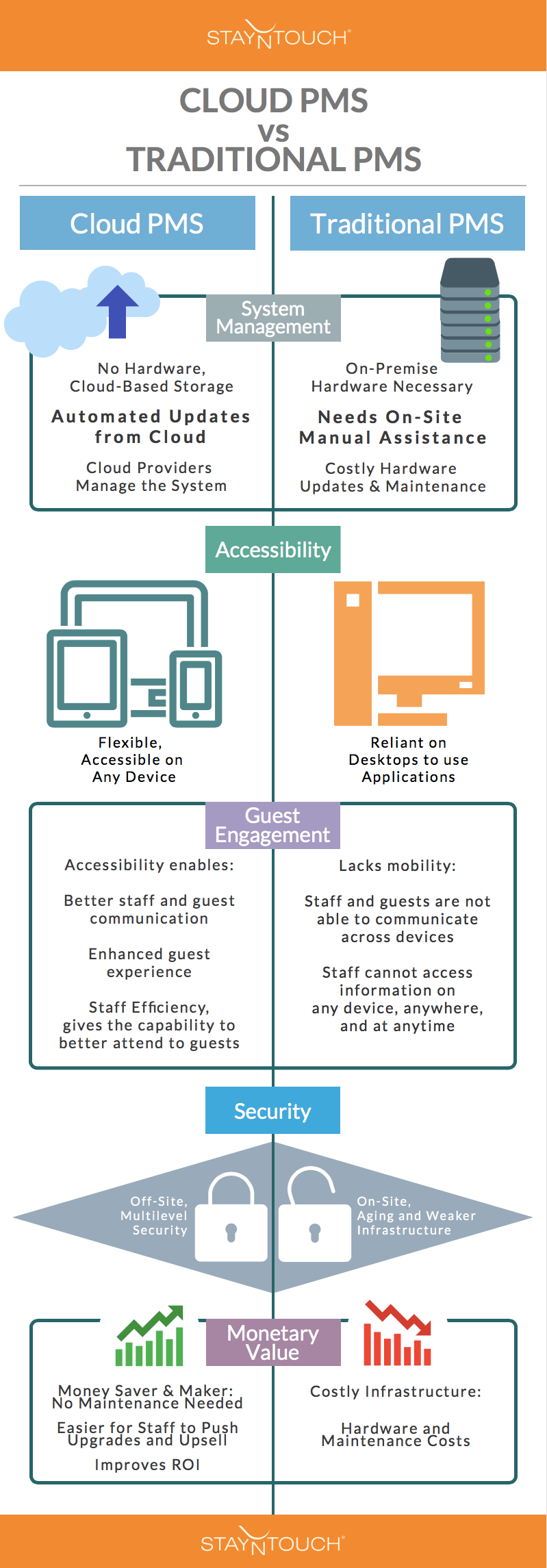
The software and all operational data are hosted on remote, internet-connected servers securely managed by the software vendor, allowing staff to log into the hotel pms cloud via any standard web browser or mobile application.
The industry shift toward cloud-native PMS systems is driven by the need for real-time data synchronization. In a landscape where room availability must be accurate across hundreds of online travel agencies (OTAs) simultaneously, the speed and connectivity of the cloud are indispensable.
The Pros of a Cloud-Based PMS
The primary advantage of cloud pms for hotels is its Software-as-a-Service (SaaS) subscription model. Hoteliers pay a small upfront investment and subscription-based monthly operational expense, which is more accessible for smaller properties compared to legacy PMS.
Because the vendor is responsible for server maintenance, updates are automatic, frequent, and pushed seamlessly without disrupting hotel service. That ensures the property always has the latest tools.
Hotel PMS vendors also manage data security with professional-grade encryption and strictly managed data centers to maintain PCI compliance in credit card transactions.
Cloud PMS allow hoteliers to grow their tech stach seamless. Hoteliers can access a cloud PMS from any device globally and can connect to open APIs for seamless third-party integrations with all other hotel software systems. Cloud PMS systems can also scale easily without hardware upgrades, whether its a few extra rooms or a whole new property across the country.
2. On-premise (legacy) PMS
On-premise property management systems represent the traditional approach to hotel management, where the system is installed and operated entirely on local hardware and physical servers located directly within the hotel building.
Legacy PMS trace back to the 1970s when the first property management systems were introduced as massive, complex on-site installations focused primarily on basic guest profiling and reservation record-keeping. Over the following decades, these systems transitioned into “minicomputers” capable of handling broader operational tasks such as housekeeping and basic financial reporting.
In an on-premise system, access is strictly limited to devices connected to the local network. That means the system requires dedicated physical space, environmental cooling, and rigorous on-site security protocols.
The Pros of an On-Premise Legacy PMS
So why are on-premise and legacy PMS still around in 2026? While often perceived as outdated in the current market, these systems still serve specific segments where control over data and independence from internet connectivity are paramount.
Many large hotel chains that have invested in this infrastructure want to continue using their private data build from decades of use.
Legacy PMS also don’t require access to the internet, which is ideal for extremely remote resorts, off-grid ranches, or properties located in regions with underdeveloped digital infrastructure.
The Cons of an On-Premise Legacy PMS
On-premise setups demand a massive upfront investment for hardware and software licenses, alongside the continuous burden of funding an internal IT department to manage manual (and often costly) system updates.
Legacy, on-premise systems also lack the automation modern systems provide. They typically require a manual “night audit,” a grueling, labor-intensive process that can take hours for staff to complete, compounding fatigue in an already labor-starved market.

3. Mobile-First PMS
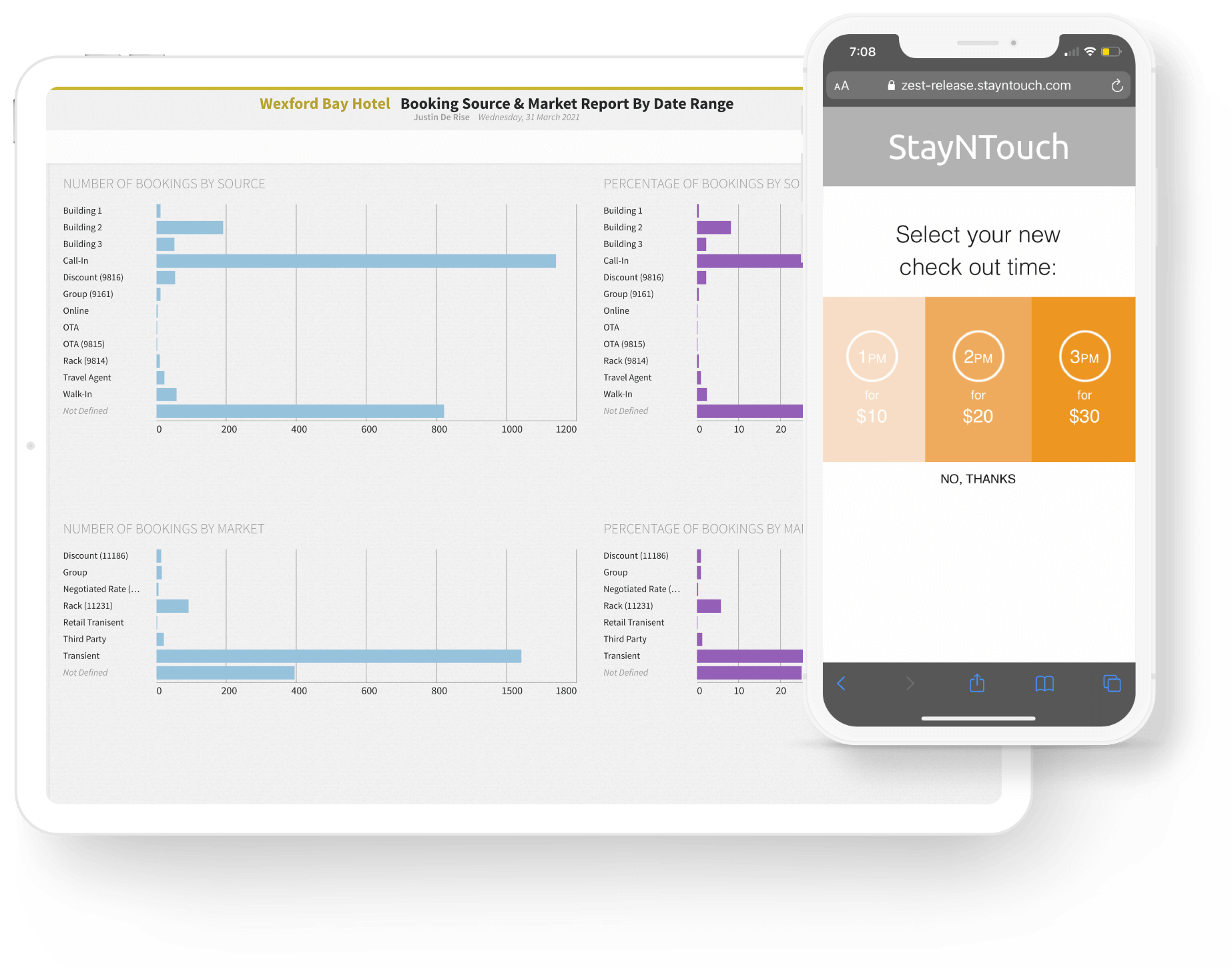
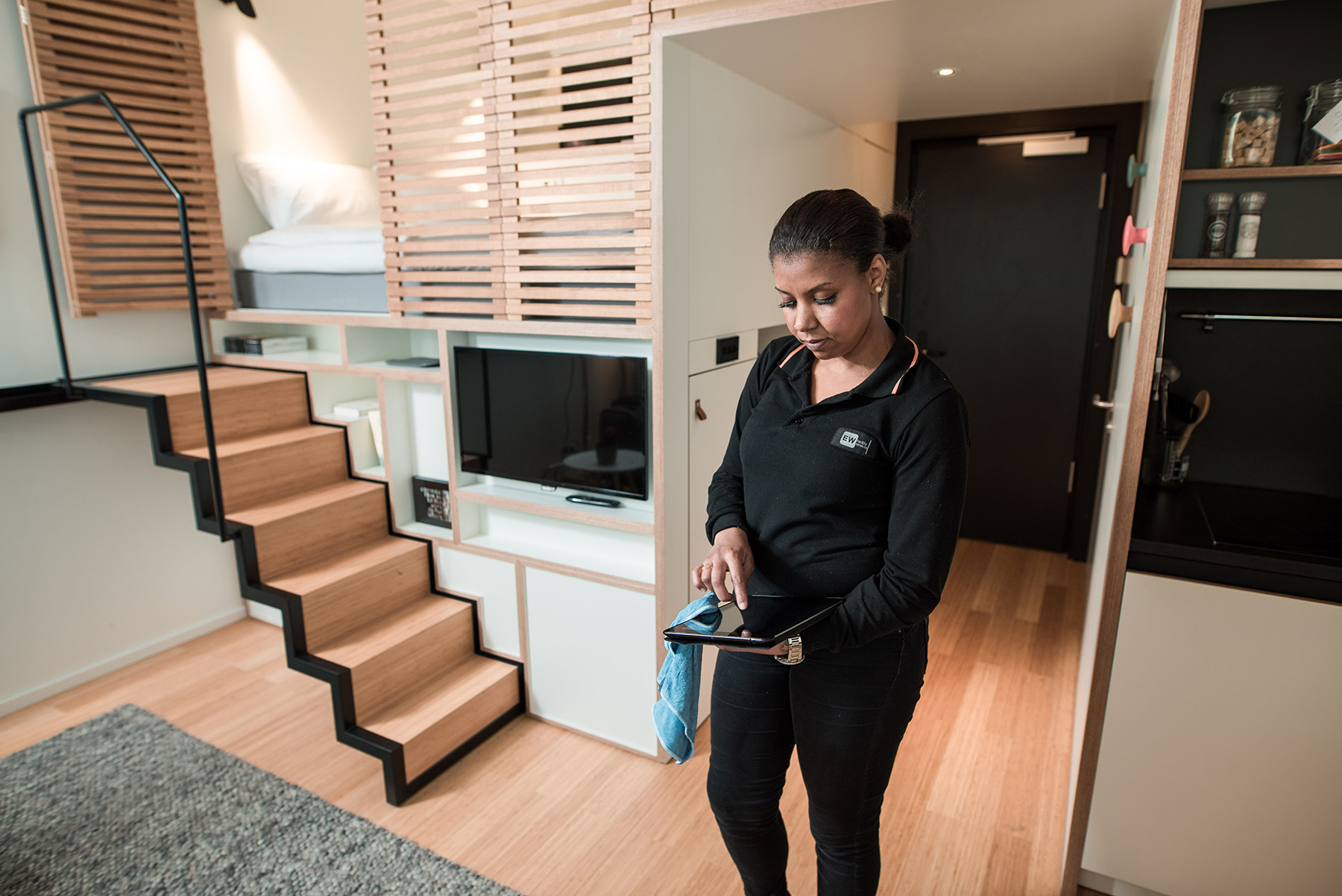
Mobile-first systems, such as Stayntouch, are cloud PMS systems specifically designed for tablets and smartphones to help staff focus on guest relations and physical tasks rather than being stuck behind the front desk.
These systems are particularly effective for boutique hotels or properties with lean teams where staff members must perform multiple roles. With a mobile-first PMS, hotel staff can simultaneously check in a guest while inspecting a room.

4. All-in-one vs. best-in-class open-API PMS
As digital channels fracture and automation becomes a requirement for hotel efficiency in 2026, an API-first is necessary to connect with a hotel’s full digital ecosystem.
An “API-first” architecture allows the PMS to connect seamlessly with “best-of-breed” external tools, such as:
- Revenue Management Systems (RMS): For AI-driven pricing.
- Guest Messaging Tools: For automated WhatsApp or SMS communication.
- IoT and Smart Lock Providers: For digital keys and energy management.
- Accounting Software: For automated financial reconciliation (e.g., Stayntouch’s deep integration with Xero).
- Housekeeping Software: For optimizing operations via live room status updates and maintenance tracking.
5. Hybrid PMS
Hybrid systems try to bridge the gap between on-premise systems with legacy reliability and cloud-based PMS with modern flexibility.
These models store core operational data locally to ensure uptime during internet failures while utilizing cloud components for reporting, mobile access, and third-party integrations.
This approach is often utilized by larger properties that are gradually transitioning away from legacy infrastructure.
Use Our Evaluation Score Card to Compare Hotel PMS Platforms
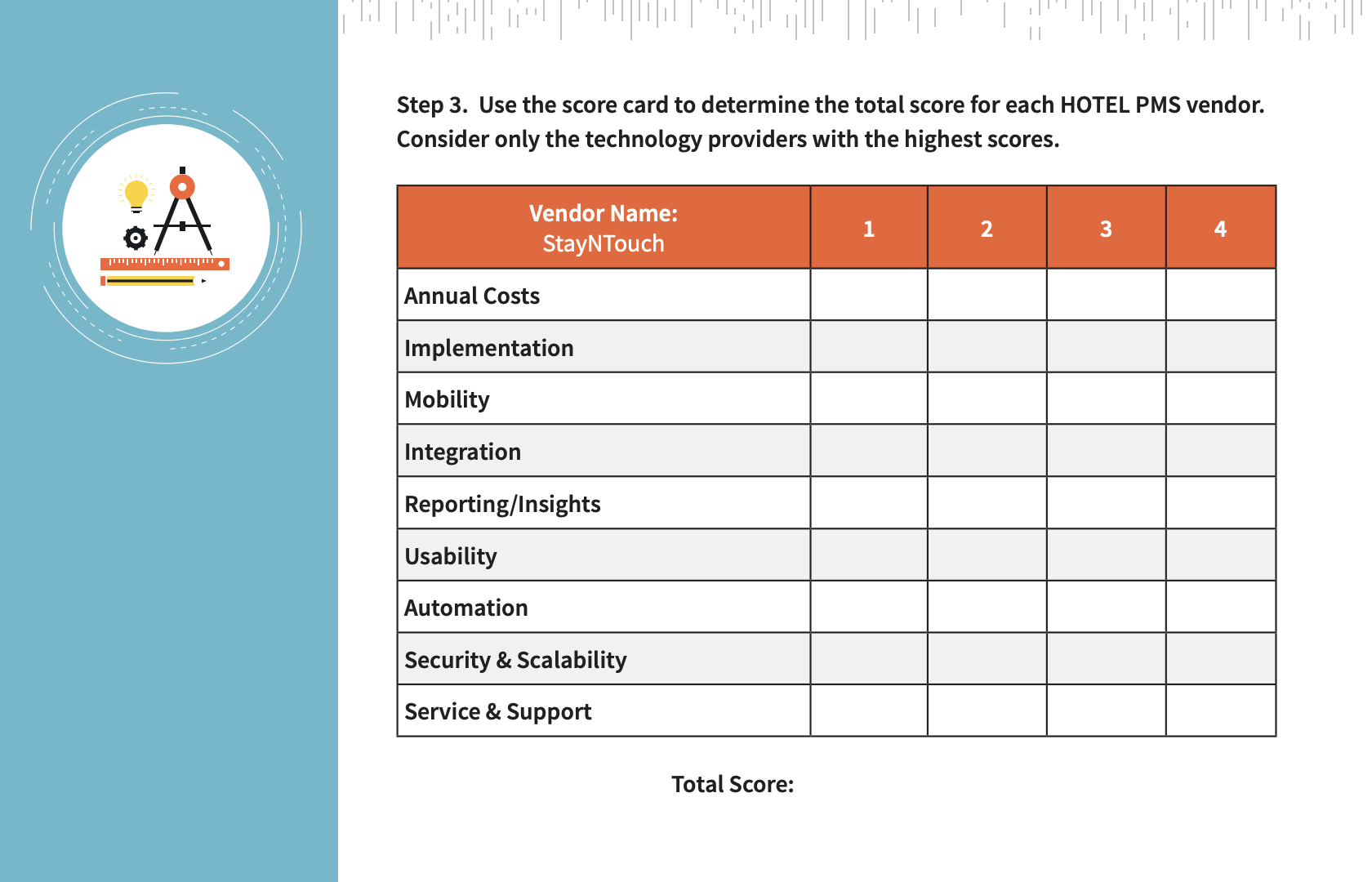
This printable PMS score card guides you through choosing a hotel PMS based on the following factors: your goals, annual costs, length of implementation, mobility, integration abilities, analytics and reporting, ease of use, automation capabilities, security, scalability, and customer support from the PMS vendor.
Which type of hotel PMS is right for your property?
Selecting a PMS is a high-stakes decision that will dictate your hotel’s technological capabilities for the next five to ten years, meaning a one-size-fits-all approach is ineffective. The ideal software must align perfectly with your property’s unique size, service model, and long-term operational goals.
When selecting a PMS for your hotel, consider the following.
- Ease of use for staff and guests (which is becoming a top priority in 2026) including clean dashboards, intuitive workflows, and self-teaching libraries that reduce onboarding time from weeks to days.
- What, if any, integrations with other external tools you’ll need.
- Total cost of ownership, including:
- Implementation Fees: The cost of setup and data migration.
- Training Costs: Both initial and ongoing as staff turnover occurs.
- Integration Fees: Some legacy vendors charge for every third-party connection.
- Payment Processing Margins: The difference in rates if payments are bundled vs. integrated via a third party.
- Opportunity Cost: The revenue lost due to system downtime or inefficient workflows.
Check out our blog on how to choose the best PMS for your needs for more advice from expert hoteliers!
To further simplify this complex landscape, here are some recommendations for your specific hotel category.
Small and independent hotels
When evaluating the best pms for small hotels or the best pms system for small hotels, the definitive industry recommendation is a cloud-based or mobile-first platform.
Independent hotel operators’ pain points often include:
- Training bottlenecks caused by high staff turnover
- Expensive integration fees for legacy systems
- Crippling invisibility on digital OTA markets
Mobile-first and cloud-based PMS address these pain points by:
- Shifting from heavy upfront costs to an affordable SaaS mode
- Intuitive and easy-to-learn interfaces that reduce training times
- Adding deep integration with channel managers to boost global visibility

Boutique and lifestyle hotels
For design-forward properties, the guest experience itself is the product. The undisputed recommendation for a boutique hotel pms is a mobile-first cloud system for the following reasons:
- The technology removes the barrier of a clunky reception desk.
- It operates natively on smartphones and tablets, enabling contactless check-in, self-service kiosks, and incredibly flexible staff roles.
Hotel groups and multi-property operators
The ideal hotel pms for hotel groups is a cloud-native platform built around an open API and robust centralized reporting.
Scaling a portfolio demands a multi property hotel pms that can add new locations and centralize guest profiles without requiring expensive local hardware upgrades.
Whether deploying a massive enterprise network or a pms for small hotel group operations, this architecture can easily scale. By centralizing data and automating multi-property audits, platforms like Stayntouch drive up to 70% greater operational efficiency across the entire portfolio.
Limited-service and extended-stay hotels
These properties require a cloud-based system featuring a highly lean UI and powerful channel distribution.
The benefit of cloud-based pms for limited-service hotels is aggressive automation. By eliminating manual data entry, lean teams can manage high-volume turnover effortlessly.
An effective extended stay hotel PMS must also deeply integrate dynamic rate plans and complex, long-stay housekeeping logic based on the guest’s Average Length of Stay (ALOS), to ensure long-term profitability while keeping OTA inventory perfectly synchronized.
The future of hotel PMS in 2026: AI, sustainability, and what’s next
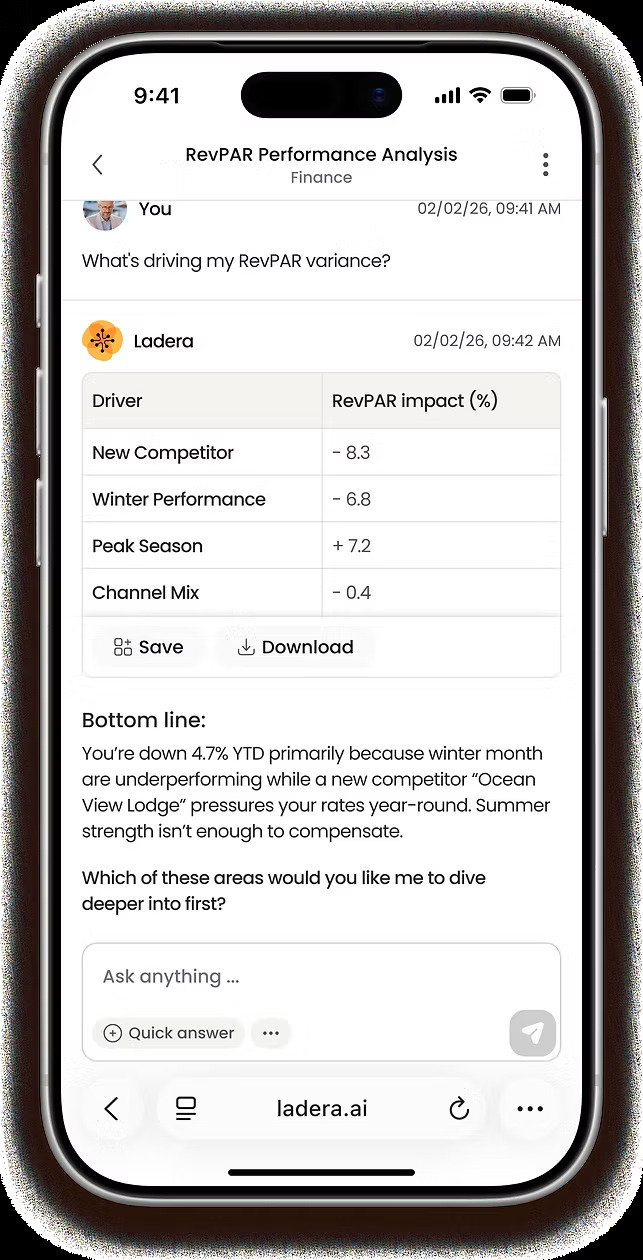
In 2026, property management systems are evolving from a reactive database into a proactive, autonomous assistant. The integration of Artificial Intelligence (AI) is no longer a future projection but a current reality.
AI in hotel PMS: what’s real vs. marketing?
AI adoption has surged, with over 80% of hoteliers planning to expand their use of AI tools to handle labor-intensive tasks in 2026.
- Predictive Revenue Management: Agentic AI uses data from PMS, RMS, and CRM systems (like local event dates, flight delays, and weather patterns) to adjust room rates before a demand surge actually hits the booking engine.
- AI Guest Assistants: Systems like Stayntouch use AI agents to answer 95% of guest inquiries instantly across WhatsApp, Airbnb, and the hotel’s website, freeing staff for high-touch service.
- AI-Powered Upselling Engines: AI-powered upselling integrations like Sojern and UpsellPRO increase per-guest revenue via offers for pre-arrival or in-stay room upgrades, tailored check-in times, spa experiences, and breakfast and dining offers.
- The Autonomous Night Audit: AI agents can now automatically reconcile financial reports, manage no-shows, and process end-of-day balances without human supervision, effectively eliminating one of the industry’s most hated manual chores.
Hyper-Personalization and the Unified Guest Profile
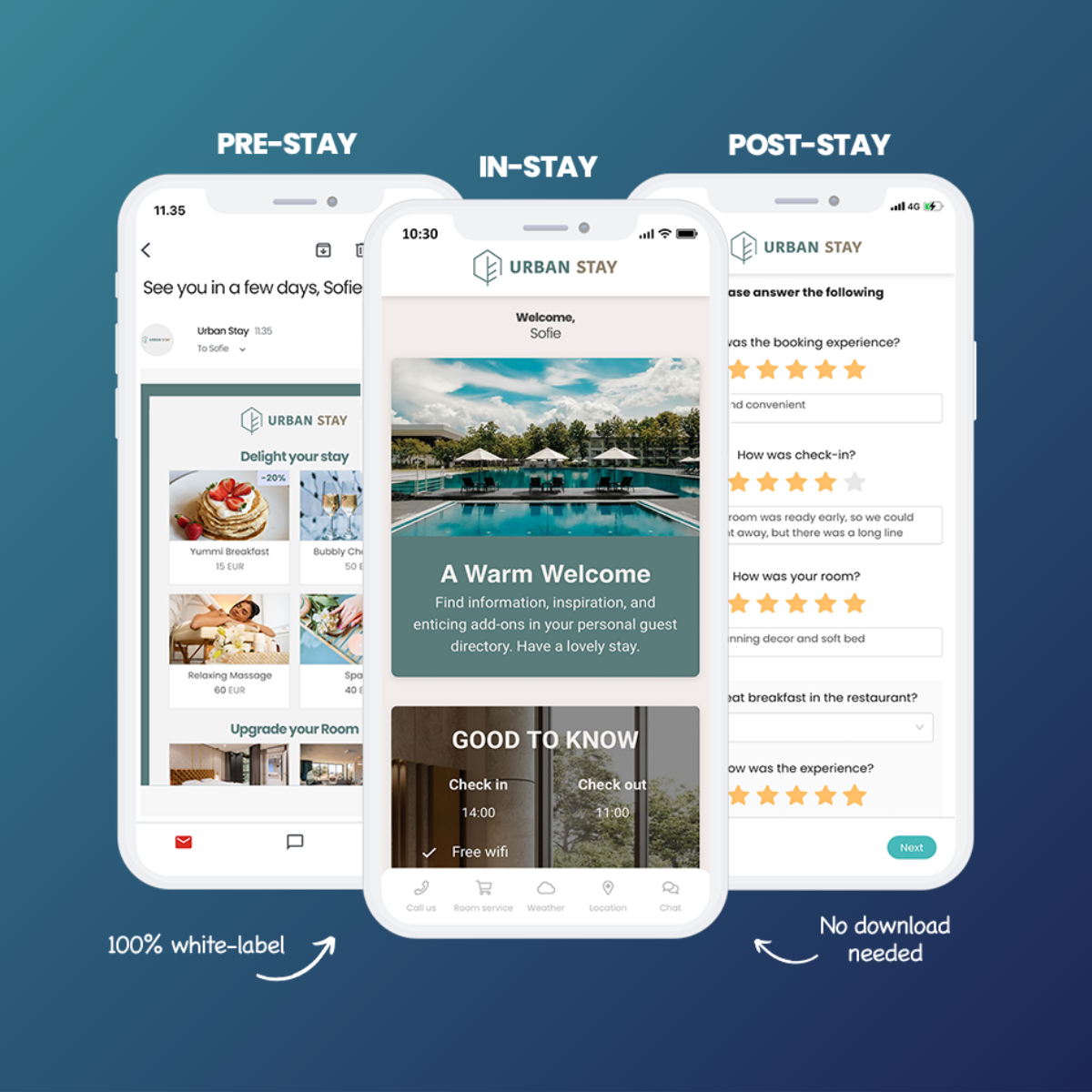
PMS systems are moving towards utilizing data from every possible part of the hotel, from restaurant orders and spa preferences to room temperature settings, and past stay history. All to create a single, unified guest profile that hotels can use to offer ever more personalized touches like a discount of a return stay for their anniversary or having the guests favorite drinks and snacks from the hotel grab-and-go kiosk already in their room.
Sustainability and IoT integration
Hotel PMS can also lighten a hotel’s environmental footprint. By integrating to IoT (Internet of Things) devices, the PMS can adjust lights and thermostats when they guests check out or after a housekeeping staff member marks a room OOO (Out of Order). This saves the hotel money on electricity and air conditioning, plus contributes to their environment goals.
See how Stayntouch compares to your current PMS type
Book a free demo with one of our software experts to measure our mobile-first PMS with 1,400+ API integrations against your current system!