Written by: Kelly Campbell, Vice President of Marketing, Stayntouch
Key Takeaways
-
Hotel upselling strategies succeed when offers reach guests at the right touchpoint: pre-arrival, check-in, in-stay, and post-stay. Automated delivery removes dependence on staff memory or availability.
-
Staff turnover near 70% resets training and breaks manual upsell programs. Automation through the PMS keeps offers firing regardless of who is on shift.
-
Pre-arrival messaging, mobile check-in, and self-service kiosks deliver targeted upsells at moments of highest guest intent, driving ROI up to 240% at individual properties (see the check-in section).
-
Segmentation using PMS data such as booking source, rate code, length of stay, and guest history personalizes offers and lifts conversion rates from under 2% to 8–20%.
-
Stayntouch provides a cloud-native, mobile-first PMS that connects every touchpoint, automates charge posting, and trains staff in hours instead of days.
Why Hotel Upselling Strategies Fail
Most upsell programs fail at the execution layer. Three operational constraints drive that failure, and vendors rarely name them directly.
First, staff turnover resets the training clock. Industry estimates put annual U.S. hospitality turnover near 70%, against 12–15% in most other sectors. Every time a trained front desk agent leaves, the upsell program leaves with them. A system that carries the offer independently of any individual employee keeps revenue flowing.
Second, a front desk that cannot leave the desk cannot sell. When check-in software is workstation-bound, staff process transactions behind a monitor instead of reading guest signals and making offers. Priya Rajamani, VP of Implementation and Support at Stayntouch, notes that self-service check-in creates a natural opportunity for upselling such as upgrades, early check-in, late checkout, or amenities, and that mobile check-in, kiosks, and other self-service technologies depend on a property management system (PMS) that can connect with the rest of the hotel’s technology stack.

Third, missed charges are revenue lost. Every purchase that is not posted to the folio, the guest’s running bill, before departure disappears from revenue.
The PMS is the only system where the guest profile, the rate, the room, the folio, and every guest touchpoint meet. That position makes it the system best placed to earn revenue as well as record it.
See how Stayntouch automates your upsells
The Four Touchpoints and What to Offer at Each
Each stage of the guest journey needs a specific offer and a specific system to deliver it. The table below shows which offer fits each moment and why the system, not the staff member, must deliver it consistently.
|
Touchpoint |
Offer |
Guest Signal |
System That Executes |
|---|---|---|---|
|
Pre-arrival (48–72 hrs) |
Room upgrade, early check-in, breakfast, parking |
Guest is planning logistics |
Stayntouch Guest Messaging, Stayntouch Booking |
|
Check-in |
Room upgrade, amenities, food and beverage (F&B) packages, parking, monetized early check-in/late checkout |
Guest is choosing their room |
Mobile check-in, Stayntouch Kiosk |
|
In-stay |
Late checkout, lobby retail, spa charge posting |
Guest is on property |
Guest device, Stayntouch Grab & Go Kiosk, automatic charge posting |
|
Post-stay |
Direct rebooking, loyalty enrollment |
Guest has just departed |
Guest profiles synchronized to customer relationship management (CRM), shared across portfolio |
1. Pre-Arrival (48–72 Hours Before Arrival)
The pre-arrival window is the highest-intent moment in the guest journey. Pre-arrival emails generate an average of $95 per booking in upsell revenue, and the traveler is still planning logistics, so an offer reads as useful information rather than a sales attempt.
Stayntouch Guest Messaging delivers pre-arrival check-in links and upsell links across SMS, custom-branded WhatsApp, online travel agency (OTA) inboxes, and web chat. Add-ons offered at booking through Stayntouch Booking capture revenue even earlier. For hotels that want a dedicated pre-arrival upsell engine, Stayntouch integrates with specialist platforms at no integration cost from Stayntouch, though each third-party platform carries its own platform fee.
2. Check-In: Upselling at Hotel Check-In
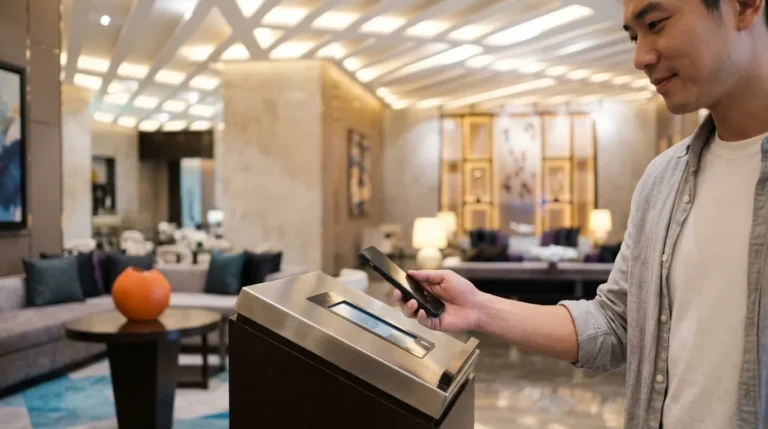
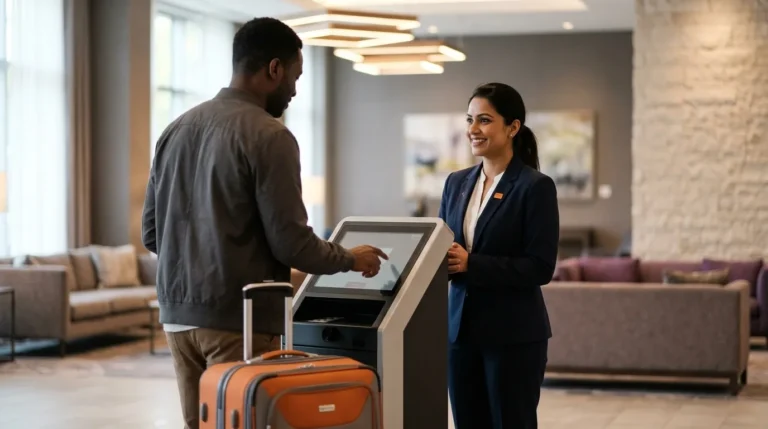
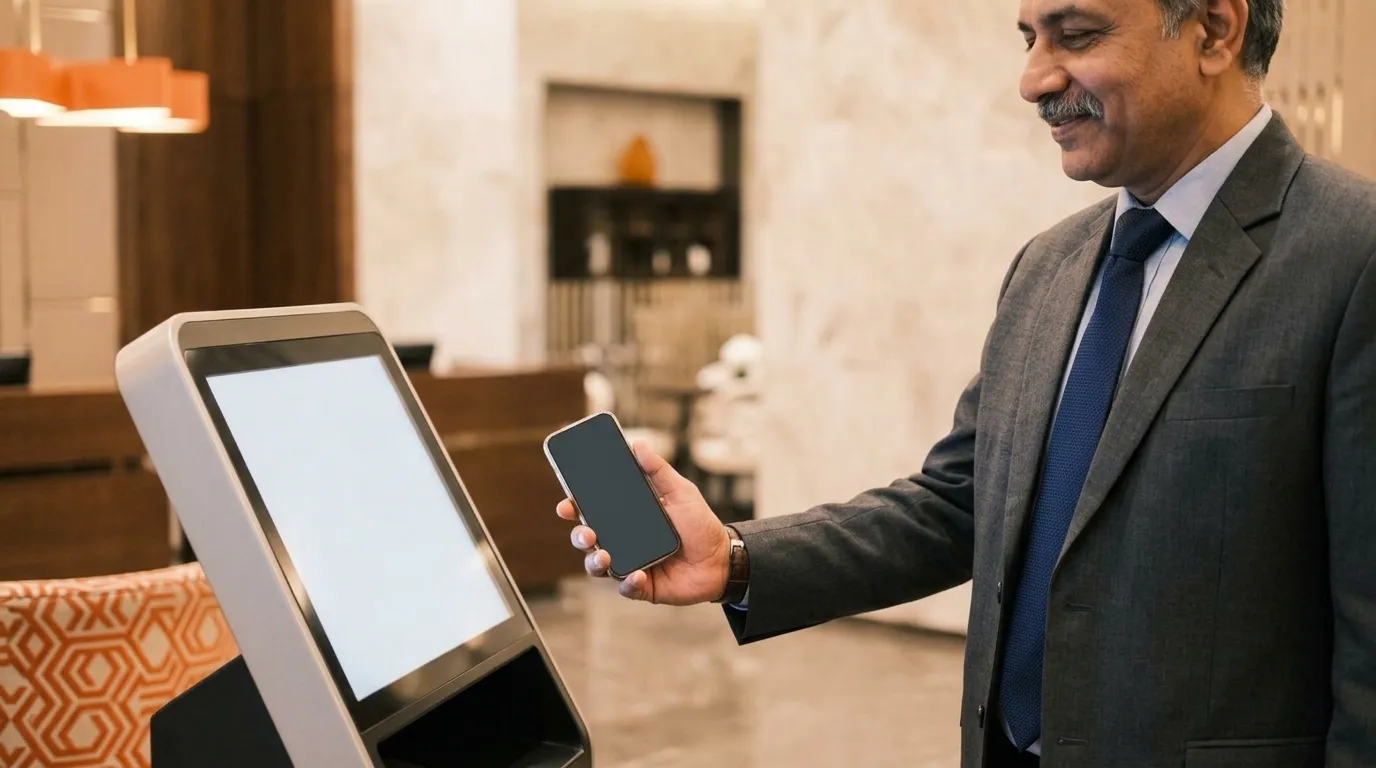
Check-in is the moment of highest intent because the guest is choosing their room and has not yet settled in. Mobile check-in and Stayntouch Kiosk present automated, targeted offers at this moment: room upgrades, amenities, F&B packages, parking, and monetized early check-in and late checkout. None of these offers depend on staff memory or availability.
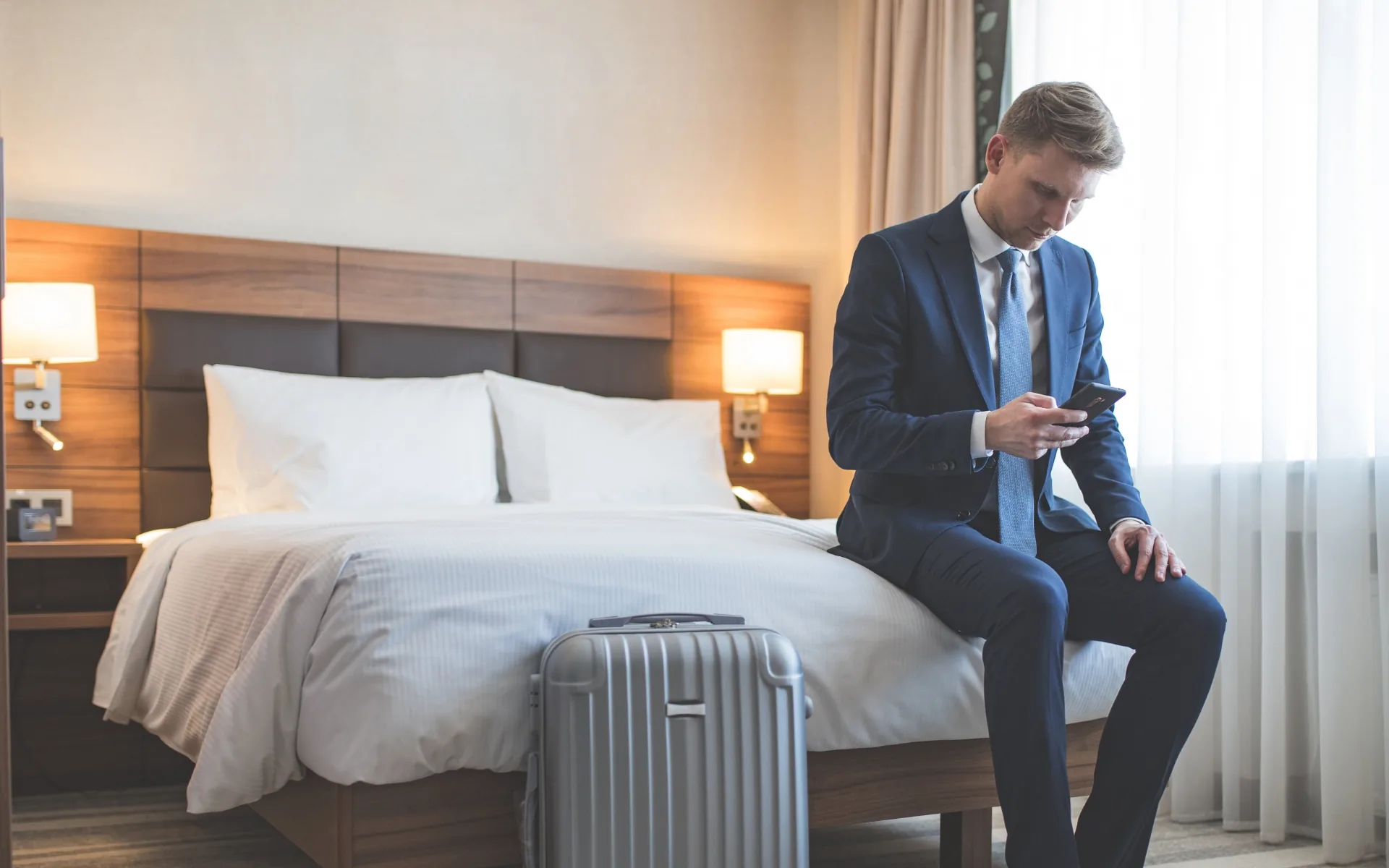
According to Stayntouch customer data, mobile upsells have driven return on investment (ROI) of up to 240% and kiosk upsells up to 120% at individual properties. These results represent standout cases rather than averages.
Early check-in and late checkout account for 90% of all upsell revenue and 96% of every sale across a 4,729-transaction sample, and 58% of hotel upsells are purchased between 7am and 1pm local time, the two busiest hours of the building’s day, when front desk staff have the least capacity to handle offers manually. Automation at check-in provides the only reliable delivery mechanism during those peak hours.
3. In-Stay
Once the guest is on property, their schedule is clearer and their device stays close at hand. Late checkout can be requested from the guest’s own device at any point during the stay. The Stayntouch Grab & Go Kiosk provides 24/7 lobby retail for guests and non-guests alike, offering food, drinks, and travel essentials.
Every transaction posts automatically to the folio or settles by card, and the kiosk operates without additional staffing. Automatic charge posting from every revenue center, including point of sale (POS) systems, spa, mobile, and the Grab & Go Kiosk, ensures every purchase lands on the right folio before the guest departs.
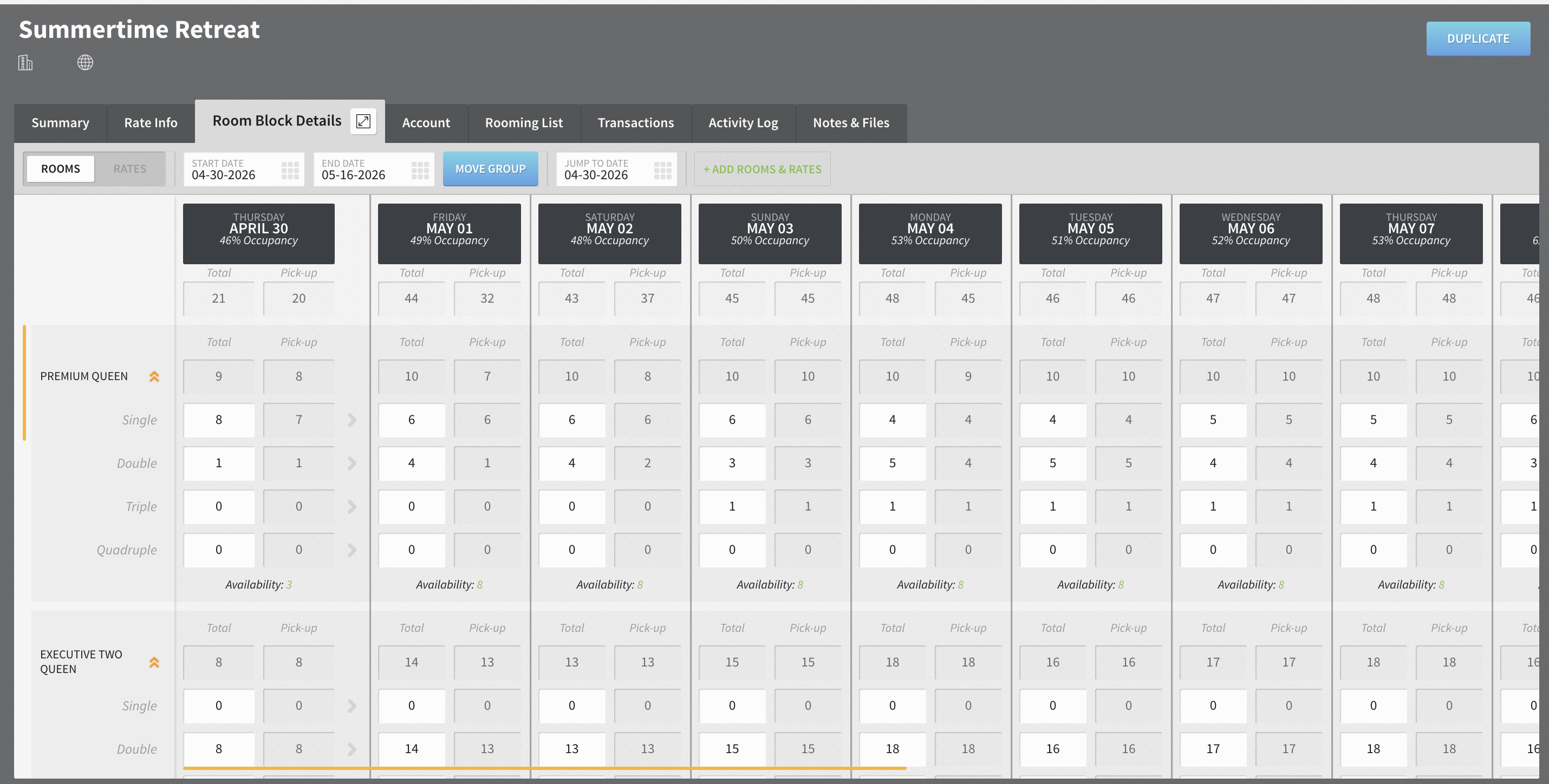
Stayntouch integrates with F&B POS systems and with spa systems for charge posting. The platform connects to the specialist tools hotels already use rather than replacing them with a full F&B POS or spa booking system.
4. Post-Stay
The post-stay moment is where the next stay is earned directly. The guest has just departed and is most receptive to a direct rebooking offer.
Guest profiles synchronize to the CRM and are shared across a portfolio, so a returning guest is recognized at a sister property with their history and preferences already known. Stayntouch integrates with CRM platforms instead of building a CRM natively. Direct rebooking at this stage avoids OTA commission and strengthens loyalty.
Guest Segmentation Using PMS Data
Guest segmentation starts in the PMS, where the booking record already contains the signals needed to personalize an offer. A separate marketing platform is optional rather than required.
PMS data that drives segmentation includes booking source, length of stay, past stays, rate code, and party composition. A business traveler booking a single room on a corporate rate code receives a different pre-arrival offer than a couple booking a weekend package because the first segment values efficiency while the second values experience.
The same logic scales across other segments. A family booking a connecting room responds to early check-in and kids’ activity offers, while a long-stay guest responds better to a mid-stay housekeeping option than to a late checkout pitch on day one.
Properties using CRM-driven upsell workflows see 8–15% conversion rates on room upgrades and 12–20% on experience packages, compared to less than 2% for generic upsell attempts at check-in. The offer performs when it matches the guest.
For multi-property groups, shared guest profiles across the portfolio mean a returning guest is recognized at a sister property. The PMS is where that profile lives, which makes segmentation a PMS capability as well as a marketing function.
The Operational Constraint: Training Time and Turnover
Training time shapes upsell strategy. An upsell program stalls when turnover resets the training clock.
The U.S. Bureau of Labor Statistics reported 962,000 open hospitality jobs in April 2026, and the cost of a vacant or undertrained front desk position extends into service inconsistency and lost upsell revenue.
Stayntouch trains front desk staff in 2 hours and the full platform across all modules in 2 days. Rate Strategy trains in 20 minutes. Stayntouch Academy provides self-paced eLearning with test environments, certifications, and progress tracking, so new hires onboard without scheduling a trainer. That capability matters when a busy Friday check-in arrives with two new hires on the desk.
The downstream effect that Stayntouch customers report matters even more than the training time itself. Because the system is easy to learn, hotels can hire for guest-facing ability rather than technical aptitude. As one Capterra reviewer put it: “I get to hire amazing personalities without worry if they will ‘get’ the PMS.” A new hire who is confident and guest-focused on their first shift becomes a stronger upsell asset than a technically proficient one who is still navigating the system.
Talk to a hospitality specialist
Packaging, Add-Ons, and Non-Room Revenue
Once the system delivers offers reliably, the next step is deciding what to include. Bundles convert better than single add-ons when the guest perceives the combined value as greater than the sum of its parts.
A romantic package that combines a room upgrade, in-room amenity, and late checkout at a single price removes the friction of evaluating each item separately. Stayntouch Booking and Stayntouch Kiosk both support package presentation at the point of purchase.
Non-room revenue fits into the same upsell strategy. The categories worth building into the offer flow include:
-
Parking, offered at pre-arrival and check-in
-
F&B packages, offered at booking and check-in
-
Day-use and hourly rates, which sell the same room more than once in 24 hours
-
Lobby retail through the Stayntouch Grab & Go Kiosk, which earns 24/7 with no added staffing
-
Spa charge posting, which routes purchases from integrated spa systems directly to the guest folio
The “builds versus connects” distinction matters here. Stayntouch builds the booking engine, kiosk, and Grab & Go Kiosk. It integrates with F&B POS and spa systems for charge posting. It does not provide a full F&B POS, CRM, revenue management system (RMS), or central reservation system (CRS).
Why Service Culture Still Matters for Upselling
Automation delivers the offer, and staff close it. A structured greeting protocol that encourages eye contact, a smile at a distance, and a verbal greeting at closer range turns every guest encounter into a revenue opportunity as well as a service moment.
In the context of hotel upselling strategies, this structure matters because it opens natural conversations. A staff member who greets a guest early and engages directly has already created space to offer an upgrade, a late checkout, or a dining recommendation without sounding scripted.
Staff incentive programs that reward upsell conversions work best when they sit on top of a service culture where every guest interaction already follows a clear pattern. When turnover resets the training clock, that service protocol needs to appear in onboarding from day one so the incentive program keeps its foundation.
Measuring What Works
None of the touchpoints above improve on their own. They improve when you can see which ones are working.
Measurement frames which offers convert, which touchpoints underperform, and which channels carry OTA commission that a direct booking would avoid. Key questions include which offer types convert at each touchpoint, which guest segments respond to which offers, and whether pre-arrival or check-in performs better for a given property’s mix.

Stayntouch reporting delivers scheduled, filtered reports automatically by email, SFTP, or cloud drive. Charges post to the folio at the moment of purchase, so incremental revenue from upsells, kiosk retail, and add-ons appears in reporting without anyone re-keying a transaction. The revenue a hotel earns becomes the revenue it can see, measure, and act on.
Why Stayntouch
Stayntouch is a cloud-native PMS built mobile-first, so the automation that takes routine work off staff also puts the right offer in front of every guest. Three-way check-in, including fully mobile in 30 seconds, hybrid pre-check-in, or staff-assisted anywhere on property, lets the guest choose their path while the upsell fires on each path.
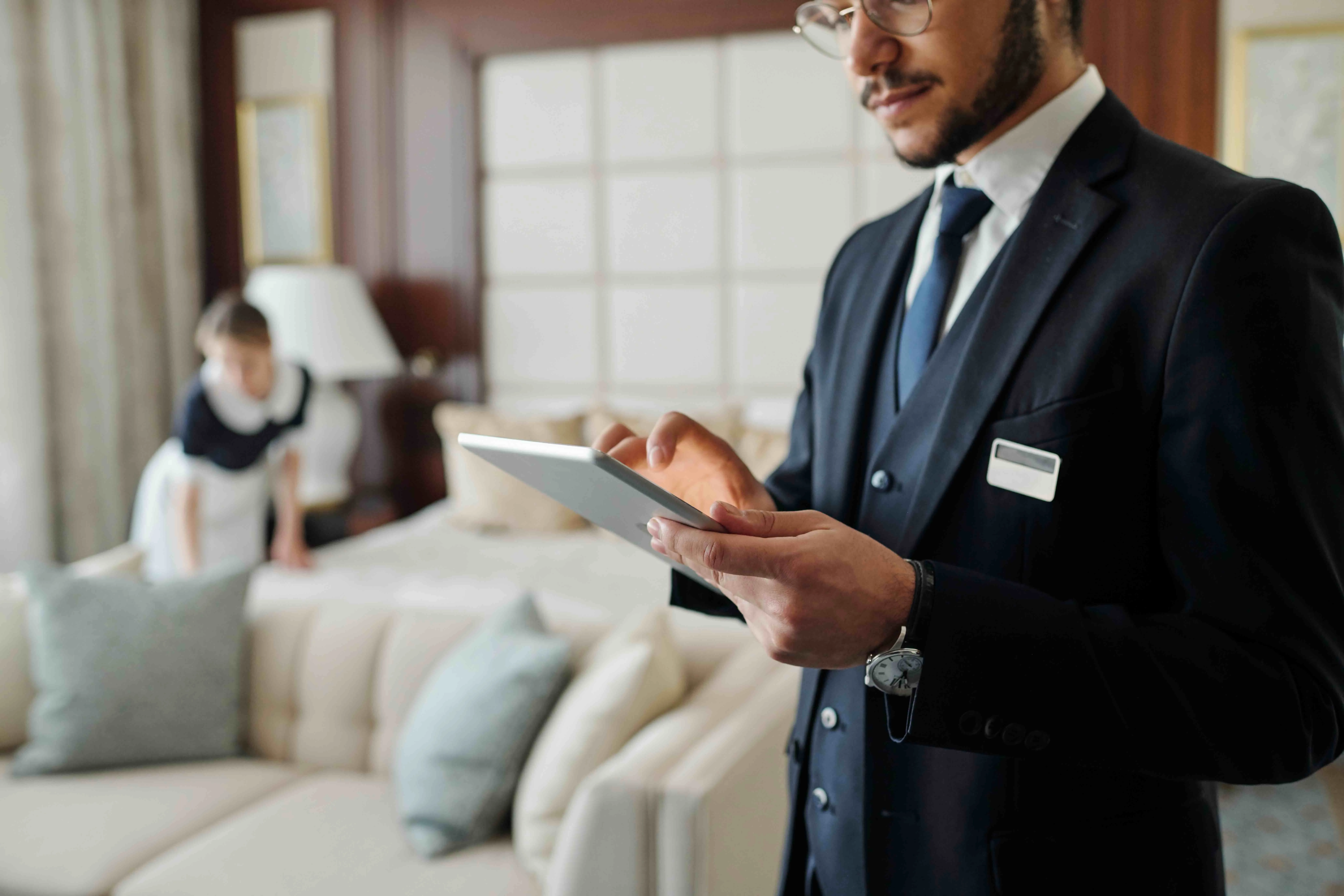
According to Stayntouch customer data, the platform reduces staff-assisted check-in by 54%, which frees the team to engage with guests rather than process transactions. Linchris Hotels describes the result as turning the front desk into a sales channel.
The integration model reinforces the upsell strategy. Stayntouch charges nothing for its 1,400+ integrations, so adding a specialist upsell tool, CRM, or revenue management system is never blocked by an integration fee, though each third-party platform still charges its own platform fee. That same philosophy extends to support. Every customer gets 24/7/365 coverage with no service tiers and a guaranteed response under one hour, delivered by hospitality specialists rather than a chatbot.
Conclusion
A touchpoint-by-touchpoint upsell strategy across pre-arrival, check-in, in-stay, and post-stay provides the framework. The system that fires the offer at each moment decides whether the strategy succeeds.
The PMS is the only system where the guest profile, the rate, the room, the folio, and every guest touchpoint meet. Building the upsell strategy around that system turns every stay into a more profitable one.
Build your upsell strategy with Stayntouch
Frequently Asked Questions
What Are the Most Effective Hotel Upselling Techniques for Independent Hotels?
The most effective hotel upselling techniques for independent hotels fire automatically at the right guest-journey moment instead of depending on staff memory or availability. Pre-arrival messaging sent 48–72 hours before arrival, offering room upgrades, early check-in, parking, and F&B packages, reaches guests when they are planning logistics and most receptive to spending.
Mobile check-in and kiosk check-in present automated, targeted offers at the moment of highest intent, when the guest is actively choosing their room. In-stay, late checkout offered from the guest’s own device and 24/7 lobby retail through a self-service kiosk capture revenue without adding headcount. Post-stay, synchronized guest profiles support direct rebooking and loyalty enrollment.
The common thread across all four stages is relevance and convenience. The offer must connect to real PMS data such as room type, rate code, availability, and guest history, and it must appear in a channel the guest already uses rather than requiring a separate interaction at the front desk.
How Does a PMS Enable Guest Segmentation Before Arrival?
A PMS enables pre-arrival guest segmentation because it holds the booking record that contains every signal needed to personalize an offer, including booking source, length of stay, rate code, party composition, and past stay history. A business traveler on a corporate rate code receives a different pre-arrival offer than a couple on a leisure package because their priorities differ.
A family booking a connecting room receives early check-in and activity offers instead of a spa package, while a returning guest who purchased a room upgrade on a previous stay becomes a strong candidate for the same offer again. This segmentation starts in the PMS, where the profile lives, and does not require a separate marketing platform to initiate.
For multi-property groups, shared guest profiles across the portfolio mean a returning guest is recognized at a sister property with their preferences already known. Personalized offers can then appear from the first touchpoint of the next stay.
What Is Automated Hotel Upselling and How Does It Work?
Automated hotel upselling delivers targeted upgrade and add-on offers to guests at predefined moments in the guest journey without requiring a staff member to initiate the offer manually. The system reads reservation data from the PMS, determines eligibility based on room type, rate plan, arrival date, and availability, and delivers the offer through the guest’s preferred channel such as SMS, WhatsApp, OTA inbox, mobile check-in flow, or kiosk.
When the guest accepts, the confirmed upsell updates the PMS automatically, posts to the folio, and routes the operational task to the relevant department. Two-way PMS integration separates effective automated upselling from a simple email blast. The offer must reflect real-time availability, and the accepted purchase must write back into the reservation record so the front desk, housekeeping, and finance all see the same information.
Stayntouch Guest Messaging, mobile check-in, and Stayntouch Kiosk all operate on this model natively. Stayntouch also integrates with specialist upsell platforms for hotels that want a dedicated upsell engine alongside the PMS.
How Does Staff Turnover Affect Hotel Upselling Programs, and What Is the Fix?
Staff turnover is a major threat to a hotel upselling program because a program that depends on trained staff to initiate offers loses effectiveness with every departure. A new hire who does not know the upgrade inventory, the pricing, or the right moment to make an offer will not make one, and the revenue gap often stays invisible until someone reviews the data.
The fix operates on two levels. First, the system must carry the offer independently of any individual employee, so automated pre-arrival messaging, mobile check-in upsells, and kiosk upsells fire regardless of who is on shift. Second, the PMS must train fast enough that new hires become productive before the next busy arrival period.
As covered earlier, Stayntouch trains front desk staff in 2 hours and the full platform in 2 days, with Stayntouch Academy handling self-paced onboarding. That speed lets hotels hire for guest-facing ability rather than technical aptitude, so a confident, engaged staff member becomes a stronger upsell asset.
What Is Hotel Upsell Software and How Does It Integrate with a PMS?
Hotel upsell software automates the delivery of upgrade and add-on offers across the guest journey by reading reservation data from the PMS and presenting relevant offers through email, SMS, WhatsApp, mobile check-in, or kiosk. The PMS remains the system of record for the reservation and the folio, while upsell software sits alongside it, using PMS data to determine eligibility and availability and writing confirmed purchases back into the PMS.
Integration depth matters because a read-only connection is sufficient for offer delivery, but two-way PMS integration is required for confirmed upsells to update the reservation automatically and prevent double-selling. Stayntouch provides native upsell capabilities through mobile check-in, Stayntouch Kiosk, and Stayntouch Guest Messaging, and integrates with specialist upsell platforms at no integration cost from Stayntouch, with each third-party platform carrying its own platform fee.
This approach lets hotels choose the upsell tool that fits their operation without being blocked by integration fees or vendor lock-in.
Read Next
Turn a more connected stack into a better stay.
See how Stayntouch can support the operating moments that matter most to your hotel team.