Written by: Kelly Campbell, Vice President of Marketing, Stayntouch
Key Takeaways for Hotel Amenity Upsells
- The four-part formula (right guest, right amenity, right moment, clear benefit) replaces generic pitches with a repeatable upsell system at every touchpoint.
- Segment guests by trip purpose using PMS signals such as booking source, length of stay, and prior history, then match specific amenities to each traveler type.
- Pre-built amenity packages (Business Ready, Weekend Escape, Family Fun, Romance) convert better than individual add-ons and can deliver attach rates of 8–25% across channels.
- Timing matters: pre-arrival email, mobile check-in, kiosk, and in-stay messaging each have distinct conversion benchmarks that Stayntouch automates from a single PMS.
- Track ancillary revenue per occupied room, conversion by channel, and attach rate by category; request a demo to see how Stayntouch turns every touchpoint into measurable ancillary revenue.
Segment Guests by Trip Purpose Before Building Offers
The first part of the formula, right guest, starts with segmenting by trip purpose before building any offer. PMS data surfaces the signals: booking source, length of stay, room type, arrival day, and prior stay history. Expert guidance recommends starting with broad macro segments such as business, leisure, family, and romance, then refining sub-segments where revenue opportunity is highest, rather than over-segmenting too early.
Segmentation definitions should align across front office, F&B, spa, and revenue management through a single integrated system so personalization stays consistent. Stayntouch PMS surfaces guest profiles automatically, so the segment is visible at every touchpoint without staff having to look it up.
| Traveler Type | Primary PMS Signals | Best-Match Amenities | Why It Converts |
|---|---|---|---|
| Business | Weekday arrival, single occupancy, corporate rate, short stay | Parking, express breakfast, late checkout, meeting space | Business travelers show 55–75% preference for digital check-in, so pre-arrival and mobile channels perform strongly. |
| Leisure | Weekend arrival, two-plus guests, OTA or direct booking, longer stay | F&B packages, local experiences, pool or cabana access, late checkout | Conversion rates for relevant in-stay activity or experience offers range from 6–15%. |
| Family | Multiple occupants, school-holiday dates, connecting rooms | Breakfast bundles, activity packages, early check-in, parking | Transient leisure guests respond well to free breakfast, flexible cancellation, and early check-in. |
| Romance | Two guests, anniversary or honeymoon note, weekend or midweek stay | Spa packages, in-room dining, champagne arrival, late checkout | Couples booking overnight spa and food packages represent a high-value ICP with strong conversion. |
Turn Segments into Four Ready-to-Use Amenity Packages
Once you know which traveler type you are serving, the next step is matching them to the right amenity. Packages convert better than individual add-ons because they frame a complete experience rather than a line-item cost. Experience-based merchandising in pre-arrival flows can lift average booking value by up to 20% when room upgrades, F&B packages, and local experiences are bundled into coherent stay narratives. The table below provides four ready-to-adapt templates with indicative pricing ranges and realistic attach rate targets.
| Package Name | Included Amenities | Sample Add-On Price | Target Attach Rate |
|---|---|---|---|
| Business Ready | Guaranteed parking, express breakfast, late checkout to 2 p.m. | $45–$65 per stay | 15–25% |
| Weekend Escape | Welcome drink, F&B credit ($30), late checkout to 1 p.m. | $55–$75 per stay | 12–20% |
| Family Fun | Early check-in from 11 a.m., breakfast for two adults and two children, parking | $70–$95 per stay | 10–18% |
| Romance Package | Spa credit ($50), in-room champagne, late checkout to 2 p.m. | $90–$130 per stay | 8–15% |
Attach rate here means the share of eligible arriving guests who purchase the package. Pre-arrival upsell emails achieve 15–25% conversion, check-in achieves 2–5% conversion, and during-stay offers achieve 6–10% conversion, so the channel chosen for each package matters as much as the package itself.
A sample pre-arrival email for the Romance Package reads:
Subject: A little extra for your stay, [First Name]
You are arriving in two days, and we want to make sure your stay is everything you planned. We can add a $50 spa credit, a chilled bottle of champagne waiting in your room, and a relaxed 2 p.m. checkout, so your last morning feels as good as your first night. Add the Romance Package for $[price] when you complete your mobile check-in below.
Trigger Upsell Offers at the Right Moment in the Stay
Timing forms the third part of the formula. The same offer sent at the wrong moment converts poorly, while the right timing makes it feel like a service rather than a pitch. Pre-arrival communications sent 48–72 hours before arrival often achieve open rates of 45–65% and work well for planning-stage offers. Mobile check-in creates the highest-intent moment, because the guest is engaged with their stay, payment details are already in hand, and adding an amenity takes a single tap.
| Channel | Timing Trigger | Best Amenities to Offer | Conversion Benchmark |
|---|---|---|---|
| Pre-arrival email | 48–72 hours before arrival | Spa packages, F&B credits, parking, early check-in | $95 per booking in upsell revenue (Revinate 2026 North America benchmarks) for the pre-arrival email channel |
| Pre-arrival SMS | 24 hours before arrival if pre-registration incomplete | Parking, early check-in, breakfast bundles | SMS outperforms email buried in a promotions tab for timely amenity upsells |
| Mobile check-in flow | At the moment the guest completes digital registration | All package types; parking and dining convert highest | 15–25% conversion at online or physical check-in |
| Kiosk | During on-property self-check-in | Room upgrades, late checkout, F&B credits, parking | According to Stayntouch customer data, automated upsells have driven ROI increases of up to 120% at kiosk and 240% via mobile at individual properties, which represent standout cases rather than averages. |
| In-stay messaging (SMS/WhatsApp) | Day 2 of multi-night stay; 4 p.m. on arrival day for dinner; 8 a.m. on final day for late checkout | Spa, F&B, late checkout, experiences | Contextual upsell notifications convert at 3–8% when well-targeted |
Mobile check-in converts highest because the guest is in a planning mindset, not a reactive one. Amenities tied to arrival logistics or immediate use, such as parking and dining reservations, convert best when embedded in the mobile or pre-arrival check-in flow rather than offered after the guest reaches the lobby. Stayntouch surfaces targeted upsell offers automatically inside the mobile check-in and kiosk flows, with no additional staff action required.
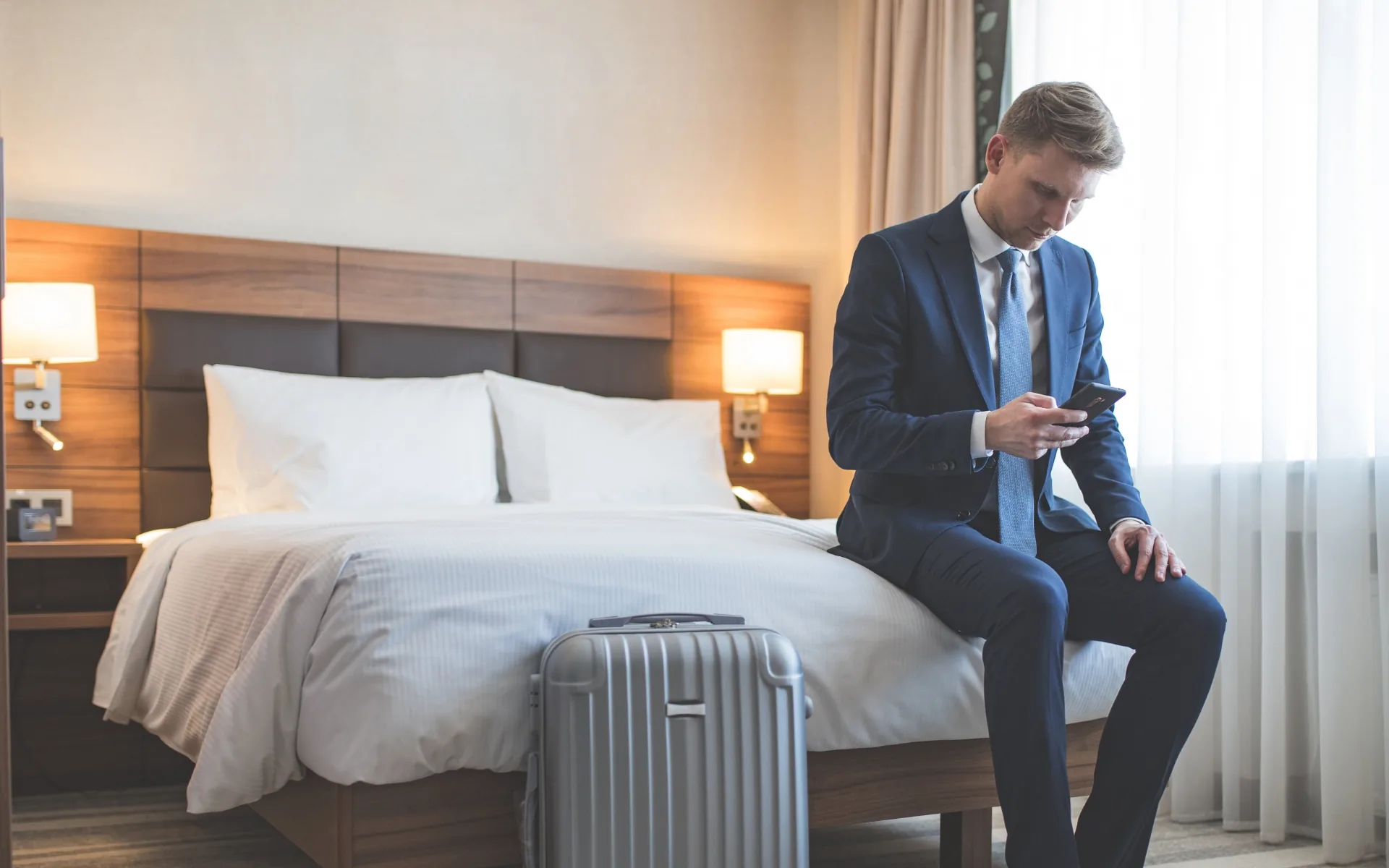
See automated offer triggers across every channel in action when you schedule a Stayntouch demo.
Use Staff Discovery Questions to Uncover Clear Guest Benefits
The fourth part of the formula, clear benefit, starts with listening to the guest. Staff who ask one relevant question before making an offer convert more than those who pitch from a script. Discovery questions surface the guest signal that makes a benefit-focused offer feel like a recommendation rather than a sale.
Three discovery questions that work across segments:
- “Is this your first time staying with us, or have you been before?” Returning guests reveal preferences, while first-timers open the door to orientation offers such as a welcome F&B credit or a spa introduction.
- “What is bringing you to [city] this trip?” Purpose of travel identifies the segment quickly. Business signals parking and late checkout, while a celebration signals spa and in-room dining.
- “Do you have any plans for dinner tonight, or are you still deciding?” An open question about the evening creates a natural entry point for an F&B offer without pressure.
Each answer feeds directly into Stayntouch. Staff can add a preference note to the guest profile in real time, and Stayntouch Guest Messaging, the AI-powered messaging tool embedded inside the PMS, can follow up automatically with a relevant offer via SMS or WhatsApp. Hotels can drive smart, data-backed upsells by using historical spend data in a centralized guest profile to suggest relevant offers, such as promoting spa openings to guests who have previously booked wellness treatments. The discovery question starts the conversation, and the PMS closes the loop automatically.
Explore how Stayntouch connects staff discovery to automated follow-up in a guided demo.
Write Benefit-Focused Upsell Copy Guests Actually Care About
Feature language describes what an amenity contains, while benefit language describes what the guest gains. Shifting from feature to benefit framing can improve conversion rates. A practical formula is: feature, plus “which means,” plus guest outcome.
Side-by-side examples for the four core amenity categories:
| Amenity | Feature Language (avoid) | Benefit Language (use) |
|---|---|---|
| Spa | “Our spa includes a 60-minute Swedish massage and access to the thermal suite.” | “You will leave feeling completely reset. An hour of massage and the thermal suite means you arrive at your meeting tomorrow sharper than when you landed.” |
| Parking | “We offer on-site parking for $18 per night.” | “Your car is right here when you need it, with no circling the block or paying surge rates at a garage down the street.” |
| F&B | “The breakfast package includes a full buffet for two guests.” | “You start the day without having to think about it. Breakfast for two is ready when you come down, and you are out the door on your own schedule.” |
| Experiences | “We offer a guided city walking tour departing at 10 a.m.” | “You will see the parts of the city most visitors miss. Our guide knows the neighborhood, so you get the real story, not the tourist version.” |
Benefit-led language describes what the guest gains rather than what the amenity contains; “You would have the terrace completely to yourselves in the morning” is more persuasive than “It includes a private balcony.” The same principle applies in automated pre-arrival emails and kiosk screens. Lead with the outcome, then follow with the detail as proof.
Track Ancillary Revenue with a Simple, Focused Dashboard
Ancillary revenue per occupied room is total non-room revenue divided by occupied rooms in a period. This metric anchors any amenity upsell program because it isolates non-room yield from occupancy fluctuations. A 200-room hotel at 78% occupancy and a $140 ADR that adds just $10 in incremental upsell revenue per occupied room can generate more than $569,000 annually, often with contribution margins above 70% once platform and staffing costs are covered.
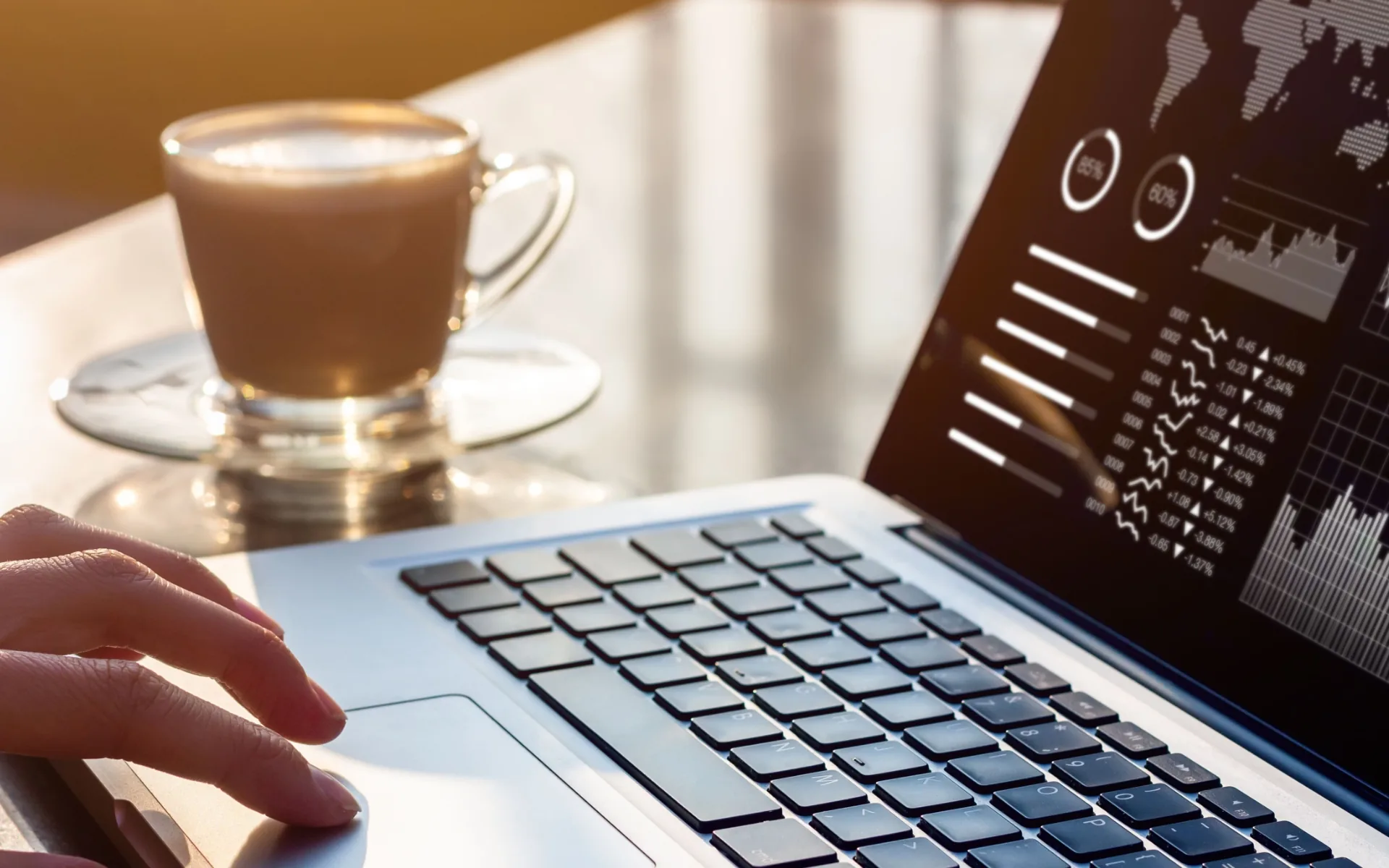
A practical measurement framework tracks five metrics:
- Ancillary revenue per occupied room, which is total non-room revenue divided by occupied rooms and serves as the primary KPI.
- Upsell conversion rate by channel, which is offers accepted divided by offers delivered, tracked separately for pre-arrival email, mobile check-in, kiosk, and in-stay messaging. As noted in the timing benchmarks above, pre-arrival offers consistently outperform front-desk approaches by a factor of three.
- Attach rate by amenity category, which is the share of arriving guests who purchase each category (parking, spa, F&B, experiences), enabling comparison across offer types. Tracking acceptance rate by category enables hotels to compare performance across amenity types.
- Ancillary revenue share of total revenue, which is non-room revenue as a percentage of total hotel revenue. Mature upselling programs often see ancillary revenue reach 20–30% of total revenue.
- TRevPAR (Total Revenue Per Available Room), which is total revenue from all sources divided by available rooms and captures the full impact of ancillary gains that RevPAR alone misses.
Stayntouch 360° reporting and analytics surfaces these metrics automatically. Interactive analytics allow direct action on the underlying data, such as adjusting an offer or a timing trigger from within the report instead of exporting to a spreadsheet. Reports are fully customizable and can be scheduled for automated delivery by email or cloud drive, so the ancillary revenue dashboard arrives without anyone having to request it. According to Stayntouch customer data, the platform delivers up to a 42% improvement in accounting efficiency through automated charge posting from every revenue center, including spa, F&B, kiosk, and mobile, directly to the guest folio with no manual intervention.
See how Stayntouch surfaces the ancillary revenue dashboard automatically in a personalized demo.
Conclusion: Apply the Four-Part Formula Across Every Guest Touchpoint
The four-part formula, right guest plus right amenity plus right moment plus clear benefit, replaces the generic front-desk pitch with a system that works at every touchpoint. The system spans the pre-arrival email sent 48–72 hours out through the in-stay message on day two of a multi-night stay. Segment by trip purpose using PMS data. Build four ready-to-use packages with benefit-focused copy. Trigger offers at the moment of highest intent, with mobile check-in and kiosk first, pre-arrival email second, and in-stay messaging third. Measure ancillary revenue per occupied room, conversion by channel, and attach rate by category, then adjust where conversion falls below 5%.
Industry averages for ancillary revenue per occupied night vary by hotel type and location, while leading operators achieve higher figures. What separates average performers from leaders is not access to better technology, but a systematic approach to capturing non-room revenue. Hotels that close this gap treat ancillary revenue as a discipline with defined processes and metrics, not an afterthought left to individual staff initiative.
Stayntouch automates the entire formula. Guest segments surface from PMS data. Offers appear inside the mobile check-in flow and kiosk at the moment of highest intent. Charges post automatically to the guest folio. The ancillary revenue dashboard arrives on schedule. Staff are freed from the transaction to focus on the guest.
Frequently Asked Questions
What is ancillary revenue per occupied room, and how should independent hotels measure it?
Ancillary revenue per occupied room is the total non-room revenue, including spa, parking, F&B, experiences, early check-in, late checkout, and any other add-ons, divided by the number of occupied rooms in a given period. This metric provides a clear view of how much a hotel earns beyond the room rate, because it isolates non-room yield from occupancy swings. To measure it accurately, every revenue center must post charges automatically to the guest folio in real time.
Stayntouch handles this natively. Charges from F&B, spa integrations, the Grab & Go Kiosk, and mobile add-ons post directly to the folio as they happen, so the number in the dashboard reflects actual captured revenue rather than an estimate. A practical measurement framework pairs ancillary revenue per occupied room with upsell conversion rate by channel, attach rate by amenity category, and ancillary revenue as a share of total revenue. Together these four metrics tell a revenue manager not just how much non-room revenue the property is capturing, but also where the upsell funnel is working and where it is leaking.
Which channel converts amenity upsells most reliably?
Each channel serves a different moment in the guest journey, and the highest-converting channel depends on the amenity type. Pre-arrival email sent 48–72 hours before arrival works best for planning-stage offers such as spa packages, F&B credits, and parking reservations, because the guest is in a relaxed, anticipatory mindset and has time to consider the offer. Mobile check-in creates the highest-intent moment overall. The guest is actively engaged with their stay, payment details are already in hand, and adding an amenity requires a single tap.
Amenities tied to arrival logistics, such as parking and dining reservations, convert particularly well in the mobile check-in flow. The kiosk captures guests who prefer on-property self-service and presents the same targeted offers in a branded, friction-free interface. In-stay messaging via SMS or WhatsApp performs best for same-day offers, such as a dinner prompt at 4 p.m. or a late-checkout offer at 8 a.m. on the final morning. Stayntouch automates offer delivery across all four channels from a single PMS, so the right offer reaches the right guest at the right moment without requiring staff to manage each touchpoint manually.
How does Stayntouch automate amenity upsells without adding staff or friction?
Stayntouch surfaces targeted amenity offers automatically inside the mobile check-in flow and kiosk interface at the moment the guest completes registration and payment. No staff action is required to trigger the offer, because the PMS uses the guest profile, booking data, and segment signals to present the relevant package. When a guest accepts an offer, the charge posts automatically to their folio and flows into the ancillary revenue dashboard.
Stayntouch Guest Messaging, the AI-powered messaging tool embedded inside the PMS, handles pre-arrival and in-stay outreach via SMS and WhatsApp, with real-time two-way translation so language never becomes a barrier. The Grab & Go Kiosk adds a 24-hour self-service retail point in the lobby. Guests and non-guests alike can purchase food, drinks, and essentials, with charges posting automatically to the folio for hotel guests and card payment for walk-ins. According to Stayntouch customer data, automated mobile upsells have driven ROI increases of up to 240% and kiosk upsells up to 120% at individual properties, which represent standout cases rather than averages. The result is incremental ancillary revenue captured at every touchpoint with no additional headcount and no front-desk friction.
What benefit-focused language works best for hotel amenity upsells, and how is it different from feature language?
Feature language describes what an amenity contains, such as “60-minute massage,” “on-site parking,” or “full breakfast buffet.” Benefit language describes what the guest gains, such as “you will arrive at your meeting tomorrow sharper than when you landed,” “your car is right here when you need it,” or “you start the day without having to think about it.” A practical formula is to state the feature, then add “which means,” and complete the sentence with the guest outcome.
This approach works in pre-arrival emails, kiosk screens, staff scripts, and in-stay messages. For staff, the most effective approach is to anchor the benefit to something the guest has already shared, such as a trip purpose, a celebration, or a long travel day, so the offer feels like a recommendation rather than a pitch. One relevant offer per guest, stated with a clear price and an easy way to decline, converts better than a menu of options. Stayntouch displays benefit-focused offer copy inside the mobile check-in and kiosk flows, and Stayntouch Guest Messaging delivers the same language via SMS and WhatsApp automatically, so the benefit framing stays consistent across every channel without relying on individual staff members to remember the script.
How can independent and boutique hotels build a repeatable amenity upsell system without a dedicated revenue management team?
A repeatable system has four components, which are a segmentation model, a package library, a timing trigger map, and a measurement dashboard. The segmentation model uses PMS data such as booking source, arrival day, occupancy, and prior stay history to classify guests by trip purpose automatically. The package library contains four to six pre-built bundles, including business, leisure, family, romance, and any property-specific variants, with benefit-focused copy ready to deploy.
The timing trigger map defines which offer goes to which segment at which moment, such as pre-arrival email at 48–72 hours, mobile check-in offer at registration, and in-stay message on day two. The measurement dashboard tracks ancillary revenue per occupied room, conversion by channel, and attach rate by category on a weekly cadence. Stayntouch handles the execution layer for all four components. The PMS segments guests from existing booking data, presents packages inside mobile check-in and kiosk flows, posts charges automatically, and delivers the dashboard without manual assembly. A general manager or front-office leader can run the entire system from a single login, with no dedicated revenue management team required. Stayntouch trains front desk staff in 2 hours on the PMS and the full platform across all modules in 2 days, so the system becomes operational quickly even with a lean team.
Read Next
Turn a more connected stack into a better stay.
See how Stayntouch can support the operating moments that matter most to your hotel team.