
Written by: Kelly Campbell, Vice President of Marketing, Stayntouch
Key Takeaways
-
Cloud hotel software replaces paper boards and radio calls with real-time PMS syncing, which cuts room-status delays that keep guests waiting.
-
Automated room assignment and credit systems balance workloads fairly across attendants, so suites and long-stay rooms do not overload a few people.
-
Five core metrics – labor minutes per occupied room, labor minutes per departure room, room turnaround time, inspection pass rate, and workload variance – give a reliable view of true productivity gains.
-
Productivity improvements often stall because of over-assignment, poorly calibrated credit values, or low staff adoption, and each issue is fixable with the right configuration and management.
-
Stayntouch delivers native Mobile Housekeeping inside the PMS, giving hotels instant status updates, balanced assignments, and measurable productivity lifts without extra integration fees.
See How Stayntouch Boosts Housekeeping Productivity
How Cloud Software Increases Housekeeping Productivity
Cloud-based hotel housekeeping software increases staff productivity through four core mechanisms: real-time PMS syncing, mobile app workflows, automated room assignment, and instant issue reporting. Each mechanism replaces a specific manual task that consumed time without adding value.
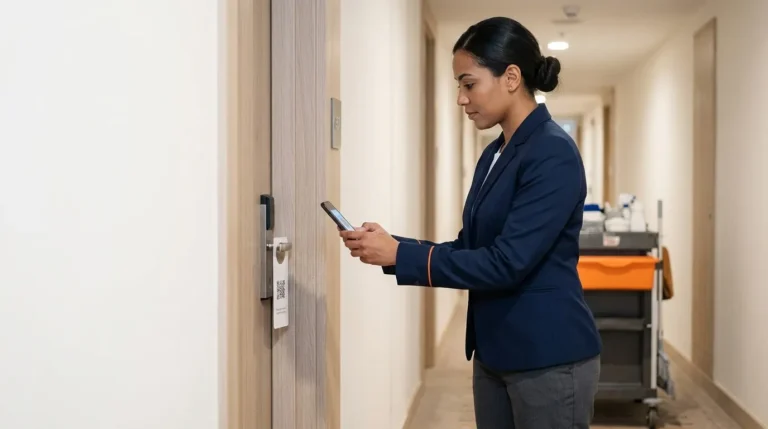
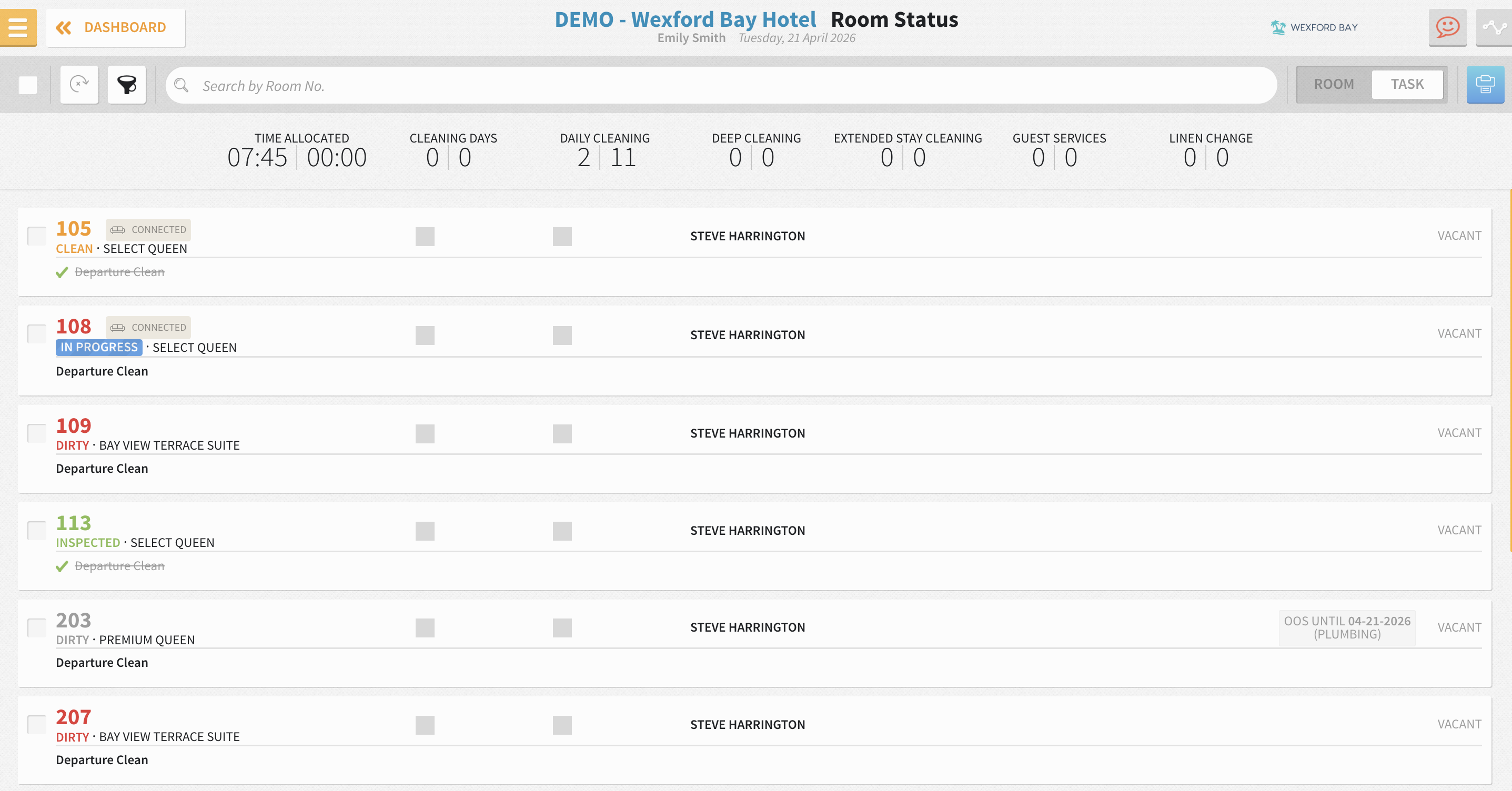
Start with the paper room board. It becomes a live digital view that updates the moment an attendant marks a room complete, which means the front desk no longer needs to radio housekeeping to ask whether a room is ready. Status pushes automatically in real time. Supervisors get the same benefit. Instead of walking the corridors to see what has been done, they open a mobile dashboard showing every room’s status by floor and section from anywhere on property. The phone call from the front desk to housekeeping asking whether a specific room can be assigned to an early arrival turns into a live room-status feed that answers the question before anyone calls.
A room could traditionally sit marked dirty for 15 to 30 minutes after an attendant finished, because status updates depended on phone calls or manual entry. In an integrated setup, the PMS updates to vacant-ready the moment the attendant taps complete on a mobile device.
Stayntouch’s Mobile Housekeeping module operates natively inside the PMS. Housekeepers update room status from the room itself, post minibar charges with fast-posting, and check out zero-balance guests directly. Managers assign work by floor or section and see progress live. They can also assign tasks forward in time, so a manager staffs tomorrow against tomorrow’s expected departures instead of reacting on the day. According to Stayntouch customer data, hotels report a 25% increase in housekeeping productivity after implementation.

How To Measure Housekeeping Productivity In A Hotel
Those mechanisms sound promising, and operators need proof that they work. Vendor claims about productivity gains only matter when they tie to clear metrics. To test those claims, track five metrics before and after any software change. Together they separate real efficiency gains from speed that quietly erodes quality.
-
Labor minutes per occupied room: Total housekeeping labor minutes divided by occupied rooms for the period. Typical full-service benchmarks run 22–28 minutes per occupied room. The metric can be broken out by shift and by individual staff member to surface outliers.
-
Labor minutes per departure room: Total housekeeping labor minutes divided by departure rooms only. This metric gives the most precise signal of checkout-clean efficiency, because departure rooms carry the heaviest workload.
-
Room turnaround time (departure to inspected and sellable): The elapsed time from a guest checking out to the room being marked inspected and available for the next arrival. Integrated PMS-to-task-manager workflows can cut average room turnover time by 15–20 minutes compared with manual coordination.
-
Inspection pass rate: The percentage of rooms that pass supervisor inspection on the first attempt. The target re-clean rate is under 5%. Higher rates signal training gaps or insufficient time allocation per room type.
-
Workload variance by attendant: The spread between the highest and lowest labor minutes per room across individual attendants. Closing the gap between a hotel’s best and worst housekeepers by even 3 minutes per room compounds into significant savings at volume.
The metric “rooms cleaned per shift” appears often and misleads operators. It ignores room type, departure versus stayover status, and the fact that a stayover room takes 10 to 15 minutes to service versus 30 to 45 minutes for a checkout clean. A suite or a long-stay room takes materially longer than a standard stayover. Rooms-per-shift rewards easy inventory rather than real productivity. An attendant assigned five checkout rooms carries a completely different workload than one assigned five stayover rooms with the same room count.
Track these metrics before and after any software change. The first signal appears in faster room status propagation, because the front desk learns about clean rooms sooner. Over the next one to two months, the stronger signal appears in lower labor minutes per departure room without a drop in inspection pass rate. When inspection pass rate falls as turnaround time improves, the configuration creates speed at the cost of quality. That pattern signals a setup problem rather than a true productivity gain.
Automated Room Assignment And Credit Systems
Points-based credit systems assign each room type a weighted credit value rather than counting rooms as equal units. The system balances total credits across attendants, so a housekeeper assigned three suites and four stayovers carries a comparable load to one assigned eight standard checkout rooms. On paper the room counts differ, but the actual work stays balanced.
Scoring criteria typically include four factors: room type, room status (a checkout clean scores higher than a daily service clean), additional tasks such as adding a cot or preparing a VIP room, and logistical factors such as movement between floors. A housekeeping manager sets a shift threshold, for example 450 credits, and distributes rooms until each attendant reaches that threshold in a balanced way.
Naive credit systems fail in predictable ways. Static point values can understate the true time burden of suites and long-stay rooms. Operators who calibrate credit values from observed median clean times often find certain room types take 20–30% longer than the schedule assumed. That gap silently overloads the attendants assigned to those rooms. When credit values do not reflect actual time burden, attendants learn to avoid suites and long-stay rooms. The early warning sign appears when those room types are consistently assigned late or skipped.
Effective configuration uses several principles. Weight credits by room type and by departure versus stayover status. Allow supervisors to override assignments when operational reality demands it. Use automated assignment by floor or section to reduce walking time between rooms. Apply forward task assignment, which schedules tomorrow’s work against tomorrow’s expected departures, so managers staff proactively rather than reacting on the day. Hotels should never assign more than 80% of a cleaner’s shift to tasks. That buffer preserves time for breaks, restocking, and unexpected issues. Full utilization appears efficient on paper and creates bottlenecks on any day that does not go exactly to plan.
PMS-Native Housekeeping Vs. Standalone Housekeeping Platforms
Housekeeping functionality lives in two distinct architectures, and the choice between them shapes daily operations.
A housekeeping module built natively inside the PMS, as Stayntouch’s Mobile Housekeeping module is, keeps room status updates instant for the front desk and the guest-facing check-in flow because all data lives in the same system. Because all data stays in one place, housekeeping and the front desk always see the same room status, with no third-party integration to maintain and no sync delay to reconcile. The most important integration question for any housekeeping tool is whether the connection is real-time and two-way or batched and polling. A native module removes that concern.
Standalone specialist platforms go deeper on task management, predictive scheduling, inspection workflows, and analytics than most native PMS modules. They connect to the PMS through an API (application programming interface, the standardized connection two software systems use to exchange data). The platform pushes status changes back while pulling room assignments and checkout data from the PMS. The main trade-off centers on feature depth. Specialist platforms typically add capabilities that native modules rarely match, and they add cost and another integration to maintain.
Stayntouch runs housekeeping natively inside the PMS and also integrates with specialist platforms. Integrations with these platforms carry no per-interface fee from Stayntouch. Users still pay each third-party platform its own platform fee, while Stayntouch charges nothing for the integration itself. Hotels that want deeper task management or predictive scheduling from a specialist platform can have it and still keep the real-time PMS sync that makes room status reliable for the front desk.
Talk To Us About Native Housekeeping
Why Housekeeping Productivity Gains Stall After Go-Live
Housekeeping productivity gains often disappear after implementation because of configuration, adoption, and ongoing management choices. Three failure modes account for most post-go-live stalls.
-
Over-Assignment. The system or supervisor loads an attendant past what the shift can absorb. Quality drops, inspection failure rates rise, and the productivity metric improves on paper while the guest experience deteriorates. Over-assignment produces hidden productivity failure because the schedule can appear efficient while room quality quietly deteriorates. The early warning sign is a rising inspection failure rate alongside faster turnaround times. Corrective action includes adjusting credit thresholds, building in shift buffers, and treating the inspection pass rate as a co-equal metric alongside turnaround time.
-
Credit Systems That Penalize Slow Room Types. When credit values do not reflect the actual time burden of suites and long-stay rooms, attendants avoid those room types because completing them puts them behind on total credits. Static point values in credit-based scheduling can understate the true time burden of suites and uneven room types. The early warning sign is suites and long-stay rooms consistently assigned late or skipped. The correction is to recalibrate credit values based on observed clean times, logged via mobile task check-in and check-out over roughly a month of real operational data.
-
Adoption Collapse. Supervisors quietly return to the paper board or the radio because the software never matched how the property actually runs. A property champion receives training and resigns, no one else knows the system, resistance spreads, and months of negativity follow, leaving the system present but not operational. The early warning sign is staff using personal radios or paper notes alongside the system. The correction is to involve supervisors in configuration before go-live, provide ongoing training, and keep the system’s purpose clear. Automation exists to return staff to guests and to support them.
Housekeeping Priorities By Property Size
Housekeeping productivity gains compound with room count and with the number of properties, because a single live room-status view replaces more coordination work at scale. At a 75-room property, eliminating radio calls and paper boards saves meaningful time each shift. Across a 20-property portfolio, the same real-time status propagation eliminates coordination overhead at every property simultaneously. A manager can see housekeeping progress across the entire group from one dashboard.
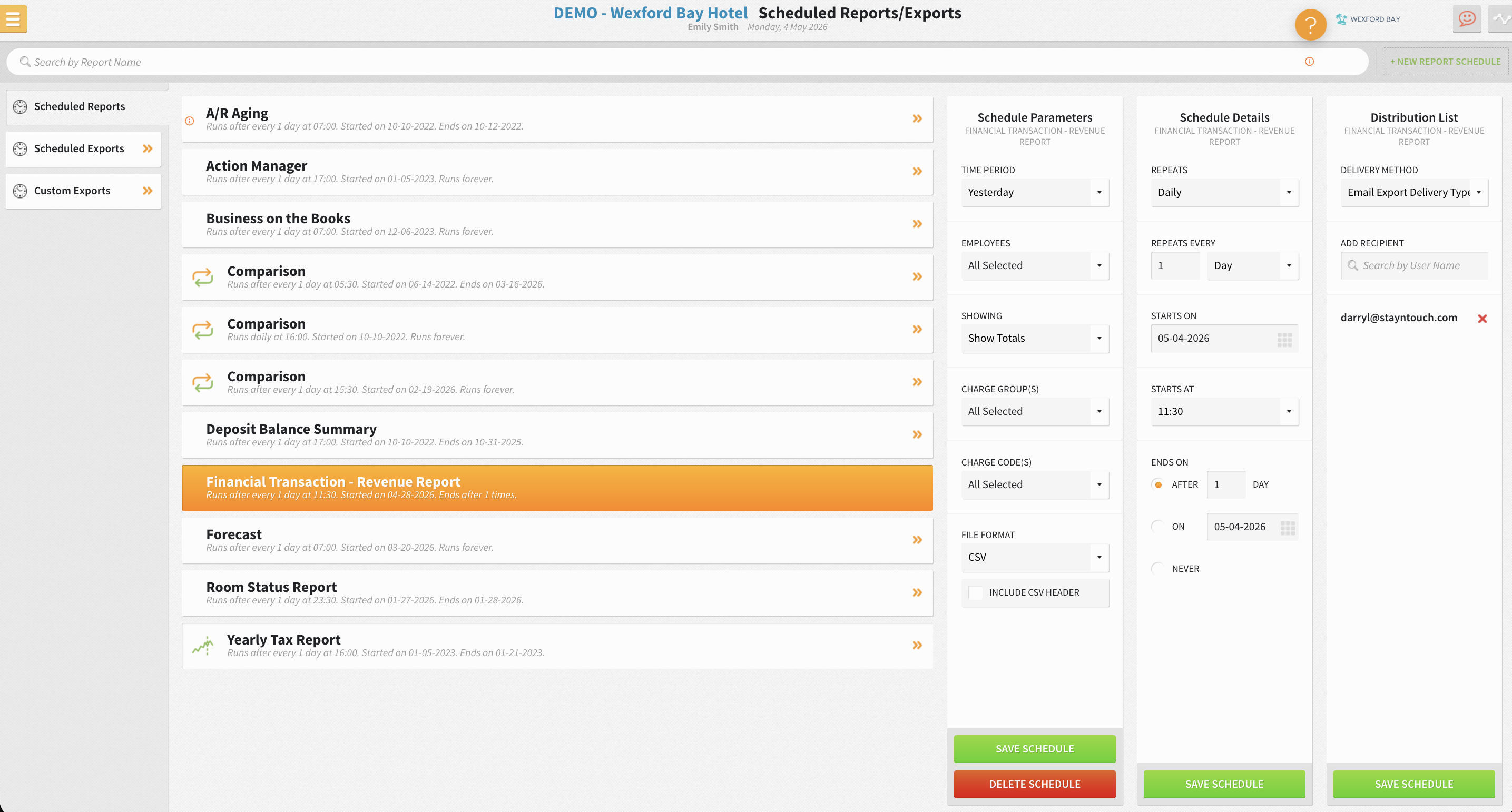
Stayntouch is built for larger properties, multi-property groups, and management companies, and it also works with hotels of all sizes, including those under 75 rooms. The multi-property dashboard shows live occupancy, available rooms, and housekeeping status across the portfolio. Central configuration can be pushed to every property from the same view. According to Stayntouch customer data, multi-property management runs 70% more efficiently from a single login. For a rooms division leader managing multiple properties, that efficiency gain starts in housekeeping, the department where coordination work is heaviest and the cost of delay is most visible in the revenue line.
Explore Multi-Property Housekeeping With Stayntouch
Frequently Asked Questions
Does Housekeeping Software Integrate With My PMS?
Yes. Stayntouch offers a native Mobile Housekeeping module built directly inside the PMS, so room status updates propagate instantly to the front desk with no third-party integration required. For hotels that want deeper task management, predictive scheduling, or inspection workflow capabilities, Stayntouch also integrates with specialist platforms including Optii, hotelkit, Knowcross by Unifocus, Amadeus HotSOS, Breezeway, and Alice. Stayntouch charges no per-interface fee for these integrations. Each third-party platform carries its own platform fee, and the connection to Stayntouch is included.
How Long Does It Take Front Desk Staff To Learn The System?
Front desk staff are fully trained on Stayntouch PMS in 2 hours. Full platform training across all modules takes 2 days. Stayntouch Academy provides self-paced eLearning with role-based learning paths, test environments, certifications, and progress tracking, so new hires can onboard without scheduling a trainer. Because the system is designed to be learned quickly, hotels can hire for guest-facing ability rather than technical aptitude. That flexibility matters in an industry where annual housekeeping turnover frequently exceeds 50%.
Can I Keep My Existing Housekeeping Specialist Platform?
Yes. Stayntouch integrates with Optii, hotelkit, Knowcross by Unifocus, Amadeus HotSOS, Breezeway, and Alice, with no per-interface fee from Stayntouch. If your current specialist platform delivers value in task management, predictive scheduling, or inspection workflows, you can keep it connected to Stayntouch PMS and still benefit from real-time room status sync.
What Is The Fastest Way To See Whether Productivity Improved?
Track labor minutes per departure room and inspection pass rate before and after implementation. Labor minutes per departure room isolates the heaviest workload category rather than blending it with lighter stayover cleans. Inspection pass rate confirms that faster turnaround maintains quality. These two metrics give a quick read on whether configuration supports both speed and standards.
Why Do Productivity Gains Sometimes Disappear After Go-Live?
The three failure modes covered earlier, over-assignment, mis-calibrated credit values, and adoption collapse, usually explain post-go-live stalls. Each issue stems from configuration and management choices rather than software defects. Each one can be corrected with the right data, clear thresholds, and ongoing attention after go-live.
Read Next
Turn a more connected stack into a better stay.
See how Stayntouch can support the operating moments that matter most to your hotel team.