Written by: Kelly Campbell, Vice President of Marketing, Stayntouch
Key Takeaways
- Manual communication via radios, paper logs, and phone calls creates costly delays in room status updates that directly affect guest satisfaction and revenue.
- A cloud-native PMS uses a four-tap status sequence that removes manual handoffs and keeps housekeeping and front desk views in sync.
- Six specific pain points—paper delays, missed early check-ins, lack of VIP prioritization, maintenance handoff delays, stale PMS data, and high training costs—drive the communication gap between departments.
- Stayntouch PMS delivers instant status updates, forward task assignment, VIP flagging, photo-based maintenance logging, and full platform training in just 2 days to solve these operational challenges.
- Book a demo to see how Stayntouch replaces radios, paper, and phone calls with live two-way sync across your property.
The Four-Tap Status Sequence in Stayntouch PMS
A cloud-native PMS with mobile housekeeping moves a room from occupied to ready for the next guest through four clear actions, with no radio calls, paper slips, or phone relay required:
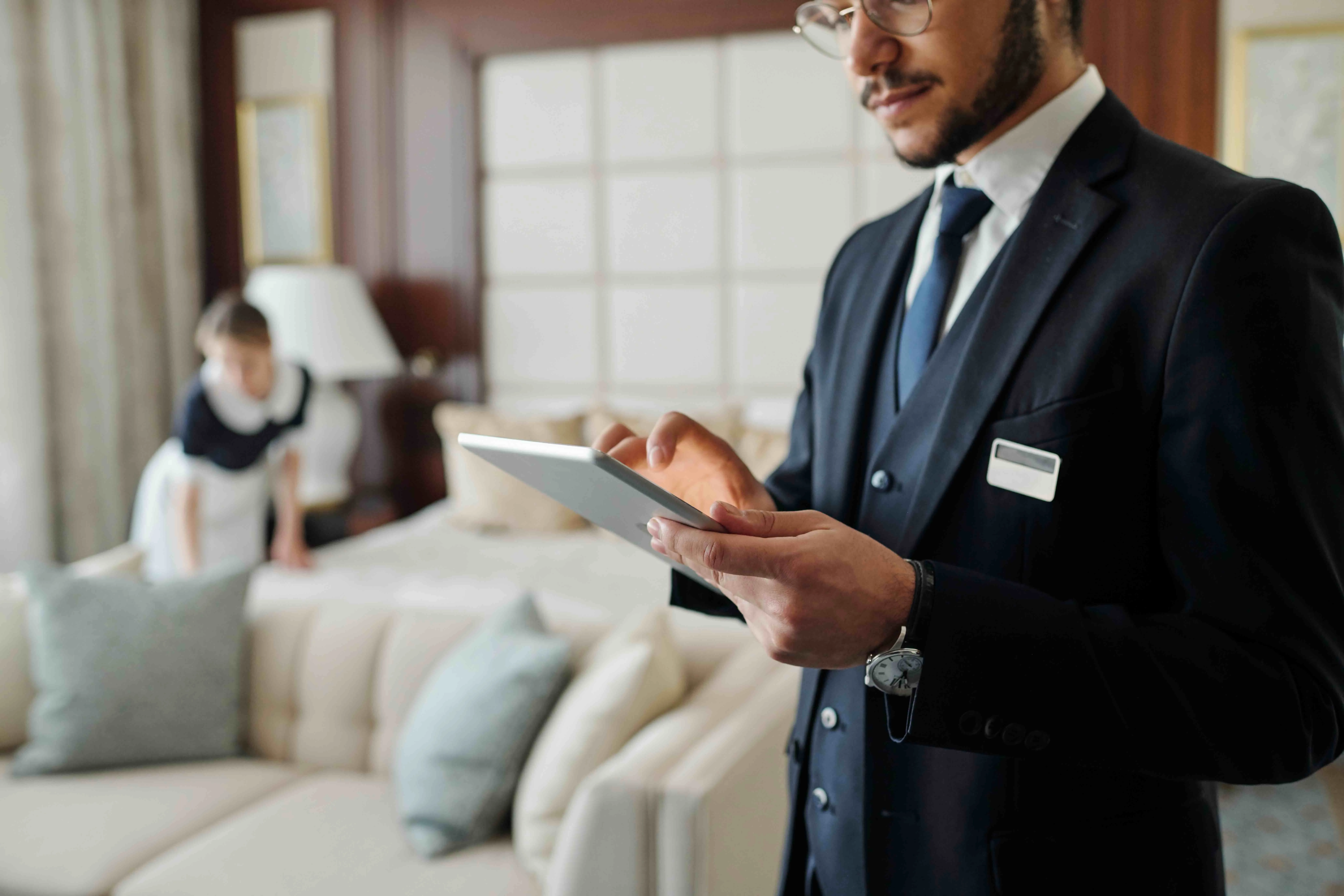
- Checkout triggers the status flip. When the front desk closes a guest folio (the guest’s running bill for the stay), the room status changes automatically to dirty on every housekeeper’s mobile device.
- The housekeeper claims and cleans the room. The attendant opens the task on their phone, works through a mobile checklist, and logs any minibar charges or maintenance issues with photos directly in the system.
- A supervisor inspects and signs off. The inspector reviews the room and marks it passed in the PMS from their own device.
- The front desk sees the room as available instantly. No re-keying and no phone call. The room appears ready to assign the moment inspection is complete, including for guests who paid for early check-in.
This sequence forms the operational core of real-time front desk and housekeeping communication. The next sections explain how manual processes break down and how each step in this sequence maps to a specific Stayntouch capability.
The Problem: Six Gaps Between Housekeeping and Front Desk
Six distinct pain points create a gap between what housekeeping knows and what the front desk sees. Each carries a measurable cost.
1. Paper and radio delays. Manual PMS updates via phone calls, walk-ups, or paper logs create delays in room status updates. Status is accurate only at the moment it is written and visible only in one location. Within minutes of each shift starting, the front desk and housekeeping work from different versions of reality.
2. Early check-in and arrival flagging. Without live room status, the front desk cannot see which rooms will be ready first for arriving guests. Early-arrival guests wait in the lobby while inspected rooms sit unassigned. Properties that charge for early check-in lose revenue and damage the guest experience.
3. Rush and VIP prioritization. Paper logs and radios do not support real-time priority routing for VIP or early-arrival rooms. A housekeeper working from a printed list has no way to know that the guest in room 412 is a VIP whose room should be turned first.
4. Maintenance handoff delays. In most hotels, the handoff between housekeeping and maintenance relies on verbal reports, paper chits, radio calls, and front desk relay, resulting in an average 2.4-hour delay between fault detection and engineer dispatch. 41% of maintenance-related guest complaints stem from delayed or lost inter-department communication.
5. No two-way PMS sync. Without PMS status sync, housekeeping software requires a human to re-key status between two screens. Because this re-keying happens manually, often minutes or hours after the actual status change, the shared board becomes stale. The front desk availability view then drifts from reality with every manual step that is skipped or delayed.
6. High-turnover training costs. In U.S. hotels, labor costs per occupied room have climbed since 2021, while the U.S. quit rate in accommodation and food services reached 4.3% in March 2026, close to double the 2.2% private-sector average. A housekeeping system that takes weeks to learn becomes a permanent operating cost every time a new attendant joins.
The Solution: Live Two-Way Sync in a Cloud-Native PMS
Stayntouch PMS addresses each of these six pain points through features built directly into the platform, not bolted on as a separate module.

Instant status propagation. Room status updates from housekeeping staff appear across the system the moment they are entered on a mobile device. The front desk sees a room become available the moment it passes inspection. According to Stayntouch customer data, this real-time visibility contributes to a 25% increase in housekeeping productivity.
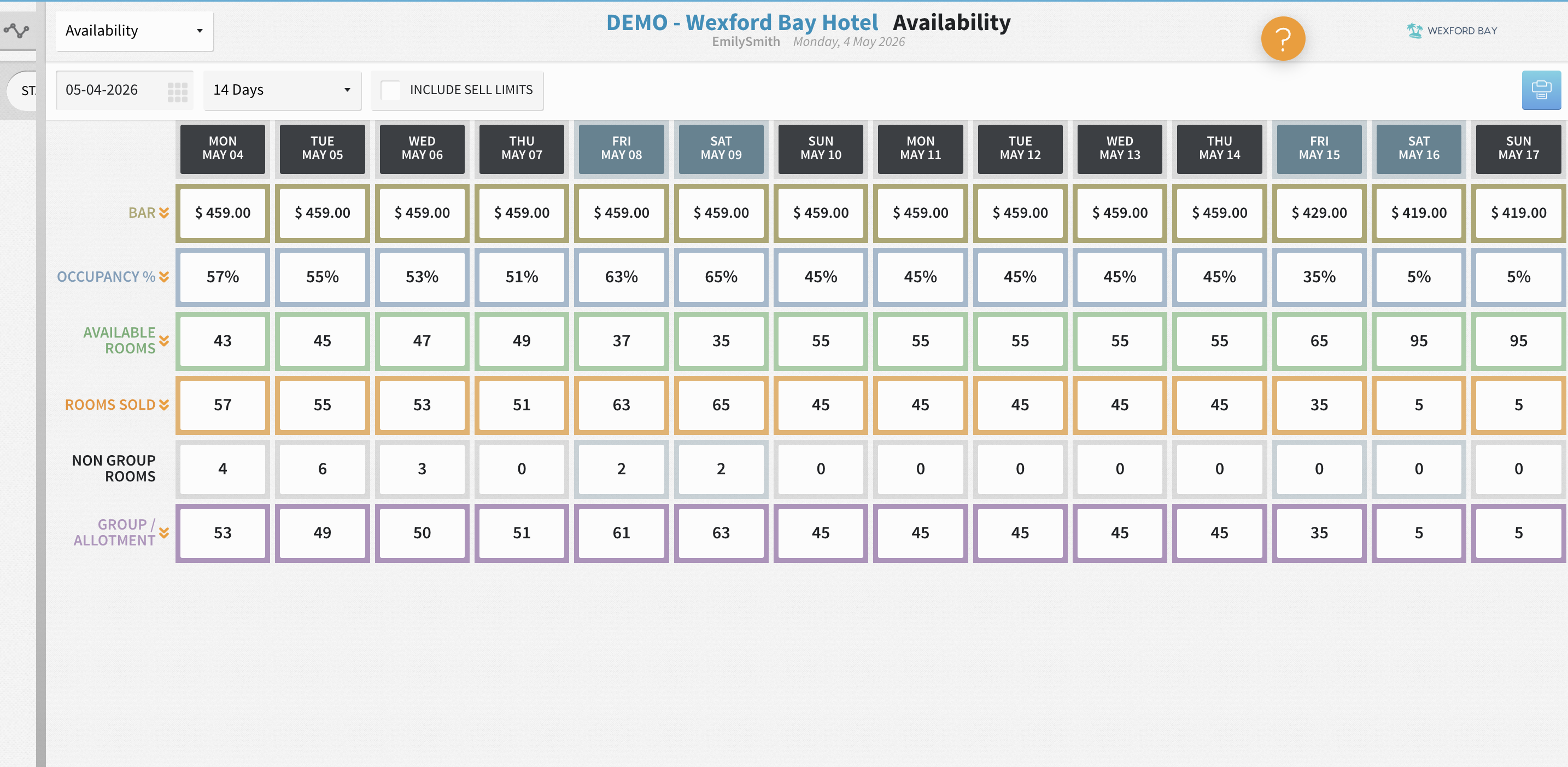
Forward task assignment. Tasks can be assigned ahead of time based on expected departures, not just current room state. A housekeeping manager can staff tomorrow’s shift against tomorrow’s departure list rather than reacting on the day. This forward planning eliminates the daily scramble to rebuild schedules, which is why integrated PMS-to-task workflows reduce administrative time by approximately 50%, even though they do not remove every manual step.
VIP and rush flagging. Priority flags for early arrival, VIP status, and late checkout display automatically on the housekeeper’s device. No radio call is needed to communicate that a room should be turned first.
Photo-based maintenance logging. Attendants photograph and log maintenance issues directly in the PMS from the room. The report reaches the relevant team immediately, with a record attached to the room’s history. This removes the paper chit that might sit at the front desk for hours.
Full platform training in 2 days. Stayntouch trains staff on the full platform across all modules in 2 days. In a high-turnover industry, that means a new hire is productive on their first shift and the training clock resetting does not become a recurring productivity loss. Stayntouch Academy provides self-paced eLearning with test environments, certifications, and progress tracking so onboarding does not depend on scheduling a trainer.
Reduction in room turnover time. Real-time room status updates from digital checkout in a PMS can automatically notify housekeeping via mobile devices and adjust cleaning priorities based on incoming arrivals, reducing room turnover time.
Book a demo to see Stayntouch mobile housekeeping and live two-way sync in action.
Real-Time Communication Workflow in Daily Operations
The four-tap sequence introduced earlier serves as a framework. The steps below show how that sequence runs inside Stayntouch PMS across a full room cycle, from checkout to the next guest’s arrival, without any manual re-keying between systems.
- Guest checks out. The front desk closes the folio. The room status flips automatically to dirty on every housekeeper’s mobile device assigned to that floor or section.
- Task assignment fires automatically. The system assigns the room to the nearest available attendant based on active workload. Priority level is set by time until the next check-in: urgent if under two hours, high if two to four hours, and normal if over four hours.
- Attendant cleans and updates in the room. The housekeeper works through a mobile checklist, posts any minibar charges directly to the departing folio, and photographs any maintenance issues. Start and end times are logged automatically.
- Supervisor inspects and signs off. The inspector reviews the room and marks it passed on their device. The room status changes to available at the same time across the PMS and the front desk view. No phone call or re-keying is required.
- Front desk assigns the room. The moment the room passes inspection, it appears available for assignment. A guest who paid for early check-in can receive a key immediately. A VIP arriving in 30 minutes can be confirmed into a specific room before they reach the lobby.
- Maintenance requests route directly. Maintenance requests route in parallel with the cleaning workflow. Any fault logged by the housekeeper during cleaning routes immediately to the engineering team’s device, with the room flagged as out of order (OOO, removed from sale) or out of service (OOS, temporarily withheld) until the repair is confirmed complete.
Technology Comparison for Front Desk–Housekeeping Sync
The table below compares three categories of hotel technology on the dimensions that matter most for front desk and housekeeping communication. All Stayntouch figures are from Stayntouch customer data or published platform specifications. Third-party figures are cited inline.
| Dimension | Legacy tools (radios, paper, phone) | All-in-one platforms | Stayntouch (best-in-class PMS) |
|---|---|---|---|
| Room status delay | Minutes to hours (manual update via phone or radio) | Seconds to minutes (depends on sync interval and vendor implementation) | Instant (status propagates the moment the attendant updates their device) |
| Mobile access for housekeeping | None (status lives on paper or whiteboard) | Available on some platforms, with workflow depth varying by vendor | Full mobile housekeeping with task lists, photo logging, minibar posting, and live status sync |
| Integration cost | Not applicable | Legacy enterprise integrations can cost as much as $10,000 each | 1,400+ integrations at no extra cost from Stayntouch; each third-party platform charges its own platform fee |
The 2026 Hotel Technology Outlook, produced by the NYU SPS Jonathan M. Tisch Center of Hospitality with Stayntouch and IDeaS (300+ hotel professionals, November 2025), found that 30% of all-in-one users intend to move to best-in-class solutions, against 14% moving the other way. PMS satisfaction among best-in-class users stands at 70%, compared with 55% among all-in-one users. All-in-one users report check-in delays at 46% versus 23% for best-in-class users.
Frequently Asked Questions
How much does real-time housekeeping sync actually improve productivity?
According to Stayntouch customer data, properties using Stayntouch PMS with mobile housekeeping see a 25% increase in housekeeping productivity. The mechanism is straightforward: when attendants update room status from the room itself rather than walking to a supervisor station or calling the front desk, cleaning time is spent cleaning rather than communicating. Forward task assignment, which schedules tomorrow’s rooms against tomorrow’s expected departures, means supervisors spend less time rebuilding schedules on the day and more time on quality inspection. The result is more rooms turned per shift, with fewer guests waiting in the lobby for rooms that are already ready.
How long does it take to train housekeeping and front desk staff on Stayntouch?
The training times cited earlier, 2 hours for front desk staff and 2 days for the full platform, reflect a deliberate design choice. Stayntouch Academy provides role-based, self-paced eLearning with test environments, certifications, and progress tracking, so a new housekeeper or front desk agent can onboard without scheduling a trainer, and a manager can verify who has completed what. Because the system is designed to be learned quickly, hotels report being able to hire for guest-facing ability rather than technical aptitude, which matters significantly in an industry where annual turnover runs near 70% in the United States.
What happens to maintenance requests that housekeeping identifies during cleaning?
In Stayntouch PMS, housekeeping attendants log maintenance issues directly from their mobile device while in the room, including photo documentation. The request routes immediately to the relevant team without passing through the front desk as an intermediary. The room can be flagged as out of order (OOO, removed from sale entirely) or out of service (OOS, temporarily withheld from assignment) until the repair is confirmed, which prevents the front desk from assigning a room with an unresolved fault. This removes the paper chit and radio relay that, in traditional setups, can delay engineer dispatch by hours and cause the same faults to recur because no repair history is tracked.
Does Stayntouch integrate with existing housekeeping and facilities management tools?
Stayntouch connects with 1,400+ integrations at no extra cost from Stayntouch. Each third-party platform charges its own platform fee, but Stayntouch charges nothing for the integration itself. Housekeeping and facilities management integrations include Amadeus HotSOS, Knowcross by Unifocus, Optii, Breezeway, hotelkit, Nuvola, Operto, and Snapfix, among others. For properties that want to run a dedicated housekeeping operations platform alongside the PMS, the two-way sync ensures that status updates in either system appear in the other in real time, keeping the front desk view current without manual re-keying.
How does Stayntouch handle high staff turnover in housekeeping departments?
Stayntouch is designed around the reality of hotel turnover. The mobile housekeeping interface focuses on simplicity, so attendants update room status, log minibar charges, and report maintenance issues from their phone without navigating complex menus. Stayntouch Academy provides self-paced eLearning so new hires can onboard independently, and role-based learning paths mean a housekeeper trains only on the parts of the system they actually use. The 2-hour front desk training figure and the broader 2-day full platform training support a model where a new hire is productive on their first shift instead of spending weeks in training.
Conclusion: Turn Every Room Status Update into Revenue
Radios, paper logs, and phone calls between front desk and housekeeping are not just inconvenient; they create a measurable revenue leak. The six pain points covered in this article, manual status delays, missed early check-ins, absent VIP prioritization, slow maintenance handoffs, stale PMS data, and constant retraining, each carry a documented cost. A cloud-native PMS with live two-way sync addresses all six through a single platform that housekeeping staff update from the room, supervisors inspect and sign off on from their device, and the front desk sees in real time.
According to Stayntouch customer data, the outcomes are concrete: a 25% increase in housekeeping productivity, front desk training completed in 2 hours, and room status that updates the moment an attendant taps their phone, not after a significant delay. The 2026 Hotel Technology Outlook confirms the direction of travel. It reports that 51% of hotel professionals plan to replace or upgrade their technology stack within the next 12 to 24 months, and best-in-class PMS users report half the check-in delays of all-in-one users.
Every room status update is a signal. In a manual system, that signal arrives late, passes through multiple people, and sometimes never arrives at all. In Stayntouch, it arrives instantly, and the front desk can act on it before the guest reaches the lobby.
Read Next
Turn a more connected stack into a better stay.
See how Stayntouch can support the operating moments that matter most to your hotel team.