Written by: Kelly Campbell, Vice President of Marketing, Stayntouch
Key Takeaways for Your Housekeeping Operation
- Paper housekeeping lists create costly information lag, so front-desk staff wait for manual status updates that delay room readiness and guest check-ins.
- The four-metric ROI test measures daily time loss across room-turn minutes, radio calls, room-readiness rates, and ADR impact to show when digital housekeeping becomes cheaper than paper.
- Properties with 30–75 rooms and moderate turnover usually reach the break-even point where digital housekeeping saves 4–6+ hours of labor daily and reduces guest complaints.
- Stayntouch’s PMS-integrated mobile housekeeping delivers a 25% productivity increase by removing coordination overhead and giving the front desk instant room-status updates.
- Ready to calculate your property’s savings? Contact Stayntouch to run the four-metric ROI test and see real-time housekeeping in action.
Run the Four-Metric ROI Test in Under Five Minutes
The table below compares paper-based and software-based housekeeping across the four metrics that drive daily time loss. Every figure comes from third-party operational research. Use the right-hand column to plug in your own numbers.
| Metric | Paper Lists | PMS-Integrated Software | Your Property |
|---|---|---|---|
| Minutes lost per room turn (status relay, radio calls, front-desk walks) | 8–12 minutes per room | Near zero, status updates instantly | _____ min × _____ rooms |
| Radio calls or phone contacts per shift (housekeeping to front desk) | Multiple per room, cleaners call or text when each room finishes | Eliminated, cross-department communication improves | _____ calls/shift |
| Rooms turned per day at standard check-in time (room readiness rate) | 58–72% ready at check-in time (67% average) | Higher readiness at check-in time | _____% today |
| Average daily rate (ADR) impact from delayed room assignment (guests waiting, complaints, reviews) | Room cleanliness drives positive reviews, delays erode scores | Higher guest satisfaction, fewer operational errors | ADR: $_____ |
To calculate your daily time cost, start by converting minutes to hours. Multiply the minutes lost per room turn by the number of rooms turned on a typical day, then divide by 60. This gives you the total hours lost to coordination overhead.
Next, translate those hours into dollars by multiplying by your average housekeeping or front-desk labor rate. That final figure represents what paper lists cost your property every single day, before you even factor in ADR impact or guest complaints.
Hotel operators who work through this calculation on forums and in industry communities describe the same frustration. The radio calls are not just slow, they interrupt every other task. A front desk agent fielding status calls every few minutes cannot give full attention to the guest standing at the desk. Digital housekeeping systems remove those calls by pushing room status changes to the front desk the moment a housekeeper marks a room complete on their mobile device.
Six Daily Pain Points Operators Feel with Paper Lists
Real-time status versus physical list walks. A paper list is a snapshot printed at shift start, and it becomes outdated within 30 minutes. Every room turned after that moment exists only in the housekeeper’s head until someone physically relays the update. Digital housekeeping inside a property management system (PMS), the core software a hotel runs on, flips room status the moment inspection passes and gives the front desk a live view with no lag.
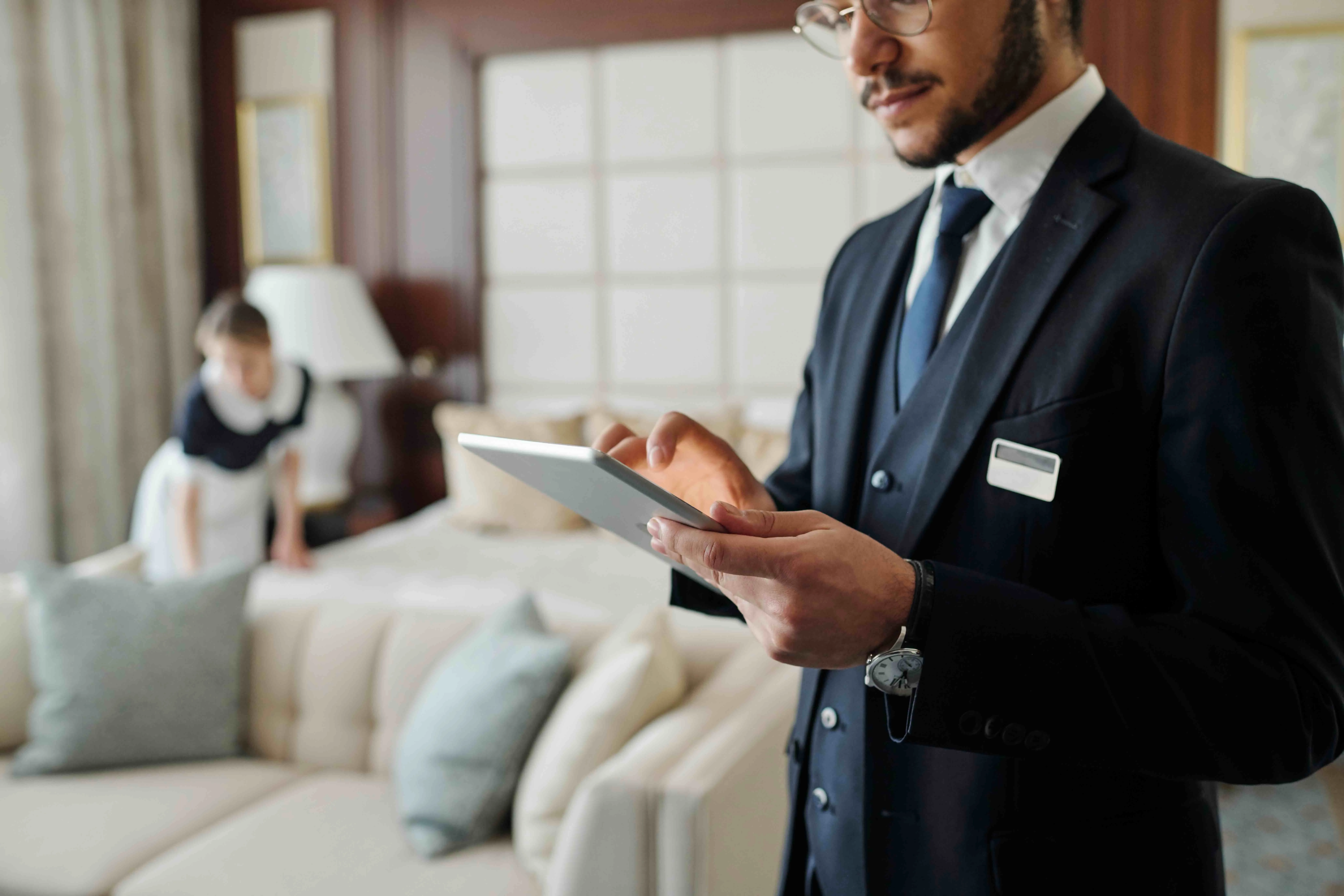
Communication friction between housekeeping and front desk. Housekeeping managers often spend one to two hours per day on room assignment, quality checks, and back-and-forth with the front desk when digital processes are absent. That time is recoverable. According to Stayntouch customer data, mobile housekeeping inside the PMS delivers a 25% increase in housekeeping productivity by removing the coordination overhead that paper creates.

Maintenance issue tracking that paper loses. A housekeeper who notes a broken fixture on a paper list creates a record that lives on one sheet, in one location, for one shift. Digital shift logbooks reduce maintenance escalation response times by automatically generating work orders from housekeeping entries. Paper cannot trigger that workflow.
Training and adoption reality. Industry estimates put annual U.S. hospitality turnover near 70%. Every new housekeeper trained on a paper system learns a process that does not transfer to other roles. Digital housekeeping tools with visual mobile interfaces often require only 15–30 minutes of training, which matters when the training clock resets constantly.
Integration friction with existing PMS. A standalone paper process cannot connect to anything. A digital housekeeping module inside the PMS automatically flips a room to dirty at checkout and to ready after passed inspection. The front desk availability view stays current without manual re-keying. That connection creates the operational difference between departments working from one live view and two versions of the truth.
Small-property versus mid-size tipping points. A 15-room hotel can often keep using paper lists successfully when operations run smoothly off a single one-page printed list. The value of digital tools grows once room count, floors, or turnover volume create repeated information lags. A 40-room independent hotel often gets what it needs from a real-time housekeeping module bundled inside a guest-experience platform it already runs, rather than a standalone specialist tool. These pain points translate directly into measurable costs, so the next step is to see where paper stops being cheaper.
When Paper Lists Stop Being Cheaper: Property-Size Decision Matrix
The break-even point between paper and digital housekeeping is not a fixed room count. It depends on daily turnover volume, labor rate, and the number of floors that create information lag. The matrix below uses third-party operational data and Stayntouch customer data to show where each approach holds its cost advantage.
| Property Profile | Paper Lists | Digital Housekeeping (PMS-Integrated) | Verdict |
|---|---|---|---|
| Under 30 rooms, low daily turnover, single floor | Low coordination overhead, one printed list manageable | Software cost may exceed time savings at this scale | Paper may still win, evaluate actual time loss first |
| 30–75 rooms, moderate turnover, multiple floors | At the 8–12 min/room rate × 30+ rooms = 4–6+ hours daily, radio calls multiply | Labor savings from removing manual coordination hours each week at $15/hr or higher | Digital becomes cheaper, tipping point reached |
| 75–150 rooms, high turnover, peak-season pressure | Information lag causes guest waits, only 58–72% of rooms ready at check-in time (67% average) | Room turnover up to 30% faster, 30–40% fewer guest complaints about room readiness | Digital clearly cheaper when full labor and ADR costs are included |
For U.S. hotels specifically, hotel wage cost per occupied room rose 12.8% in 2025 to $48.32, with labor cost per hour rising 8.0%. That increase was nearly three times U.S. consumer price inflation of 2.7% over the same period, according to HotelData.com powered by Actabl Hotel Effectiveness (~5,000 U.S. hotels). At those labor rates, the minutes lost per room turn on paper represent a major expense. On a 75-room property with 60 daily checkouts, those lost minutes translate to 8–12 hours of recoverable labor cost every single day.
Run the numbers for your property with a Stayntouch specialist.
Stayntouch Housekeeping: Real-Time Status Inside a Best-in-Class PMS
Stayntouch is a cloud-native property management system built mobile-first for independent hotels, boutique brands, and multi-property groups. The product team focuses entirely on the PMS and its guest-facing surround, rather than spreading effort across revenue management, customer relationship management (CRM), point-of-sale (POS), or central reservation systems. Those specialist tools connect through integrations instead.
Housekeeping in Stayntouch runs on mobile devices with custom task lists and automated assignment by floor or section. Room status updates move across the system the moment a housekeeper marks a room inspected. The front desk sees the update in real time, without a radio call, without a walk, and without a phone. Tasks can be assigned forward in time, so managers staff tomorrow against tomorrow’s expected departures rather than reacting on the day. According to Stayntouch customer data, this setup delivers a 25% increase in housekeeping productivity and removes the information gap that causes lobby waits.
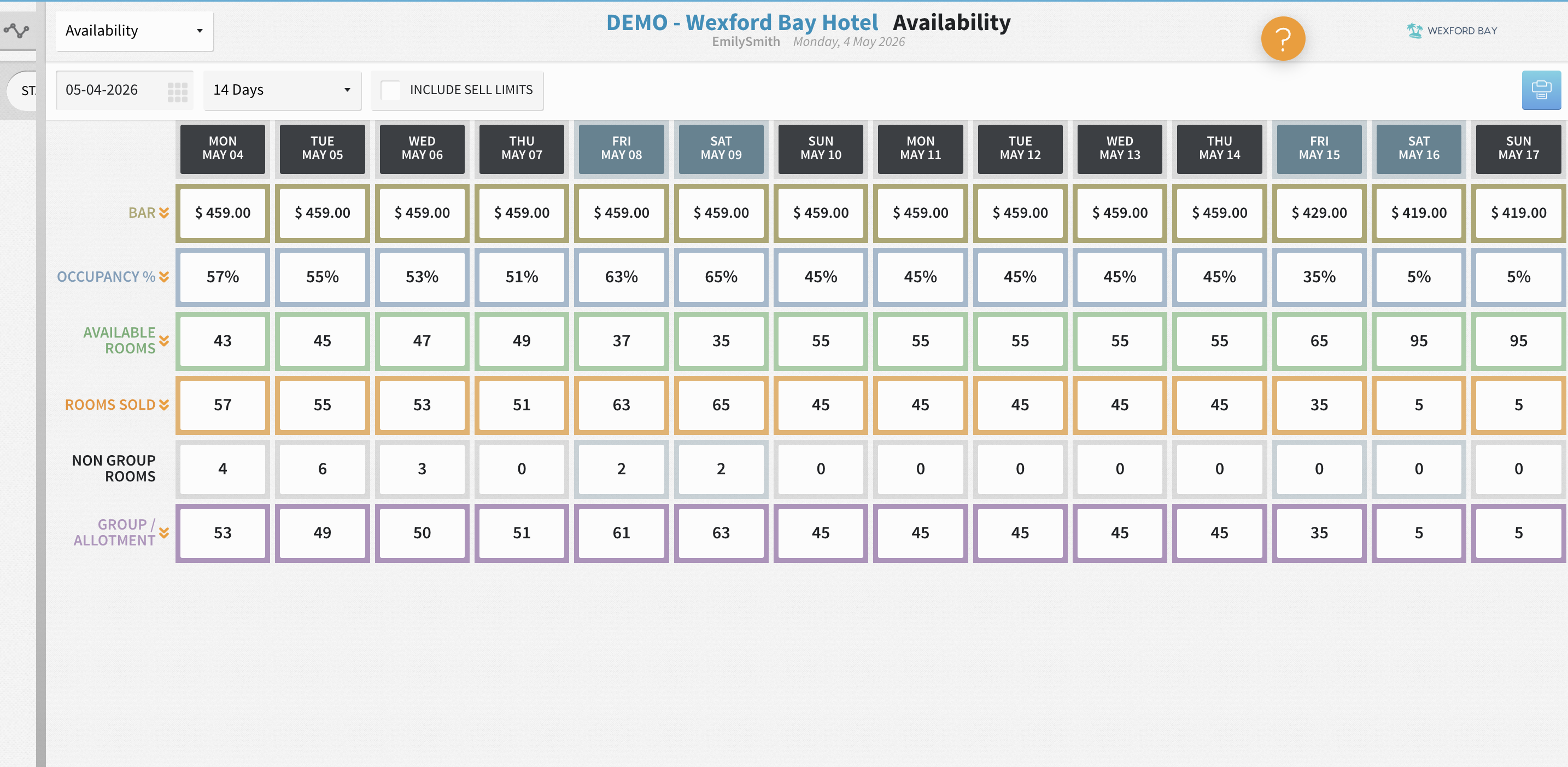
That real-time status connects directly to front-desk, guest-mobility, and accounting workflows. A guest who paid for early check-in receives their room the moment it passes inspection, which turns an operational signal into revenue. Minibar charges post from the room to the guest’s folio, the running bill for the stay, automatically. Housekeepers can check out zero-balance guests directly. The front desk and housekeeping work from one live view, not two versions of the truth.
Stayntouch integrates with 1,400+ systems at no additional cost for the integration itself. Third-party platforms carry their own fees, but Stayntouch charges nothing to connect them. Housekeeping-specific integrations include Optii, Flexkeeping, hotelkit, Knowcross by Unifocus, Breezeway, Operto, Snapfix, and others. The full platform trains across all modules in 2 days, with front desk staff operational in 2 hours, which matters in an industry where the U.S. quit rate in accommodation and food services was 4.3% in March 2026, nearly double the 2.2% private-sector average, according to the U.S. Bureau of Labor Statistics Job Openings and Labor Turnover Survey (JOLTS).
See real-time housekeeping status inside a best-in-class PMS.
Frequently Asked Questions
How long does Stayntouch implementation take?
A single property typically deploys in about one month. A full portfolio configures and goes live in 30 to 45 days. In one customer case, 139 properties across 29 U.S. states migrated in 90 days for a single management company. Implementation can be fully remote, on-site, or a combination, with a dedicated project manager running a structured six-week process from team introductions through go-live preparation. Auto-Configuration reduces property setup from about 30 hours of manual work to 4–5 hours using standardized templates.
How long does full platform training take?
Full platform training across all modules takes 2 days, and front desk staff are operational in 2 hours. The Rate Strategy module, which automates rule-based rate adjustments inside the PMS, trains in about 20 minutes. As noted earlier, the full training timeline is 2 days across all modules with front desk staff ready in just 2 hours, and the self-paced Stayntouch Academy means new hires can onboard without waiting for a scheduled training session. Role-based learning paths, test environments, certifications, and progress tracking support teams that hire for guest-facing ability rather than technical aptitude.
What data migration support does Stayntouch provide?
The Dataloader module migrates legacy guest profiles, group reservations, company and travel agent profiles, and deposit totals in as little as 1–2 hours. For messy legacy exports, the Stayntouch team uses an internal Colab-based file cleanup and validation process to reformat and validate data before migration, rather than rejecting the file. Manual data entry remains available as a fallback when automated migration is not feasible. Certain fields such as group blocks are always created manually regardless of export quality. Non-standard data such as group rooming lists or revenue budgets can be uploaded as CSV files outside the structured Dataloader format.
What is the difference between a best-in-class PMS and a closed all-in-one platform?
A best-in-class PMS dedicates its entire engineering effort to the property management system and its direct surround, including arrival, payment, distribution, and guest communication. It integrates with specialist revenue management, CRM, POS, and central reservation systems instead of building them, so the hotel chooses the right tool in each category rather than accepting whatever the platform provides. A closed all-in-one platform spreads its engineering team across multiple separate disciplines, which limits the depth achievable in any one of them. The 2026 Hotel Technology Outlook, produced by the NYU SPS Jonathan M. Tisch Center of Hospitality with Stayntouch and IDeaS Revenue Solutions (300+ hotel professionals), found that 30% of all-in-one users intend to move to best-in-class solutions, against 14% moving the other way, and that best-in-class users report 70% PMS satisfaction versus 55% among all-in-one users.
Does Stayntouch work for smaller independent hotels?
Stayntouch works with hotels of all sizes, including properties under 75 rooms. The preferred profile is 75 rooms and above, multi-property groups, and management companies, but smaller independent hotels are well supported and receive the same 24/7/365 support with no service tiers and a guaranteed response under one hour. Fit matters more than room count. Stayntouch is built for independent properties, independent hotel groups, and branded properties in the process of deflagging, meaning they are leaving a major brand to operate independently. For very small properties under 30 rooms with low daily turnover, the four-metric ROI test above will show whether the time savings justify the software cost at that specific scale.
Conclusion: Run the Test, Then Contact Us
Paper housekeeping lists carry a daily time cost measured in minutes per room turn, radio calls per shift, rooms not ready at check-in, and ADR (average daily rate, average room revenue per paid occupied room) impact from guest complaints and review scores. The four-metric ROI test in this article gives any general manager or operations leader a framework to calculate that cost for their specific property in under five minutes.
The break-even point for most properties with 30 or more rooms and moderate daily turnover falls well within the first year of switching to PMS-integrated digital housekeeping. Many properties reach that point within the first few months based on labor savings alone, before counting revenue recovered from faster room turns and improved guest satisfaction scores.
Stayntouch delivers real-time housekeeping status connected directly with front-desk, guest-mobility, and accounting workflows inside a best-in-class, cloud-native PMS. The platform’s 1,400+ integrations connect seamlessly, with Stayntouch charging nothing for the connections themselves. The full platform trains in 2 days, and support is 24/7/365 with a guaranteed response under one hour, delivered by hospitality specialists, not a chatbot.
Run the test, then contact us to see what Stayntouch looks like for your property.
Read Next
Turn a more connected stack into a better stay.
See how Stayntouch can support the operating moments that matter most to your hotel team.