
Written by: Kelly Campbell, Vice President of Marketing, Stayntouch
Key Takeaways
- A multi-property hotel management system is a single centralized platform that manages reservations, operations, and reporting across an entire portfolio with shared data rather than duplicated records.
- Running separate single-property PMSs creates costly inefficiencies including lost guest recognition, manual report assembly, repeated configuration work, and missed rate updates.
- Core multi-property capabilities include a centralized dashboard, cross-property reservations, shared guest profiles, central rate and inventory control, and consolidated portfolio reporting.
- The need for multi-property technology emerges when groups share guests, staff, or rate strategy, and it scales with portfolio growth rather than a fixed property count.
- Stayntouch Multi-Property delivers 70% more efficient portfolio management from one dashboard; See how Stayntouch Multi-Property can transform your group operations.
What Is a Multi-Property Hotel Management System?
A property management system (PMS) is the core software a hotel runs on, and front desk and housekeeping staff use it every hour of every shift. A multi-property PMS extends that foundation across an entire portfolio and replaces the separate logins, separate databases, and separate reporting stacks that accumulate when each hotel runs its own system. Operators often call this a “multi-property PMS,” while corporate teams may refer to it as hotel group management software.
The alternative, one PMS per property, means each hotel maintains its own rate and policy configuration, its own guest records, and its own reporting. A revenue manager changing a rate must log into ten systems and hope all ten took. A corporate team assembling a portfolio performance report pulls exports from every property and reconciles them by hand.
A multi-property hotel management system treats the portfolio as one business. That single shift changes three things: configuration is written once and applied across properties, guest data is shared across the portfolio, and performance is visible at the portfolio level without manual assembly.
What Is Multi-Property Management?
Multi-property management is the practice of operating a portfolio as one business rather than as a set of independent hotels that happen to share an owner. The unit of operation shifts from the property to the portfolio, so configuration is written once and pushed down and performance is visible across every hotel without assembling reports by hand. A guest who has stayed at three of your hotels is one guest in the system, with one profile and one history.

What Breaks When a Group Runs Separate PMSs
Fragmented hotel technology shows up as operational costs that compound over time. The scenarios below highlight common drains on staff time, guest satisfaction, and revenue.
- A returning guest treated as a stranger. A loyal guest checks into a sister property. Their stay history, room preferences, and loyalty standing live in a system the other hotel cannot see. The front desk asks whether they have stayed with the group before. They have, three times.
- A group performance report assembled by hand. Before anyone can see how the portfolio performed last month, someone pulls exports from ten separate systems, copies numbers into a spreadsheet, and reconciles the formats. By the time the report is ready, the data is already stale.
- Configuration rebuilt from scratch at every new opening. Rate types, deposit and cancellation policies, charge codes, user permissions, housekeeping task lists, and maintenance reasons are rebuilt property by property. The tenth hotel takes as much configuration effort as the second.
- A rate change entered in ten places. A revenue manager updates pricing for an upcoming demand period. The update has to be applied separately in each property’s system. One property gets missed. The rate parity gap surfaces on an OTA (online travel agency, a third-party booking site such as Booking.com or Expedia) before anyone catches it.
- A new hire retraining on a different system at every property. Staff who cover shifts across locations face a different interface, different workflows, and a different login at each hotel. The training cost compounds with every transfer.
- Night audit and reporting run in isolation. The night audit, the end-of-day process that closes out transactions, posts room charges and taxes, and rolls the system into the next business day, runs separately at each property. There is no portfolio-level view until someone assembles one manually the following morning.
See how Stayntouch Multi-Property eliminates these failure modes across your portfolio.
Core Features of a Multi-Property Hotel Management System
Several capabilities separate a true multi-property platform from a single-property PMS with a portfolio view. Each feature below addresses one or more of the failure modes described above.

- Centralized dashboard. Corporate teams see occupancy, revenue, and daily performance across every property in real time, without logging into each hotel separately. Yesterday’s, today’s, and tomorrow’s numbers for every property appear on one screen.
- Cross-property reservations. Staff can check availability, book rooms, and transfer bookings between locations. A guest at a sold-out property can be moved to a sister hotel without starting a new reservation.
- Shared guest profiles. A guest’s stay history, preferences, and loyalty standing travel with them to a property they have never visited. Front desk teams do not need to re-ask the same questions at check-in.
- Central rate and inventory control. Pricing, packages, and room availability can be updated across the portfolio or scoped to one property. Sell limits (caps on how many rooms may be sold for a given date) and stay restrictions (rules controlling when a rate can be booked, including closed dates, minimum length of stay, and closed-to-arrival or closed-to-departure rules) are applied once rather than repeated per property.
- Consolidated reporting. Teams can run group-wide analytics or drill down into a specific property’s revenue per available room (RevPAR), average daily rate (ADR, average room revenue per paid occupied room), and housekeeping performance without exporting and reassembling data.
When a Portfolio Needs a Multi-Property System
The need for multi-property capability does not switch on at a single property count. Pressure appears when one revenue manager or general manager oversees more than one property from one dashboard, when brand standards must hold across sites without constant policing, when a new opening has to be configured rather than rebuilt from scratch, and when corporate needs portfolio-level reporting that no single property can produce on its own.
A group of two or three properties can already feel the gap if those properties share guests, staff, or rate strategy. The need increases with scale rather than arriving at a fixed threshold.
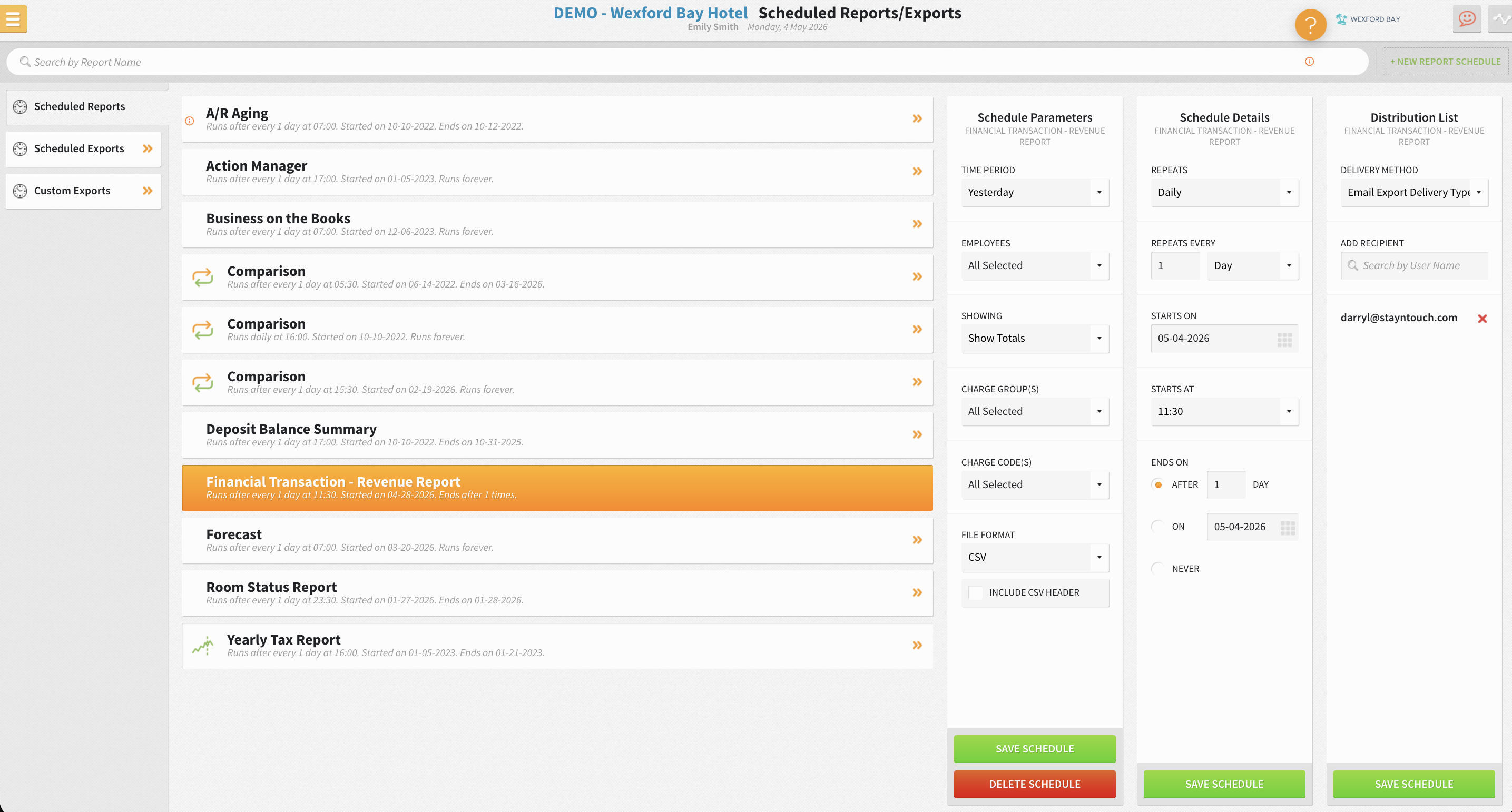
Stayntouch Multi-Property is built for this operating model. According to Stayntouch customer data, Multi-Property management runs the portfolio 70% more efficiently from a single dashboard. It supports shared guest, travel agent, and company profiles across the group, centrally pushed configuration templates, and global contracts and commission handling. Stayntouch manages 100+ properties from a single login. Custom property groups can be organized by region, brand tier, or management cluster. Cobblestone Hotels, one of the fastest-growing U.S. franchise chains, migrated 139 properties, more than 7,000 rooms across 29 states, to Stayntouch in 90 days.
Find out whether your portfolio has reached the threshold and what that efficiency gain looks like for your group.
How to Tell a True Multi-Property System From a Single-Property PMS With a Portfolio View
Feature lists alone rarely reveal whether a platform is truly multi-property. The tests below give you concrete ways to probe architecture and operations during any vendor demo.
- Shared data model versus synced separate databases. Ask whether guest, company, and travel agent profiles are genuinely shared across the portfolio or copied between systems on a schedule. A shared data model means one record exists and every property reads from it. Synced databases create copies that drift apart between sync cycles, so a returning guest who updated their contact details at one property may still appear as a stranger at another.
- Central configuration pushed down versus rebuilt per property. Ask whether rate types, deposit and cancellation policies, charge codes, user permissions, housekeeping task lists, and maintenance reasons can be written once centrally and applied to every property. If each property configures its own, the system functions as a collection of single-property tools rather than a multi-property platform.
- Portfolio-level permissions and single sign-on (SSO). SSO means one login grants access across multiple properties or systems. Ask whether a corporate user can move between properties without a separate login for each. A flexible permission model should support portfolio-level roles for corporate teams and scoped access for property-level staff.
- Portfolio-level reporting without export and reassembly. Ask whether group performance is available natively or whether someone has to pull reports from each property and combine them. Native portfolio reporting signals a true multi-property architecture.
- New-opening templates. Ask whether the tenth hotel opens on a pre-configured template or a blank system. A true multi-property architecture extends an existing operational framework to a new property, while a collection of single-property tools requires a full rebuild each time.
- The vendor’s own portfolio ceiling. Ask the vendor directly what the largest portfolio on their platform looks like today. A system that manages 100+ properties from one login is architecturally different from one that manages only a handful.
Why Multi-Property Capability Is Now a Stack-Strategy Decision
Once you know what to look for in a platform, the remaining question is when to make the change. Multi-property capability is no longer a feature reserved for large chains. It is a core evaluation criterion for any group planning to grow, standardize, or report at the portfolio level. When a portfolio upgrade is already planned, multi-property capability belongs in the same conversation as every other stack decision, and teams should ask about shared data models, central configuration, and portfolio reporting before signing a contract, not after a migration stalls.
Frequently Asked Questions
The questions below address common concerns from operators who are evaluating multi-property technology for the first time.
What Is the Difference Between a Multi-Property PMS and a Single-Property PMS?
A single-property PMS is built for one hotel with one database and one set of reports. A multi-property PMS supports multiple properties under one platform, with central teams managing group operations, property-level user access, group-level reporting, shared guest information, and standardized workflows. The architectural difference is significant because a multi-property system shares data across the portfolio rather than maintaining separate records per property that must be manually reconciled.
Does a Small Group of Two or Three Properties Need One?
The number of properties is only one deciding factor. A group with two properties may need centralized technology if the properties share guests, rates, reporting, or management teams. Pressure appears when a single revenue manager or general manager oversees more than one property, when brand standards must hold across sites, or when corporate needs portfolio-level reporting that no single property can produce. The need then increases with scale rather than switching on at a specific number.
Does a Multi-Property System Mean Losing Property-Level Flexibility?
A well-designed multi-property system preserves property-level flexibility while standardizing what needs to stay consistent. Configuration can be standardized centrally while individual hotels retain operational latitude. Corporate teams set standards for data, reporting, security, and shared priorities, while properties control the operational details that directly affect their guests and employees. Stayntouch Multi-Property supports custom property groups by region, brand tier, or management cluster and allows centrally pushed configuration templates alongside property-level operational control.
How Long Does a Portfolio Take to Deploy?
Stayntouch configures and deploys a full portfolio in 30 to 45 days, and a single property deploys in roughly a month. Auto-Configuration reduces property setup from approximately 30 hours of manual work to 4–5 hours using standardized templates. The Dataloader module migrates legacy guest profiles, group reservations, company and travel agent profiles, and deposit totals in as little as 1–2 hours. For portfolios with messy legacy exports, Stayntouch provides data cleanup support through an internal validation process rather than rejecting files outright. As the Cobblestone deployment mentioned earlier shows, large portfolios can move quickly on this model.
How Do Integrations Work Across a Portfolio?
Stayntouch offers 1,400+ integrations with unlimited connections at no additional cost from Stayntouch, though users must pay each third-party platform its own platform fee. Integrations use open APIs with webhooks, which are connections that push data the moment something happens rather than requiring systems to poll for updates, so a booking, check-in, or rate change is reflected across the stack in real time. Two integration paths are available: direct cloud-to-cloud connections for modern applications and a bridge approach via COMTROL and Omniboost for legacy door locks, PBX phone systems, and specialized accounting software, so existing hardware can stay in place when a portfolio migrates.
The Case for Getting This Right
A multi-property hotel management system is one centralized platform that runs the portfolio as one business with a single shared data set. Running separate single-property PMSs costs a group guest recognition, reporting speed, and configuration effort at every new opening. The evaluation checklist above gives any operator a set of checkable tests to distinguish a true multi-property system from a single-property PMS with a portfolio view bolted on.
Stayntouch Multi-Property runs portfolios of that scale from a single login, with one pane of glass across the portfolio, shared guest profiles, and centrally pushed configuration. Implementation runs on a structured process with dedicated support from kickoff through go-live and beyond, with 24/7/365 follow-the-sun coverage and a guaranteed response under one hour for every customer.
See what a best-in-class PMS actually feels like. Book a demo to see what a best-in-class PMS feels like.
Read Next
Turn a more connected stack into a better stay.
See how Stayntouch can support the operating moments that matter most to your hotel team.