
Written by: Kelly Campbell, Vice President of Marketing, Stayntouch
Key Takeaways
-
Revenue leakage silently drains hundreds of thousands of dollars annually from independent hotels through uncharged incidentals, OTA mismatches, siloed systems, manual audit errors, and unauthorized rate overrides.
-
Automated charge posting from every revenue center (POS, spa, mobile upsells) removes manual entry gaps and delivers up to a 42% improvement in accounting efficiency.
-
Real-time two-way channel manager sync prevents 1–2% monthly OTA revenue loss by ensuring correct VCC capture and eliminating rate parity violations.
-
Exception dashboards, automated night audit, and role-based permission controls catch discrepancies the same day they occur and block unauthorized discounts before they erode revenue.
-
Independent hotels can stop revenue leakage with a cloud-native PMS that integrates with every revenue center, and contact Stayntouch to see how the platform closes these gaps at your property.
How Revenue Leakage Hurts Independent Hotels
Revenue leakage occurs when a service is delivered, a room is occupied, or a charge is incurred, but the financial record never captures it. Leakage happens when the operational record and the financial record drift apart, such as a bar sale written on paper and never entered, a late checkout not logged, or a minibar charge that never reached the guest folio (the guest’s running bill for the stay). Independent hotels without automated PMS controls stay structurally exposed to this drift at every revenue center, including the front desk, restaurant, bar, spa, and retail.
Five Common Blind Spots and the PMS Controls That Close Them
The table below maps the five most common leakage sources to the PMS controls that prevent them.
|
Leakage Source |
How It Happens |
PMS Control |
Stayntouch Feature |
|---|---|---|---|
|
Uncharged incidentals |
POS charges never reach the guest folio |
Automated charge posting |
Real-time folio posting from POS, spa, mobile, and Grab & Go Kiosk |
|
OTA/VCC mismatches |
Virtual credit card (VCC) amounts differ from reservation value |
Two-way channel manager sync |
Stayntouch Channel Manager with real-time two-way inventory and rate sync |
|
Siloed POS and PMS |
Disconnected systems require manual reconciliation |
Open-API integrations |
1,400+ integrations including Toast, Oracle Micros, and Lightspeed at no integration fee from Stayntouch |
|
Manual night-audit errors |
Overnight manual review misses discrepancies |
Exception dashboards and automated audit |
Automated night audit with exception reporting and real-time folio visibility |
|
Unauthorized rate overrides |
Front desk staff apply unapproved discounts |
Role-based permissions and full audit trail |
Configurable permission controls, rate-override workflows, and complete transaction logging |
1. Automated Charge Posting from Every Revenue Center
Every revenue center, including restaurant, bar, spa, and retail kiosk, must attach its charges to the correct guest folio before departure. When staff post these charges manually, items get missed and revenue disappears. According to Stayntouch customer data, automated charge posting delivers up to a 42% improvement in accounting efficiency by removing manual collection and entry.
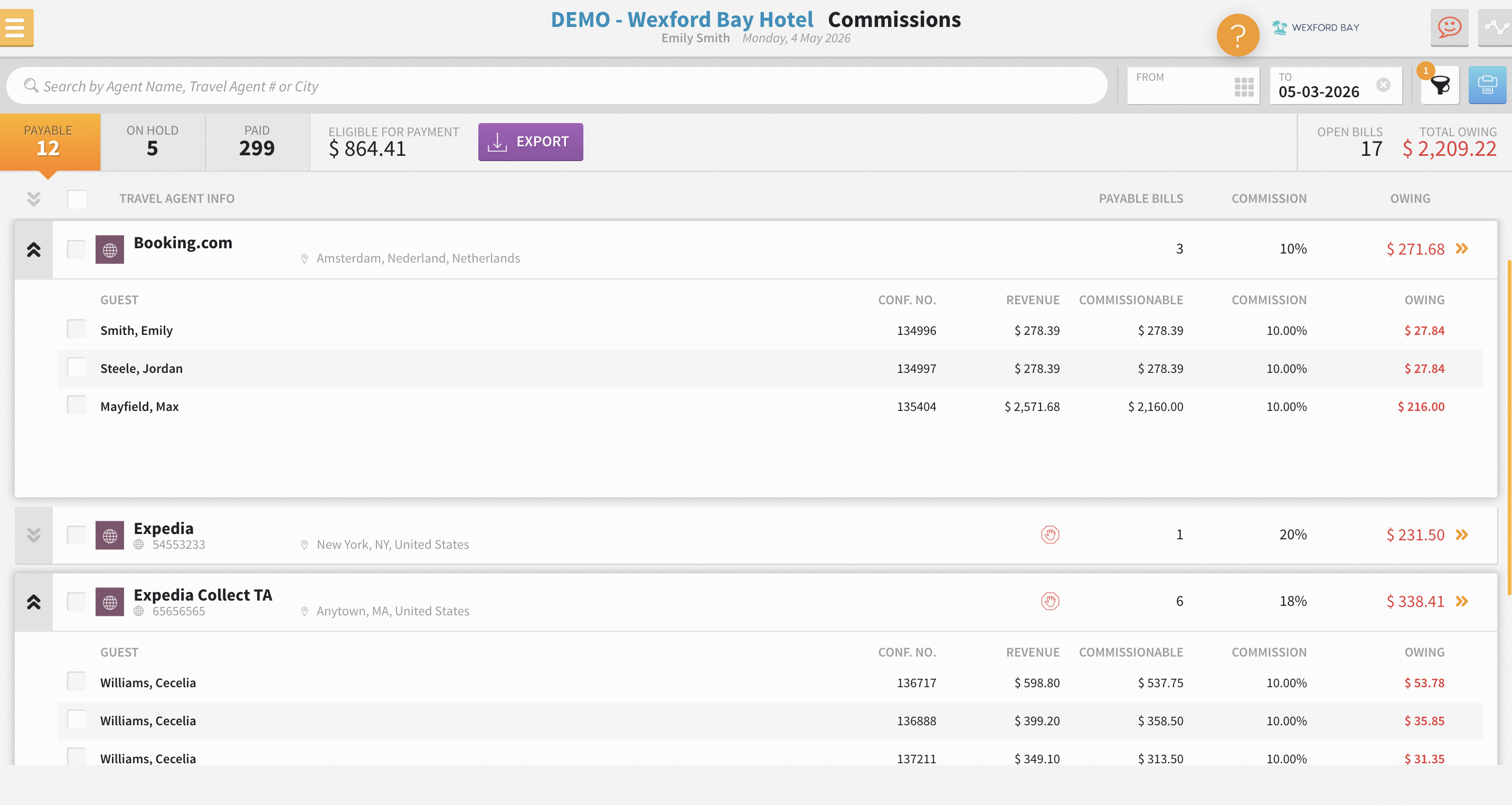
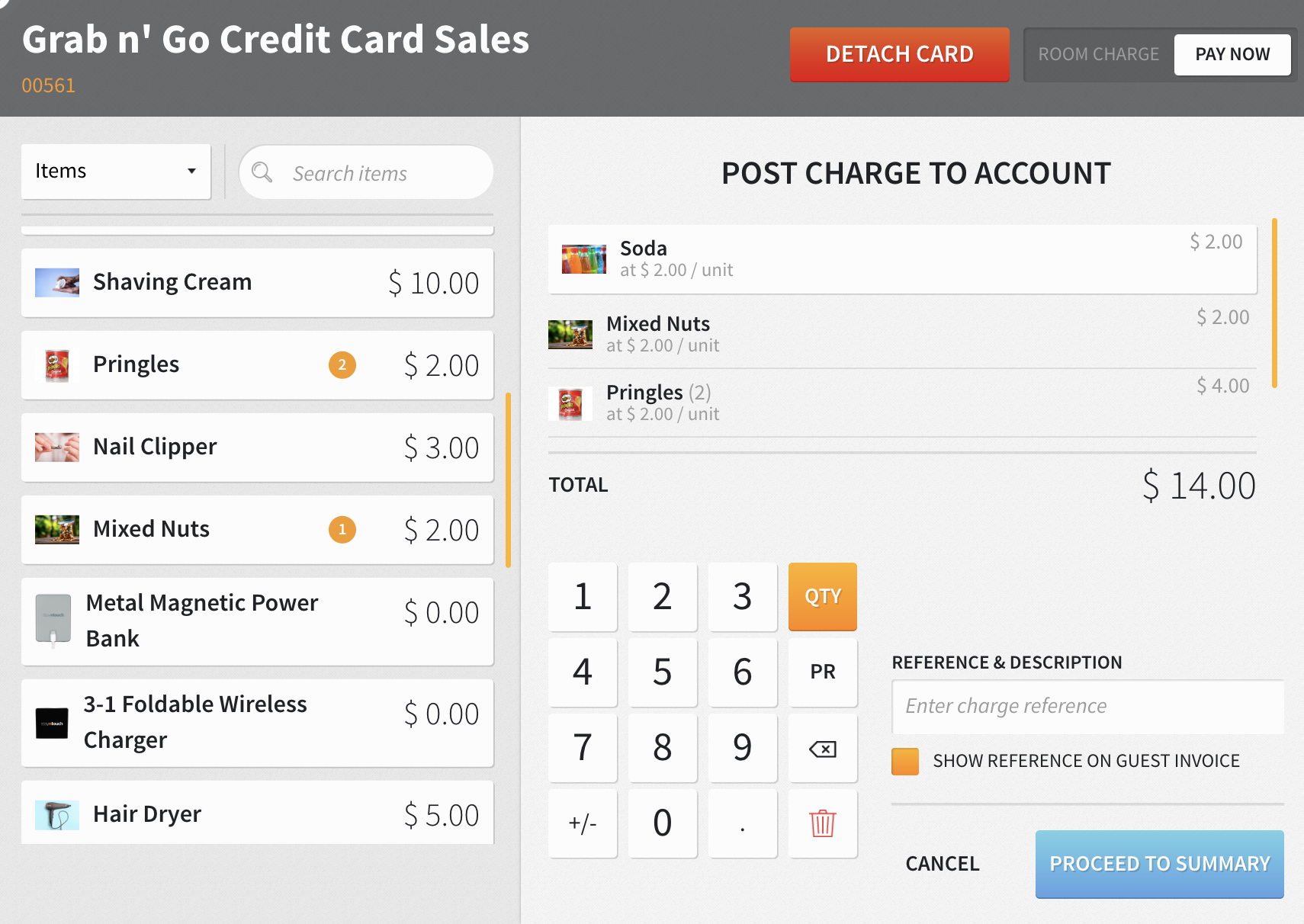
Stayntouch PMS posts charges automatically from every revenue center in real time:
-
POS charges from integrated systems including Toast, Oracle Micros, and Lightspeed post directly to the guest folio as they occur
-
Spa and retail transactions from the Grab & Go Kiosk reconcile automatically without staff intervention
-
Mobile upsell purchases such as room upgrades, early check-in, and late checkout post instantly to the folio
-
Occupancy tax (the per-night tax on the room rate, set by city, county, or state) and local taxes apply automatically at the point of posting
See automated charge posting in action and watch real-time folio updates across all revenue centers.
2. OTA Reconciliation with a Two-Way Channel Manager
Hotels lose between 1–2% of OTA revenue each month due to undetected inconsistencies in OTA virtual credit card payments. A VCC is a single-use card number issued by an OTA to pay the hotel. When the card amount does not match the reservation value because of commission errors, rate discrepancies, or tax omissions, the hotel absorbs the difference. Mismatches between payment type and settlement workflow are a key driver of revenue discrepancies in OTA processing.
Stayntouch Channel Manager prevents these mismatches through:
-
Real-time two-way sync of rates, inventory, and restrictions across 400+ distribution channels including Booking.com, Expedia, and Agoda
-
Independent sync control so rate changes, inventory updates, and restriction changes push separately, giving revenue managers precise control over what is distributed
-
Sell limits that cap rooms available per channel per date, preventing overselling and the discounting required to retain double-booked guests
-
OTA auto-charge rules configurable by entity and payment date to enforce correct VCC capture windows
3. Exception Dashboards and Daily Revenue Reconciliation
Automated nightly reconciliation recovers a meaningful share of revenue leakage that manual night audit misses. Manual night audit, the end-of-day process that closes transactions and rolls the system into the next business day, often relies on a single overnight employee who faces fatigue and time pressure. Cloud-native PMS platforms support continuous real-time posting and turn the nightly close into a reconciliation checkpoint instead of a data-entry marathon.

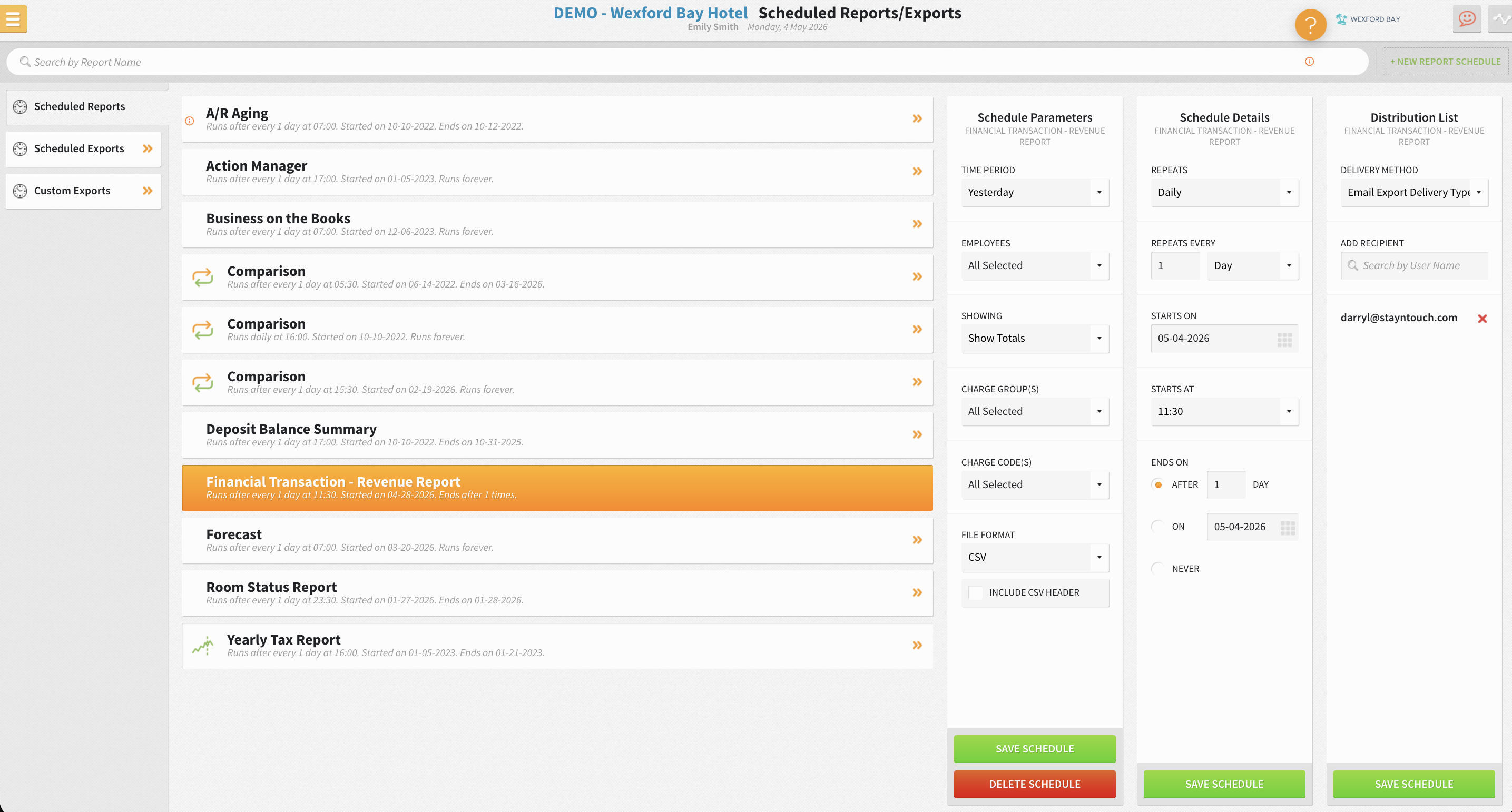
Stayntouch PMS automates this process with:
-
Automated night audit and end-of-day close that runs without manual intervention
-
Exception dashboards that surface rate variances, unapplied charges, and payment mismatches for morning review
-
Room Rate Variance reporting that flags manually entered rates deviating from booked rates
-
Real-time folio visibility so departed-but-open folios are caught before the recovery window closes
-
Scheduled reports delivered automatically by email, SFTP, or cloud drive, with no manual assembly required
4. Permission Controls and Rate-Override Workflows
Discount creep occurs when front desk staff manually increase discounts from an authorized 10% to 15% or 20% without oversight, creating silent revenue leakage. Without role-based permissions, any staff member can apply an unauthorized rate. Without an audit trail, leaders cannot identify the source or pattern of the loss.
Stayntouch PMS closes this gap with:
-
Role-based permissions that restrict rate override capability to authorized users only
-
Configurable approval workflows for pricing exceptions, requiring manager sign-off before a discounted rate applies
-
Complete transaction logging that records who changed what and when across every folio action
-
Credit limits per account that prevent charges from accumulating beyond authorized thresholds
-
Commission tracking and OTA auto-charge rules that enforce contracted terms without manual policing
5. Full Audit Trail and Chargeback Defense
A chargeback occurs when a guest disputes a charge with their card issuer after departure. The hotel loses the revenue by default unless it can produce documentation evidencing the transaction and the guest’s agreement to it. Recovery rates on post-departure billing are poor, and the labor cost of chasing small amounts frequently exceeds the amount itself, so prevention becomes the only viable strategy.
Stayntouch PMS builds a defensible record at every touchpoint:
-
Digital Registration Cards capture signed terms and conditions before or at arrival, creating a documented record that reduces disputes
-
Complete audit trail logs every transaction, adjustment, and user action with timestamps
-
Stayntouch Pay uses tokenization, which replaces real card numbers with meaningless substitute values, and point-to-point (P2P) encryption, so card data is never stored in the system in a usable form
-
PCI DSS (Payment Card Industry Data Security Standard) Level 1 certification, the most stringent tier, underpins every payment transaction
-
Accounts receivable (AR) invoicing and charge group tracking provide a clean paper trail for post-stay billing disputes
Weekly Leakage Audit Checklist
Run this checklist every Monday morning using your PMS exception reports from the prior week.
-
Review the Rate Variance Report. Identify every reservation where the charged rate differed from the booked rate. Flag amounts above your threshold (recommended: $10+) for investigation and confirm whether the variance was authorized.
-
Audit discount approvals. Pull a report of all rate overrides and discounts applied in the prior week, sorted by staff member and reason. Any discount exceeding the authorized percentage requires a manager review and retraining if unauthorized.
-
Reconcile OTA VCC payments. For every prepaid OTA booking that checked out in the prior week, confirm the VCC captured the correct amount inclusive of taxes and fees. Flag mismatches for dispute within the OTA’s correction window, and note that Booking.com requires discrepancies to be flagged within 48 hours of checkout.
-
Check for departed-but-open folios. Run a report of guest accounts that remain open after the departure date. Any open folio represents either an uncollected balance or a billing error, and both require same-day resolution.
-
Verify POS-to-folio posting. Confirm that charges from every revenue center, including restaurant, bar, spa, and retail, posted correctly to guest folios during the prior week. Identify any outlet with a posting gap and trace the cause to a system disconnect or manual process failure.
-
Review no-show and cancellation fees. Confirm that every no-show and late cancellation from the prior week had the correct fee posted per the booking’s cancellation policy. Treat unposted fees as direct revenue loss.
-
Log exceptions and track patterns. Document each exception with the issue, dollar amount, date, likely cause, and responsible party. Many discrepancies trace back to a few preventable causes, and a monthly pattern review turns individual exceptions into process fixes.
Integration Requirements for Leakage Prevention
PMS revenue leakage prevention, the practice of using PMS controls to stop revenue from escaping the financial record, depends on the quality of integrations between the PMS and every other system that generates revenue. A POS that cannot post to the folio in real time, a channel manager that syncs on a delay, or a payment gateway that requires manual reconciliation each creates a structural gap where revenue leaks.
Stayntouch connects to 1,400+ integrations across 18 technology categories including POS, revenue management systems (RMS), customer relationship management (CRM), door locks, accounting platforms, and channel management. These integrations are included at no extra cost from Stayntouch, and each third-party platform charges its own platform fee while Stayntouch charges nothing for the integration connection itself. Named partners include Toast, Oracle Micros, Lightspeed, IDeaS, Duetto, Omniboost, Sage Intacct, QuickBooks Online, and Xero, among many others.
The breadth of these integrations matters less than how they connect. Two integration architectures serve different needs. Direct cloud-to-cloud connections use application programming interface (API) webhooks, which push data the moment something happens rather than requiring another system to keep asking, for modern applications. A bridge approach via COMTROL and Omniboost connects legacy door locks, PBX (internal telephone) systems, and specialized accounting software, so existing hardware does not need replacement to achieve real-time data flow.
Best-in-Class vs Legacy and All-in-One Architectures
Independent hotel PMS controls for revenue leakage prevention only perform as well as the architecture underneath them. The 2026 Hotel Technology Outlook, produced by the NYU SPS Jonathan M. Tisch Center of Hospitality with IDeaS and Stayntouch (300+ hotel professionals, November 2025), found that 30% of all-in-one users intend to move to best-in-class solutions, against 14% moving the other way, and that best-in-class PMS users report 70% satisfaction against 55% among all-in-one users.
The architectural differences that drive these outcomes are direct.
Legacy platforms were designed for on-premise operation. Their integration lists can be extensive, but each connection may cost as much as $10,000, which turns every technology decision into a budget negotiation. Batch-based reporting means revenue managers work from yesterday’s data. Manual night audit processes are standard. The learning curve runs to approximately three months for a basic working grasp and six to nine months to master, which becomes a permanent operating cost in an industry where annual turnover runs near 70% in the United States.
All-in-one platforms address the integration problem by building everything in-house. When a vendor’s engineering team spreads its development effort across a PMS, a revenue management system, a POS, a CRM, and a central reservation system (CRS) simultaneously, no single product receives the focused development that a specialist delivers. The same study found that all-in-one users report booking errors at 57% versus 45% for best-in-class users, and check-in delays at 46% versus 23%, which creates operational gaps that translate directly into revenue leakage and guest dissatisfaction. Hotels that need a specialist RMS, a preferred POS, or a specific CRM often find they cannot connect it because the platform decides what they are permitted to use.
Stayntouch is a best-in-class, cloud-native PMS built on AWS with 100% system uptime, a performance record sustained over the past two years according to Stayntouch customer data. Its entire development focus goes into the PMS and its guest-facing surround, including Booking, Channel Manager, Pay, Kiosk, and Guest Messaging, while it integrates deeply with specialist RMS, POS, and CRM platforms of the hotel’s choice. There are no per-integration fees, no vendor lock-in on adjacent systems, and no downtime for product releases. Full platform training takes two days. Support is 24/7/365 for every customer with a guaranteed response under one hour and no service tiers, delivered by hospitality specialists rather than a chatbot.
Compare Stayntouch to your current platform in a live demo tailored to your property’s needs.
Conclusion: Stop Revenue Leakage with the Right PMS
Independent hotel revenue leakage through PMS gaps does not have to continue. The gross revenue that leaks through uncharged incidentals, OTA mismatches, siloed systems, manual audit errors, and unauthorized overrides is recoverable when the PMS acts as a financial hub with automated charge posting, real-time two-way channel sync, open-API integrations, exception dashboards, role-based permissions, and a complete audit trail.
Legacy platforms create these gaps through integration costs and batch-based data. All-in-one platforms limit the specialist tools a hotel can connect. Stayntouch closes them with a cloud-native architecture built specifically for independent hotels, boutique groups, and multi-property portfolios that need precision controls without vendor lock-in.
Schedule a demo to see how Stayntouch stops revenue leakage at your property.
Frequently Asked Questions
What is PMS revenue leakage prevention, and why does it matter for independent hotels?
PMS revenue leakage prevention refers to the use of property management system controls, including automated charge posting, real-time reconciliation, permission workflows, and audit trails, to ensure that every service delivered and every charge incurred reaches the guest folio and is collected before departure. It matters for independent hotels because they typically lack the corporate finance infrastructure of branded chains to catch errors after the fact. Revenue that leaks through uncharged minibar items, unreconciled OTA virtual credit card payments, or unauthorized front desk discounts is rarely recovered once the guest has checked out. A PMS that acts as a financial hub, connecting every revenue center in real time and flagging exceptions automatically, serves as the primary defense against this loss.
How does a two-way channel manager integration reduce OTA revenue leakage?
A two-way channel manager integration reduces OTA revenue leakage by keeping rates, inventory, and restrictions synchronized in real time between the PMS and every distribution channel. One-way or delayed sync creates windows where a room can sell on two channels simultaneously, which forces the hotel to discount or compensate a guest to resolve the double booking and creates direct revenue loss. It also creates rate parity violations, where different channels display different prices, which can trigger OTA penalty programs or guest disputes. A real-time two-way sync eliminates these windows. When a room sells on any channel, it becomes unavailable everywhere else instantly. When a rate changes in the PMS, it pushes to every connected channel simultaneously. For OTA virtual credit card reconciliation specifically, configurable auto-charge rules enforce the correct capture amount and timing, which prevents the 1–2% monthly OTA revenue loss that undetected VCC mismatches create.
What should be included in a hotel PMS audit checklist for revenue leakage?
A hotel PMS audit checklist for revenue leakage should cover five control areas on a weekly basis. First, rate integrity: review the Rate Variance Report for every reservation where the charged rate differed from the booked rate, and audit all discount approvals by staff member and reason. Second, charge posting: confirm that POS transactions from every revenue center posted to the correct guest folio during the period, and identify any outlet with a posting gap. Third, OTA reconciliation: verify that every prepaid OTA booking’s virtual credit card captured the correct amount inclusive of taxes and fees, and flag mismatches within the OTA’s dispute window. Fourth, folio exceptions: identify departed-but-open folios, unapplied credits, and no-show fees that were not posted per the cancellation policy. Fifth, pattern analysis: log every exception with its dollar amount, date, cause, and responsible party, then review monthly to identify the two or three recurring causes that account for most leakage. A cloud-native PMS with automated exception dashboards surfaces most of these items automatically, which turns the checklist from a manual data-gathering exercise into a review-and-action workflow.
How do independent hotel PMS controls differ between cloud-native and legacy systems?
The core difference lies in when data moves. Legacy PMS platforms were built around a nightly batch close, where transactions accumulate during the day and reconcile overnight in a single processing window. This means a charge missed during the day may not surface until the next morning, after the guest has checked out and the recovery window has closed. Cloud-native PMS platforms post transactions in real time as they occur, so a POS charge, a spa booking, or a mobile upsell reaches the guest folio immediately. Exception dashboards surface discrepancies the same day they occur rather than the following morning. Automated night audit runs as a reconciliation checkpoint instead of a data-entry process. The integration architecture also differs materially. Legacy platforms often charge per integration connection, which discourages hotels from connecting the systems that would close leakage gaps. Cloud-native platforms with open APIs and no per-integration fees make it commercially practical to connect every revenue center, payment gateway, and OTA channel, which is the prerequisite for comprehensive leakage prevention.
Can Stayntouch PMS replace a standalone revenue management system for independent hotels?
Stayntouch PMS includes a Rate Strategy module that automates rule-based rate adjustments on configurable parameters, such as raising rates when occupancy crosses a defined threshold and lowering them when pickup slows. This removes the need for a separate contract for hotels whose pricing need is rule-based rather than forecast-driven, and it trains in 20 minutes with instant activation. However, Rate Strategy does not function as a full revenue management system. A dedicated RMS also performs demand forecasting, competitor rate shopping, and market-data-driven price optimization, capabilities that require different data inputs and different analytical models. For hotels that need those capabilities, Stayntouch integrates with specialist platforms including IDeaS, Duetto, FLYR, Lighthouse, and PriceLabs. The hotel retains the choice. Stayntouch ensures that whatever pricing strategy is set, whether through Rate Strategy or a connected RMS, is executed consistently at the front desk through permission controls and rate-override workflows that prevent unauthorized discounts from eroding the strategy after it is set.
Read Next
Turn a more connected stack into a better stay.
See how Stayntouch can support the operating moments that matter most to your hotel team.