
Written by: Kelly Campbell, Vice President of Marketing, Stayntouch
Key Takeaways
-
The advertised PMS price rarely matches the final monthly bill. Five line items routinely turn a $79 headline into a $400 invoice.
-
Channel manager fees are often the largest hidden cost. Separate modules can add 30–60% to the total through room, connection, or booking-based pricing.
-
Payment processing rates of 1.5–3.5% scale with booking volume. A 100-room hotel can pay $20,000–$60,000 annually in card fees alone.
-
Setup fees of $300–$2,000 plus annual contracts create real switching costs. Data migration and retraining can exceed $5,000 when changing systems.
-
Stayntouch is a best-in-class, cloud-native PMS for independent hotels, boutique brands, and multi-property groups that have outgrown budget tools.
How Much Does Hotel Front Desk Software Actually Cost Per Month?
A hotel property management system (PMS) is the core software a hotel runs on. It covers reservations, check-in and checkout, room assignment, housekeeping status, guest billing, rates, and reporting. The real monthly cost of that system comes from at least five separate line items.

1. The Subscription Itself
Cloud PMS subscriptions follow two main models. Per-room pricing charges a fixed monthly fee for each room. Entry-level cloud PMS platforms advertise pricing as low as $1–$5 per room per month, while mid-market cloud systems run $5–$12 per room per month. Flat-fee tiers charge a single monthly amount regardless of room count, usually structured by feature set. More à la carte pricing often produces a higher eventual bill, while bundled platforms that include essentials in the base price tend to land closer to the advertised number.
Some vendors impose a minimum monthly commitment, such as a per-room price with a floor of 10 or 20 rooms, which inflates the effective rate for smaller properties. Annual contracts typically reduce pricing by 10–20% compared to monthly billing, and they also lock you in for the term.
2. The Channel Manager Fee
A channel manager keeps every sales channel synchronized with the PMS so a room sold on one channel becomes unavailable on the others. Without this layer, staff must update each OTA manually or accept double-booking risk.
Many budget PMS platforms sell the channel manager as a separate module. When the channel manager is separate rather than bundled, the effective PMS cost increases by 30 to 60 percent before other add-ons. Standalone channel managers for independent hotels typically cost $50–$200 per month depending on OTA count and sync frequency. Some charge per OTA connection, so the price jumps as you add channels. Others charge a per-booking percentage of 1–2%, which at meaningful occupancy can exceed a flat subscription.
3. Payment Processing Rates
Card processing fees for hotels typically run between 1.5% and 3.5% of every transaction, with hospitality properties trending higher because of card-not-present bookings and larger average tickets. A 100-room hotel processing $2 million annually could pay $20,000–$60,000 in transaction fees alone. Payment processing scales with booking volume rather than staying flat, and this cost rarely appears in pricing page headlines.
Some vendors advertise a “commission-free” booking engine but move the cost into a payment processing markup instead. Ask for the total cost per booking including payment processing, subscription, and any booking engine fees.
4. Setup and Onboarding Fees
One-time setup and onboarding costs range from $300 to $2,000 for most independent hotel implementations. These fees cover account configuration, room type setup, rate plan entry, staff training, and go-live support. Enterprise systems charge significantly more. Even a $300 setup fee adds $25 per month to the effective cost when spread over a 12-month contract.
5. Minimum Commitments and Contract Terms
Some platforms require an annual commitment to access the advertised price, while month-to-month billing comes at a higher rate. A 12-month contract with a 90-day termination notice means exiting in month six costs the remaining months, so the exit terms matter as much as the entry price.
Once you know those terms, calculate the real monthly number. Add the subscription, the channel manager (if separate), your estimated monthly payment processing fees at your booking volume, the setup fee amortized over 12 months, and any per-user or per-OTA-connection charges. That total is your actual monthly cost, and it is the number to request in writing from any vendor before you compare platforms.
Which Budget Hotel Software Fits a 10-, 30-, or 50-Room Property?
Room count is the first filter for budget hotel front desk software. The market segments itself by property size, and each band brings different cost and feature pressures.
Under 10 Rooms
At this scale, a flat-fee bundled platform that combines PMS, booking engine, and channel manager from one vendor almost always costs less than three specialist tools. For properties under roughly 20–30 rooms, a bundled platform usually reduces total spend and removes the integration work of keeping systems in sync. Free tiers exist at this size but cap out quickly, as covered in the free software section below.
10–30 Rooms
This band is the core market for budget and entry-level cloud PMS platforms. Per-room pricing is common, and the channel manager becomes the critical variable. Confirm whether it is bundled or billed separately, and whether it charges per OTA connection. Properties with 10–25 rooms and 1–5 staff should focus on reservations, invoicing, mobile access, and a simple interface that requires minimal training. Reporting depth and upselling tools matter less here than reliability and OTA sync speed.
30–75 Rooms
At this band, the total monthly cost of a properly configured stack rises materially. Properties with 25–75 rooms need advanced reporting, strong OTA integration, housekeeping tools, and upselling features. Budget platforms that served a 15-room property well may struggle with reporting complexity, group bookings, or multi-OTA distribution for a 50-room independent. This band shows the widest gap between advertised price and real cost, and switching costs start to influence decisions.
75+ Rooms
Budget tools generally stop fitting here. The capabilities that matter at this scale include shared guest profiles across properties, central rate and configuration management, portfolio reporting from a single login, and robust integrations. Budget platforms often lack these capabilities or charge extra for them. This combination creates the growth ceiling, which the next sections explore in more detail.
What Is the Best Free Hotel Management Software?
Room count determines which paid tier fits, but many operators first ask whether they can avoid a subscription entirely. Free tiers and free versions of hotel management software exist, yet they cap out fast. Running a hotel on free or open-source software is technically possible but rarely practical in 2026. Open-source PMS options lack the operational support and integrations most properties need, and the staff time required to self-manage hosting and integrations usually exceeds the cost of a commercial cloud PMS.
Free tiers on commercial platforms often limit room count, restrict integrations, remove reporting, or charge separately for the channel manager and payment processing that make the system usable. Most hotel management platforms do not offer a permanent free plan, so hotels usually must commit to a paid subscription before confirming fit.
Free stops working as soon as you need live two-way OTA sync, automated invoicing, or any integration beyond the basics. The practical question becomes how quickly you outgrow free and what the upgrade path costs.
What to Look For in Budget Hotel Front Desk Software
Once you accept that a paid plan is inevitable, the next step is deciding what to prioritize at the budget tier. Three capabilities matter most: cloud access, a channel manager, and quick onboarding.
Cloud access removes on-premise servers and manual upgrades and lets staff manage the property from any device with an internet connection. Cloud-based PMS has reached 67% market penetration among independent hotels. The operational case is straightforward: no hardware failures to manage, no IT overhead, and automatic updates.

The channel manager is often the hidden cost. It keeps every sales channel synchronized with the PMS so a room sold on one channel becomes unavailable on the others. Without it, staff either update OTAs by hand or accept overbooking risk. Channel managers use four pricing models: per-room per-month, per-property flat fee, per-booking percentage, and enterprise custom. The model chosen can swing a property’s monthly cost significantly for the same capability. That is why the first question to ask any vendor is whether the channel manager is bundled into the base price or billed as a separate module, because that answer determines which pricing model applies.
Quick onboarding matters because a system that takes weeks to learn becomes a permanent operating drag in an industry with high staff turnover. Confirm what training is included, whether it is self-paced or scheduled with a trainer, and how new hires receive training months after go-live.

Features that often count as marketing filler at the budget tier include long feature lists, AI badges on functions you will never use, and modules designed for 200-room properties. A 20-room independent needs reliable OTA sync, clean invoicing, and a housekeeping status view that works on a phone.
The Hidden Costs of Switching Later
The features above determine whether a budget tool works today, while the exit terms determine what it costs tomorrow. The cheapest entry point is rarely the cheapest exit. Most hotels switch PMS systems within two to four years, so data export terms and migration costs are near-certain future expenses.
When you switch, three costs land at once. First comes data migration. For an independent hotel, the fair 2026 data migration fee when switching PMS is $500 to $5,000, depending on data volume and source format, before the new system’s setup fee. Some vendors charge for data exports or provide data in proprietary formats that require conversion work. Ask every vendor before signing whether you can export data later in a usable format.
Second comes retraining. Every staff member who learned the old system must learn the new one. In an industry where a complicated PMS interface adds five to fifteen minutes of friction per shift, retraining includes both the training session and the productivity loss during ramp-up.
Third comes operational risk during cutover. Migration risk concentrates in forward bookings, channel mappings, and tax configuration. Errors here can cause overbookings, defective invoices, and missed charges during cutover. Relocating an overbooked guest costs $150 to $400 per night in compensation plus the relocation hotel bill and can trigger an OTA performance flag that suppresses listing visibility.
The total cost of ownership of a budget PMS includes the subscription, the add-ons, the switching cost when you outgrow it, and the operational disruption of migration. A platform with a lower monthly fee that forces a painful exit in 18 months often costs more over time.
Ask us about data portability and migration support.
When a Budget Tool Stops Being the Right Answer
The cost breakdown above explains what budget software charges. The next question is when those charges stop buying what a property actually needs. The growth ceiling for budget hotel front desk software is a set of operational needs that budget platforms are not built to handle. Those needs typically appear at 75+ rooms or when a property adds a second location.
At that scale, the capabilities that matter include shared guest profiles across properties, central rate and configuration management, portfolio reporting from a single login, and robust integrations. Properties with 75+ rooms and 15+ staff require multi-property support, revenue management, advanced analytics, and automated workflows.
The market is moving in this direction. The 2026 Hotel Technology Outlook, produced by the NYU SPS Jonathan M. Tisch Center of Hospitality with Stayntouch and IDeaS (November 2025, 300+ hotel professionals), found that 51% of hoteliers plan to replace or upgrade their technology stack within the next 12–24 months. It also found that 30% of all-in-one users intend to move to best-in-class solutions, compared with 14% moving the other way.
That upgrade intent is the problem Stayntouch was built to solve for properties that have decided their current stack is the constraint. Stayntouch is a best-in-class, cloud-native PMS built for independent hotels, boutique brands, and multi-property groups. It suits properties that have outgrown budget tools and need a platform that goes deep on PMS capabilities rather than spreading thinly across every hotel function.
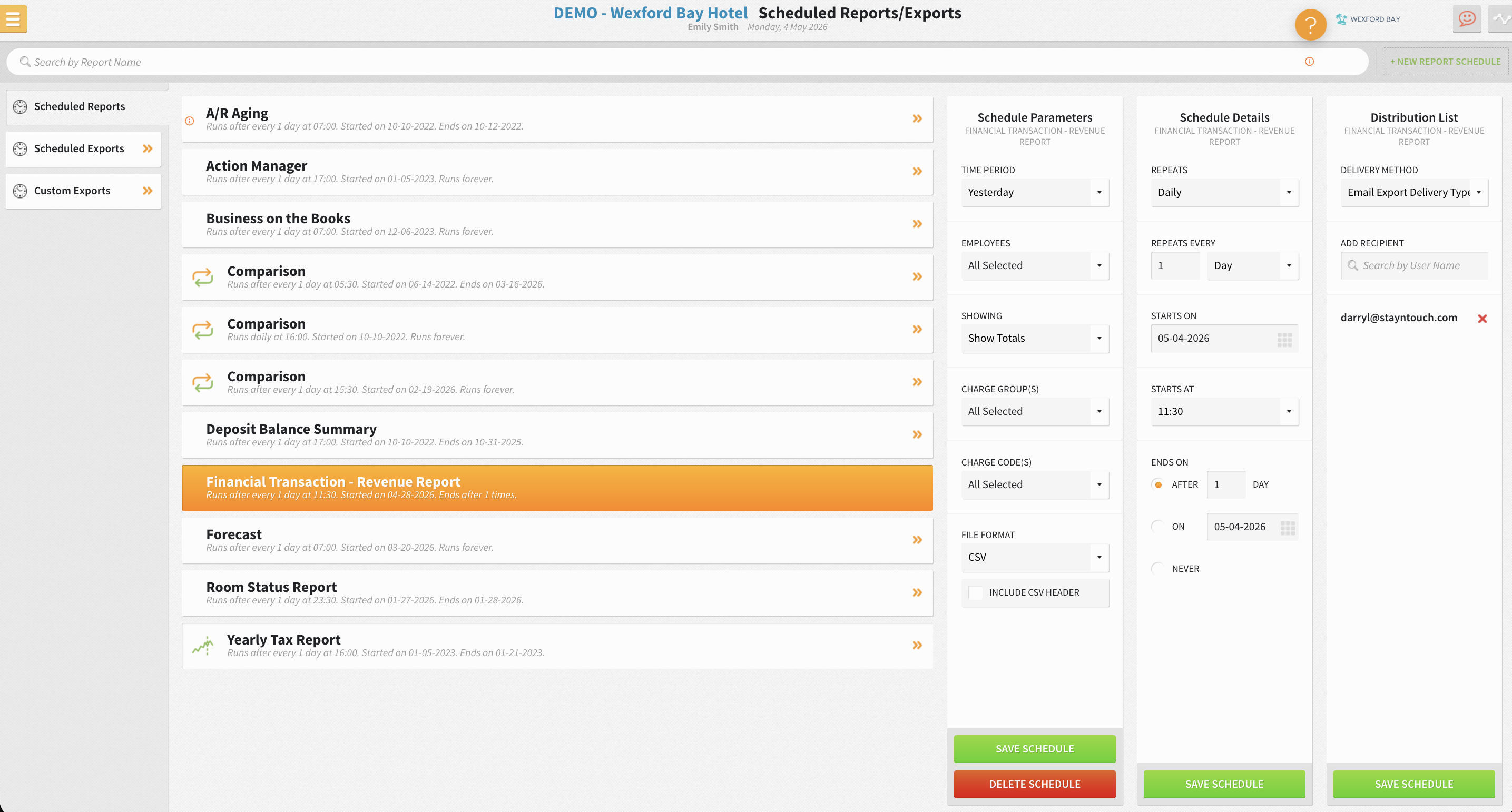
The specifics that matter at this tier include the following.
-
Reliability: Cloud-native on AWS with 100% system uptime sustained over the past two years, with no downtime required for product releases. This record reflects performance in production environments.
-
Integrations: 1,400+ integrations with unlimited connections at no extra cost from Stayntouch. Users pay each third-party platform its own platform fee, while Stayntouch charges nothing for the integration itself. Legacy enterprise platforms can charge as much as $10,000 for a single new integration.
-
Training: Full front desk staff training in 2 hours and full platform training across all modules in 2 days. In an industry where the U.S. quit rate in accommodation and food services was 4.3% in March 2026, close to double the 2.2% private-sector average, training time becomes a permanent operating cost.
-
Check-in: Three-way check-in options, including mobile in 30 seconds, hybrid pre-check-in, or staff-assisted anywhere on property. According to Stayntouch customer data, this approach reduces staff-assisted check-in by 54%.
-
Support: 24/7/365 follow-the-sun support means teams across multiple time zones so a request always reaches someone currently on shift. Every customer receives the same service tier, a guaranteed response under one hour, and hospitality specialists rather than a chatbot, all included at no extra cost.
-
Multi-property management: A single login across 100+ properties with shared guest, company, and travel agent profiles. Stayntouch customer data shows this setup runs portfolio management 70% more efficiently.
-
Implementation: Auto-Configuration cuts property setup from around 30 hours of manual work to 4–5 hours. The Dataloader module migrates legacy guest, group, company, and travel agent data in 1–2 hours. A full portfolio deploys in 30 to 45 days, while a single property goes live in roughly a month.
-
Track record: A 97% customer retention rate, a 94% recommendation rating on Hotel Tech Report from 249 hotels, and back-to-back Travel Tech Breakthrough awards, including the 2026 “Hotel PMS Company of the Year” recognition.
See how a best-in-class PMS handles multi-property operations. Book a demo.
Who This Guide Is For
Stayntouch is built for larger independent hotels, boutique brands, and multi-property groups. The preferred property size is 75 rooms and above, though many smaller properties also use Stayntouch successfully. A 12-room inn seeking the most affordable entry-level option will usually start with a budget platform. A property that has outgrown those tools, or a group managing multiple properties that needs a single operational source of truth, should consider Stayntouch.
Frequently Asked Questions
Is There a Genuinely Free Hotel Front Desk Software?
Free tiers exist on some commercial hotel management platforms, but they cap out quickly. They often limit room count, restrict integrations, remove advanced reporting, or charge separately for the channel manager and payment processing that make the system operationally useful. Running a hotel on a permanently free plan works only for very small properties with minimal OTA distribution. Open-source hotel software options require self-managed hosting, integration work, and ongoing maintenance that usually costs more in staff time than a commercial cloud subscription. Free hotel front desk software works as a starting point rather than a long-term operating model.
What Does a Channel Manager Cost on Top of a PMS?
As noted earlier, channel managers use four pricing models. The model that matters most for budget comparisons is the per-booking percentage, because at meaningful occupancy it can cost more than a flat subscription and the bill stays unpredictable. The key step is confirming whether the channel manager is bundled into the PMS price or billed separately and whether any per-connection fees apply for each OTA.
How Long Does It Take to Switch Hotel Front Desk Software?
Switching a PMS usually takes longer than operators expect, and the cost extends beyond the new system’s setup fee. Configuration and data preparation take weeks, while the actual cutover takes hours. The critical data to migrate is forward reservations with correct dates, rates, room types, and guest contacts. Channel mappings must be rebuilt and tested for each OTA before going live, and tax configuration must be checked carefully to avoid defective invoices. The $500–$5,000 migration fee mentioned earlier applies here as well, particularly if the outgoing vendor provides data in a proprietary format. Staff retraining adds further cost as productivity drops during the ramp-up period.
At What Room Count Should a Hotel Stop Using Budget Software?
There is no single room count at which budget software stops working, but the pressure becomes visible in four bands.
-
Under 10 rooms: A bundled flat-fee platform covering PMS, booking engine, and channel manager usually fits best, and free tiers may serve very basic needs.
-
10–30 rooms: Entry-level and budget cloud PMS platforms are purpose-built for this band, with per-room pricing and bundled channel managers as the standard model.
-
30–75 rooms: This band is where budget platforms start to strain, as covered above. The key addition at this scale is group booking handling, which budget tools often cannot support well.
-
75+ rooms or multiple properties: Budget tools generally give way to best-in-class PMS platforms that support shared guest profiles, central configuration, portfolio reporting, and deeper integrations.
Conclusion: Know Your Number Before You Sign
The advertised price rarely matches the real price. The monthly bill includes the subscription, the channel manager, payment processing, setup, and any minimum commitment. Exit terms and migration costs complete the picture.
Calculate the full number before signing, confirm the exit terms, and match the software class to your room count and growth plans. Smaller properties under 30 rooms usually start with budget platforms. Properties that have outgrown those tools, such as 75+ room independents, boutique groups, or management companies running multiple properties, benefit from a PMS like Stayntouch with deep functionality, 1,400+ integrations at no extra cost from Stayntouch, 100% system uptime in recent years, rapid training, and 24/7/365 support for every customer.
Ready to calculate your real monthly cost? Talk to Stayntouch.
Read Next
Turn a more connected stack into a better stay.
See how Stayntouch can support the operating moments that matter most to your hotel team.