
Written by: Kelly Campbell, Vice President of Marketing, Stayntouch
Key Takeaways
-
A guest profile in a hotel PMS is a centralized digital record that stores identity, stay history, preferences, lifetime value, and communication history, giving every department a single source of truth for recognition and personalization.
-
Core data fields such as identity, stay history, preferences, and marketing consent directly drive staff efficiency and revenue by enabling targeted upsells, reducing manual entry, and improving personalization.
-
Duplicate merging and data hygiene are essential to prevent fragmented profiles that cause compliance risks and distort reporting, and modern PMS tools use automated and human-reviewed matching to maintain clean records.
-
Multi-property profile sharing ensures guest history and preferences travel across a portfolio, enabling consistent recognition and centralized reporting while each property retains local control.
-
Stayntouch delivers robust guest profile management, duplicate merging, and multi-property sharing with built-in compliance, so contact us to see how it can work for your hotel.
Guest Profiles That Power Daily Operations
A well-built guest profile does more than store a name and email address. It captures the full arc of a guest’s relationship with a property: how they book, what room type they prefer, what they spend, what they request, and how they communicate. A complete profile unifies identity data, stay history, preferences, marketing consents, folio charges, message threads, and operational notes into one record that every department can act on.
The operational benefits reach across the entire property. Front desk teams see a returning guest’s preferences and lifetime value at check-in without switching systems. Housekeeping can anticipate needs, such as extra pillows, accessibility requirements, or green-stay preferences, before a guest arrives. Revenue and marketing teams segment audiences and trigger personalized upsell offers based on actual booking patterns rather than guesswork. Management runs reporting from a single, consistent data layer rather than reconciling multiple department records.

Hotel operators aim for a “Golden Record”: one clean, complete guest profile that consolidates every interaction from every department across all on-property touchpoints. The data fields that make that record actionable deserve a closer look.
Core Data Fields That Drive Staff Efficiency and Revenue
Some profile fields have a much bigger impact on operations and revenue than others. The table below maps the most important data categories to their effect on staff performance and revenue generation.
|
Data Field |
What It Captures |
Staff Efficiency Impact |
Revenue Impact |
|---|---|---|---|
|
Identity & Contact |
Name, email, phone, address, nationality, ID/passport number |
Eliminates manual re-entry at check-in, and pre-filled guest data reduces errors such as wrong spellings or missing phone numbers |
Enables direct communication for upsells and post-stay marketing |
|
Stay History & Lifetime Value |
Past and upcoming bookings, total nights, average daily rate (ADR), total spend, channel source |
Staff recognize VIP guests instantly without manual lookup |
Identifies high-value guests for upgrade targeting and loyalty retention |
|
Preferences & Special Requests |
Room type, floor, bed type, dietary restrictions, accessibility needs, amenity preferences |
Housekeeping and front desk act on preferences before arrival, which reduces reactive service calls |
Preference-matched upsells convert at higher rates than generic offers |
|
Marketing Consent & Communication History |
Opt-in status with timestamps, email/SMS/WhatsApp threads, pre-arrival and post-stay messages |
Staff avoid contacting opted-out guests, and consent is auditable rather than stored as a checkbox note |
Clean, single-view guest records can produce gains in email revenue per subscriber through better-targeted campaigns |
Beyond individual guest records, a complete PMS also maintains company profiles with negotiated rates and booking contacts, travel agent profiles with commissions and performance metrics, and group profiles with event contracts and billing routing, and each serves distinct operational and commercial functions. Even the most comprehensive data fields lose value when the same guest appears in the system multiple times, which fragments their history across duplicate records.

Duplicate Merging and Data Hygiene
Guest profiles in a hotel PMS drift into thousands of duplicates within a year without a fuzzy-match deduplication step on email, phone, and name. Online travel agency (OTA) bookings, where third-party platforms often supply masked or temporary email addresses, are a primary source of fragmentation. A guest who books directly once and through an OTA twice can appear as three separate records, and each record holds only a partial slice of their history.
Modern front desk software addresses this with a mix of automated and human-reviewed matching. High-confidence matches, such as identical email and name, merge automatically. Lower-confidence matches, such as a name variation paired with the same phone number, route to a staff member for review before any merge is confirmed. Deduplication remains a major challenge for many hotel operators, so this workflow needs to be simple and reliable.
Fragmented profiles create problems that reach beyond personalization. When a guest opts out of marketing in one profile instance but remains active in a duplicate, the opt-out is not honored across the board, which creates a direct compliance risk under the General Data Protection Regulation (GDPR) and the California Consumer Privacy Act (CCPA). Reporting also breaks, because the same guest counted as multiple visitors inflates visit totals and distorts lifetime value calculations. Automated profile management that merges duplicates on a scheduled basis and produces an audit trail can save hotel properties significant time each month.
Stayntouch PMS supports profile merging and synchronizes guest, company, and travel agent profiles across the portfolio. This unified approach forms the foundation for consistent recognition at every property a guest visits.
Multi-Property Profile Sharing Across Your Portfolio
Independent hotel groups and management companies face the guest profile challenge at scale. Every new property adds another place where a guest can appear as a stranger, even if they are loyal to the brand, which creates a loyalty failure and a missed revenue opportunity.
Effective multi-property profile sharing ensures that a guest’s history, preferences, and lifetime value travel with them across the entire portfolio. Each property still retains the ability to add local notes and preferences. According to Stayntouch customer data, multi-property management runs portfolios 70% more efficiently from a single multi-property dashboard, with guest, company, and travel agent profiles shared globally and aggregated stay statistics, including ADR and total stays, visible across the group.
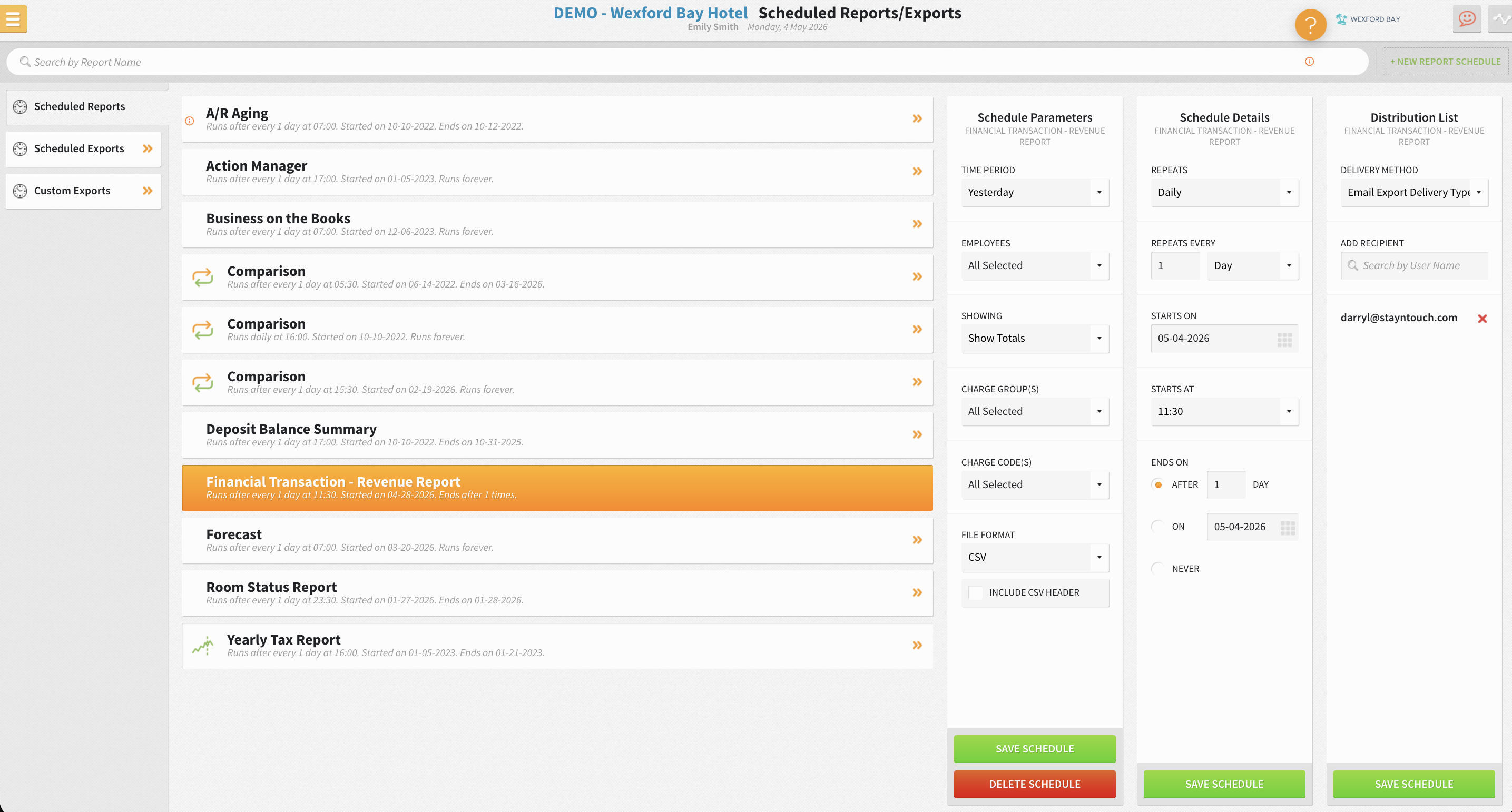
Multi-property hotel groups need consolidated guest profiles and cross-property guest history so staff can recognize guests who have stayed at sister properties. Okko Hotels, a Stayntouch customer, specifically cited the ability to merge guest profiles and manage group bookings across properties as a reason for their satisfaction with the platform.
Centralized reporting is the second major benefit. When profiles are unified, portfolio-level metrics such as repeat stay rates, lifetime value by segment, and channel mix are computed from one clean dataset rather than assembled manually from property-level exports. Privacy controls then determine how much of that data each role can see.
Privacy and Compliance Controls for Guest Data
Guest profile data sits at the intersection of several overlapping regulatory frameworks in 2026. GDPR governs the processing of personal data for guests from the European Union and United Kingdom. CCPA and the California Privacy Rights Act (CPRA) apply to California residents regardless of where the hotel is located. Payment Card Industry Data Security Standard (PCI DSS) 4.0.1, fully in effect since March 2025, places explicit responsibility on the hotel to ensure security controls remain effective across payment systems and third-party PMS vendors throughout the year, not just at audit time.
For guest profiles specifically, compliance requires several interlocking controls that work together to protect guest data and meet regulatory obligations. These controls cover the legal basis for processing, how long data is retained, who can access it, and how guest rights are honored.
Lawful basis and purpose limitation. Under GDPR, hotels typically rely on contract as the lawful basis for reservation-tied processing, legitimate interest for post-stay surveys with a documented assessment, and consent for marketing email, SMS, and WhatsApp that is freely given and withdrawable. Passport data collected for legal registration cannot be repurposed for marketing profiles.
Retention policies. Financial and invoice records tied to guest stays must generally be retained for six to ten years under legal obligation, while marketing data may be retained only while the guest’s consent remains valid, with an inactivity rule triggering re-permissioning or deletion.
Role-based access. A cloud-based PMS with role-based access controls limits front desk staff to current reservation data and prevents housekeeping or other roles from viewing sensitive guest profile elements such as payment details or passport numbers. Stayntouch scopes integration access the same way, so a door lock application can see a room number and checkout date but is blocked from payment or address data.
Audit trails and data subject rights. Controllers must respond to data subject access or erasure requests without undue delay and at the latest within one month of receipt, or after receiving any requested identity verification information. A PMS that supports clean deletion or anonymization of guest profiles is not a compliance luxury. It is a compliance requirement.
Stayntouch holds SOC 2 Type 1 certification, is GDPR-compliant, runs on AWS Private VPC infrastructure with ISO 27001/27018 certification, and maintains product compliance in 60+ countries across six regions, with jurisdictional diligence completed in advance on the hotel’s behalf rather than left to the operator to research.
Evaluation Checklist for PMS Selection
The following checklists turn the capabilities covered in this guide into concrete questions to ask any PMS vendor during evaluation. Test each item against a real scenario, such as a new reservation, a returning guest, a duplicate merge, or a data deletion request, rather than accepting a feature list at face value.
Single-property checklist
-
Does the system automatically create and update guest profiles at every touchpoint, including booking, check-in, during the stay, and post-departure, without manual data entry?
-
Does the profile surface stay history, preferences, lifetime value, and communication history to front desk staff at the moment of check-in?
-
Can staff add custom fields and notes that persist across future stays?
-
Does the system detect and flag duplicate profiles using fuzzy matching on email, phone, and name, with high-confidence matches merged automatically and lower-confidence matches routed for human review?
-
Are marketing consents stored as auditable, timestamped records, not as a checkbox in a notes field?
-
Does the platform support role-based access controls so housekeeping, front desk, and management each see only the data their role requires?
-
Can the system produce an audit trail of every profile action, including view, edit, merge, and export, for compliance purposes?
-
Does the PMS support clean deletion or anonymization of guest profiles to fulfill data subject erasure requests within the required timeframe?
-
Is the vendor’s integration connection included at no extra cost, with the hotel paying only the third-party platform’s own fee?
-
Can front desk staff be fully trained on the system in a timeframe that does not reset productivity every time someone new is hired?
Multi-property and compliance checklist
-
Are guest, company, and travel agent profiles shared across the portfolio, with aggregated stay statistics visible from a central multi-property dashboard?
-
Can each property add local notes and preferences without overwriting the shared profile record?
-
Does the system deduplicate profiles across properties, not just within a single property, using consistent matching logic?
-
Can central configuration, including rate types, deposit policies, charge codes, and user permissions, be pushed to all properties from one login?
-
Does the vendor maintain product compliance in the jurisdictions where the portfolio operates, with diligence completed in advance rather than left to the hotel operator?
-
Does the platform support Standard Contractual Clauses (SCCs) and data residency requirements for portfolios transferring EU guest data to non-EEA systems?
-
Can marketing opt-outs be propagated across all profile instances and all connected systems simultaneously?
-
Does the vendor hold a signed Data Processing Agreement (DPA) under GDPR Article 28, covering security measures, processing limitations, and breach notification obligations?
-
Is the system certified to PCI DSS Level 1 for payment processing, with tokenization ensuring raw card numbers are never stored in the PMS?
-
Does the platform offer 24/7 support with a guaranteed response time, included at no extra cost regardless of portfolio size?
Stayntouch is built for independent hotels, boutique groups, and management companies that need all of the above. It serves properties of all sizes, including those under 75 rooms, with the same depth of capability. The platform connects to 1,400+ integrations at no additional cost for the connection itself, since each third-party platform charges its own fee, trains front desk staff in 2 hours, and deploys a full portfolio in 30 to 45 days. The efficiency gains are measurable, including the 70% improvement in multi-property management mentioned earlier, plus up to 42% gains in accounting efficiency.
The 2026 TravelTech Breakthrough “Hotel PMS Company of the Year” recognition and a 97% customer retention rate reflect what happens when guest profile management, multi-property sharing, and compliance controls are built into the core of a modern PMS rather than bolted on as afterthoughts.
Frequently Asked Questions
What is a guest profile in a hotel PMS, and why does it matter?
A guest profile in a hotel property management system is a centralized digital record that stores a guest’s identity, contact details, stay history, room and service preferences, marketing consents, and lifetime value. It matters because it is the data layer that makes personalization operationally possible. When a returning guest arrives, front desk staff can see their preferred room type, past spending, and any special notes without asking the guest to repeat themselves. For housekeeping, it means anticipating needs before arrival. For revenue and marketing teams, it means segmenting audiences and triggering relevant upsell offers based on actual behavior. Without clean, unified guest profiles, every department works from a different version of the truth, and the guest experience reflects that inconsistency.
How does duplicate guest profile merging work in modern hotel front desk software?
Modern hotel front desk software uses a combination of automated and human-reviewed matching to detect and resolve duplicate profiles. High-confidence matches, where email address and name are identical, are typically merged automatically. Lower-confidence matches, such as the same phone number paired with a name variation, are flagged for a staff member to review before any merge is confirmed. This two-tier approach prevents accidental merges of genuinely different guests while still catching the most common sources of fragmentation, including OTA bookings that supply masked or temporary email addresses. The surviving profile retains the best data from each source record, and a log of every merge, including the user, timestamp, and matching signal, is preserved for audit purposes. Hotels should run deduplication on a scheduled basis rather than treating it as a one-time cleanup, because new duplicates are created continuously through every booking channel.
How do multi-property hotel groups share guest profiles without losing local control?
In a well-designed multi-property PMS, guest profiles are shared at the portfolio level so that a guest’s history, preferences, and lifetime value are visible to staff at any property in the group, not just the one where the guest originally stayed. At the same time, each property retains the ability to add local notes, preferences, and operational flags without overwriting the shared record. Central configuration, including rate types, deposit policies, charge codes, and user permissions, is pushed from a single multi-property dashboard to all properties, while individual hotels retain operational latitude for day-to-day management. Stayntouch’s multi-property dashboard allows corporate teams to manage global configuration for 100+ properties from a single login, with custom property groups by region, brand tier, or management cluster, and the same portfolio-wide profile sharing and aggregated metrics described earlier.
What privacy and compliance controls should a hotel PMS have for guest profile data in 2026?
In 2026, a compliant hotel PMS must support several interlocking controls for guest profile data. Role-based access ensures that each staff role, including front desk, housekeeping, and management, sees only the data their function requires, with sensitive fields such as payment details and passport numbers restricted to authorized users. Marketing consents must be stored as auditable, timestamped records rather than notes checkboxes, and opt-outs must propagate across all profile instances and all connected systems simultaneously. The system must support clean deletion or anonymization of guest profiles to fulfill data subject erasure requests within the timeframes required by GDPR and CCPA. Retention policies must be configurable by data category, since financial records typically require six to ten years under tax law, while marketing data should be deleted or re-permissioned after a defined period of inactivity. The PMS vendor must hold a signed Data Processing Agreement under GDPR Article 28, and payment processing must use tokenization so raw card numbers are never stored in the system. Stayntouch is certified to PCI DSS Level 1, holds SOC 2 Type 1 and ISO 27001/27018 certifications, and maintains product compliance in 60+ countries with jurisdictional diligence completed in advance.
What should hotel operators look for when evaluating guest profile capabilities during PMS selection?
Hotel operators should evaluate guest profile capabilities against real operational scenarios rather than feature lists. The key questions are whether the system automatically creates and updates profiles at every touchpoint without manual entry, whether it surfaces the right information, such as preferences, history, and lifetime value, to the right staff member at the right moment, and whether it detects and merges duplicates using fuzzy matching with human review for lower-confidence cases. Operators should confirm that the PMS stores marketing consents as auditable records with timestamps and supports role-based access, audit trails, and data subject rights workflows for GDPR and CCPA compliance. For multi-property operators, the additional questions are whether profiles are shared across the portfolio with aggregated statistics, whether central configuration can be pushed to all properties from one login, and whether the vendor maintains compliance in every jurisdiction where the portfolio operates. Operators should also assess integration depth, because a guest profile is only as complete as the data flowing into it from PMS, point-of-sale, booking engine, and messaging systems, and they should confirm that integration connections are included at no extra cost beyond each third-party platform’s own fee.
Read Next
Turn a more connected stack into a better stay.
See how Stayntouch can support the operating moments that matter most to your hotel team.