
Written by: Kelly Campbell, Vice President of Marketing, Stayntouch
Key Takeaways
- A hotel front desk management system (PMS) is the central operational hub that handles reservations, check-in, room assignment, housekeeping, guest folios, rates, and billing for every shift.
- Choosing the right PMS is an operational decision that directly impacts lobby efficiency, training costs, revenue leakage, and guest satisfaction on a daily basis.
- Key evaluation criteria include training speed, deployment timeline, integration flexibility, cloud-native architecture, mobile capability, multi-property support, and 24/7 support quality.
- Best-in-class PMS solutions outperform all-in-one platforms by delivering deeper functionality, faster staff onboarding, and more flexible integrations without hidden fees.
- Stayntouch delivers a cloud-native PMS that trains staff in 2 hours, deploys portfolios in 30–45 days, connects to 1,400+ integrations at no extra cost, and provides 24/7 support. See how it fits your property or portfolio.
How Market Pressures Shape PMS Decisions
Hotel operators in 2025 and 2026 face four simultaneous pressures, and a PMS sits at the center of each one.
Labor costs are rising faster than inflation. In U.S. hotels, wage cost per occupied room rose 12.8% in 2025, from $42.82 to $48.32, while labor cost per hour rose 8.0%, against U.S. consumer price inflation of 2.7% over the same period. An AHLA March 2026 Front Desk Feedback survey of 246 hoteliers found labor costs cited by 65% of respondents as a top financial pressure, with more than half reporting their properties are somewhat or severely understaffed.
Turnover is structural, not cyclical. The U.S. quit rate in accommodation and food services was 4.3% in March 2026, close to double the 2.2% private-sector average. Industry estimates put annual U.S. hospitality turnover near 70%, against 12–15% in most other sectors. Every departure resets the training clock. A PMS that takes weeks to learn becomes a permanent drag on productivity, not a one-time onboarding cost.
Legacy systems have become the bottleneck. Many hotels still run on platforms designed for a different era, including on-premise installs, partially cloud-based hybrids, or systems whose cloud migration is recent enough that speed and reliability suffer. Many front desks still process check-ins manually, which can create queues during peak hours, and front desk staff often spend a substantial portion of their time on administrative tasks such as data entry and payment processing, time that cannot be spent with guests. These legacy system limitations have prompted operators to reconsider the all-in-one promise.
The all-in-one promise is being reconsidered. The 2026 Hotel Technology Outlook, produced by the NYU SPS Jonathan M. Tisch Center of Hospitality with Stayntouch and IDeaS (November 2025, 300+ hotel professionals), found 30% of all-in-one users intend to move to best-in-class solutions, against 14% moving the other way, more than double the rate. In the same study, 51% of respondents plan to replace or upgrade their technology stack within the next 12–24 months. Best-in-class users report 70% satisfaction with their PMS against 55% among all-in-one users.
Guests want choice, not automation. Seventy percent of U.S. travelers prefer digital check-in options, but that preference centers on flexibility. Some guests want a warm human welcome. Others want to walk straight to their room. A PMS should support both paths without forcing the hotel to choose.
Discuss how Stayntouch addresses these pressures at your property.
Best-in-Class PMS vs All-in-One Platforms
Best-in-class PMS architecture versus all-in-one platforms. The central architectural question is where a vendor’s engineering team concentrates its effort. A best-in-class PMS vendor directs its entire development capacity toward the PMS and its immediate guest-facing surround, including check-in, payments, distribution, and communication. An all-in-one vendor spreads that same engineering effort across separate disciplines such as pricing science for revenue management, marketing automation for CRM, restaurant operations for food-and-beverage POS, and distribution infrastructure for central reservation systems. Each of those categories requires different domain expertise. No single product in the all-in-one suite receives the depth of attention that a specialist vendor can deliver.
The satisfaction gap in the 2026 Hotel Technology Outlook reflects this directly. All-in-one users report check-in delays at 46% versus 23% for best-in-class users, booking errors at 57% versus 45%, and missed guest preferences at 51% versus 41%. Among all-in-one users who intend to switch, only 34% are satisfied with training and support.
Integration flexibility. An all-in-one platform decides which tools a hotel is permitted to use. A best-in-class PMS integrates with the systems hotels actually want. Stayntouch connects to 1,400+ integrations, including IDeaS, Duetto, Toast, Oracle Micros, Salto, Revinate, Salesforce, and Sabre, at no extra cost to Stayntouch. Each third-party platform charges its own subscription fee, while Stayntouch charges nothing for the connection itself. Legacy enterprise platforms can charge as much as $10,000 for a single new integration, turning every technology decision into a budget negotiation. Stayntouch treats connectivity as included infrastructure.
Mobile capabilities. Stayntouch is mobile-first by design, not adapted for mobile after the fact. Staff can pull up a full guest profile or complete a check-in from anywhere on property. Guests have three paths: fully mobile booking in 30 seconds from their own phone, self-service via a kiosk, or staff-assisted check-in anywhere on property via tablet. According to Stayntouch customer data, this three-way model reduces staff-assisted check-in by 54%.

Multi-property support. Stayntouch manages 100+ properties from a single login, with centrally pushed configuration templates, shared guest profiles across the group, and portfolio-wide reporting. According to Stayntouch customer data, multi-property management runs 70% more efficiently from a single multi-property dashboard than from separate systems.
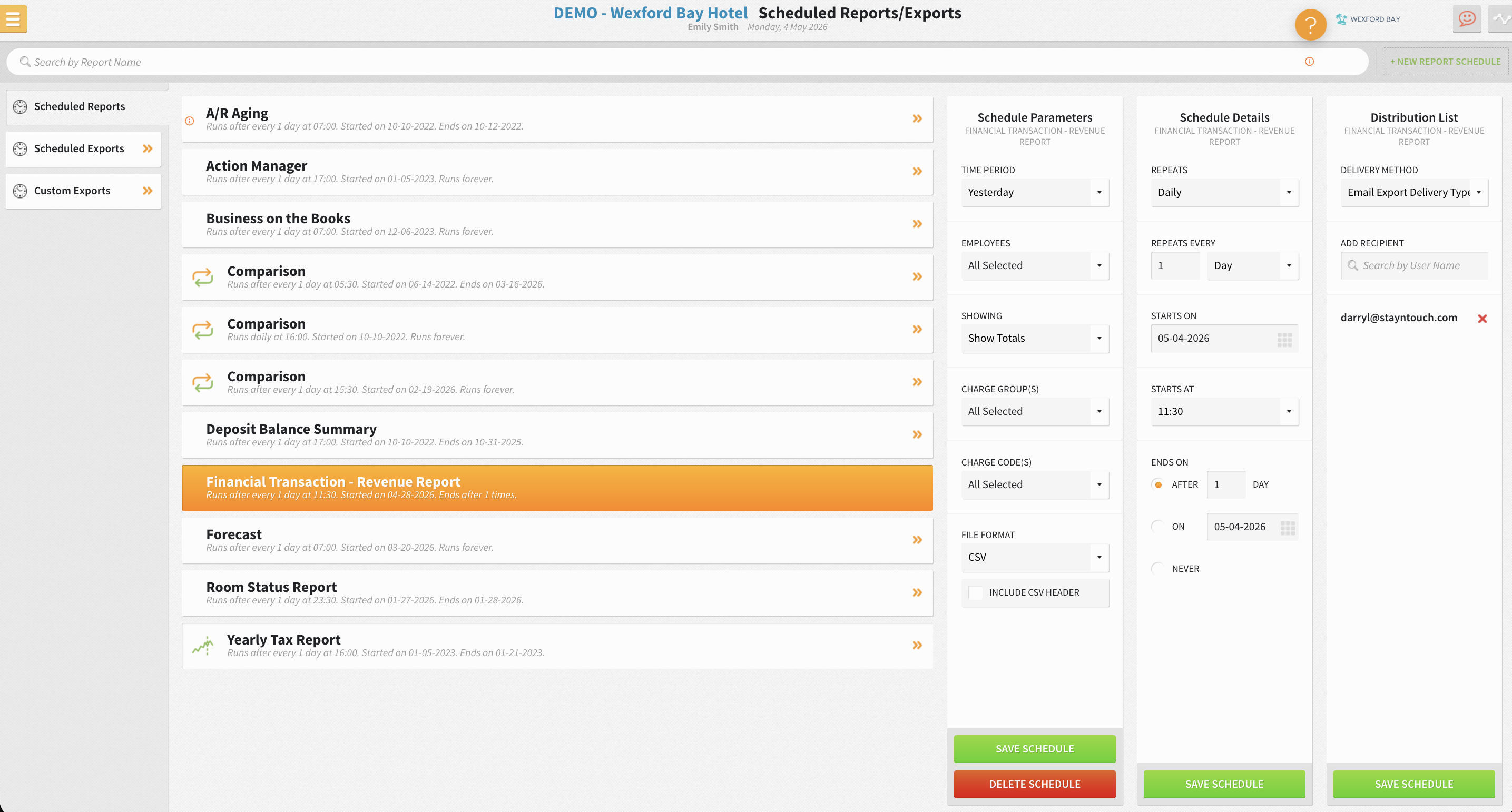
Explore how Stayntouch’s open architecture fits your existing tech stack.
How a Modern PMS Should Run Daily Operations
A hotel front desk management system touches every operational workflow. The following functions show how a well-designed PMS should handle daily work.
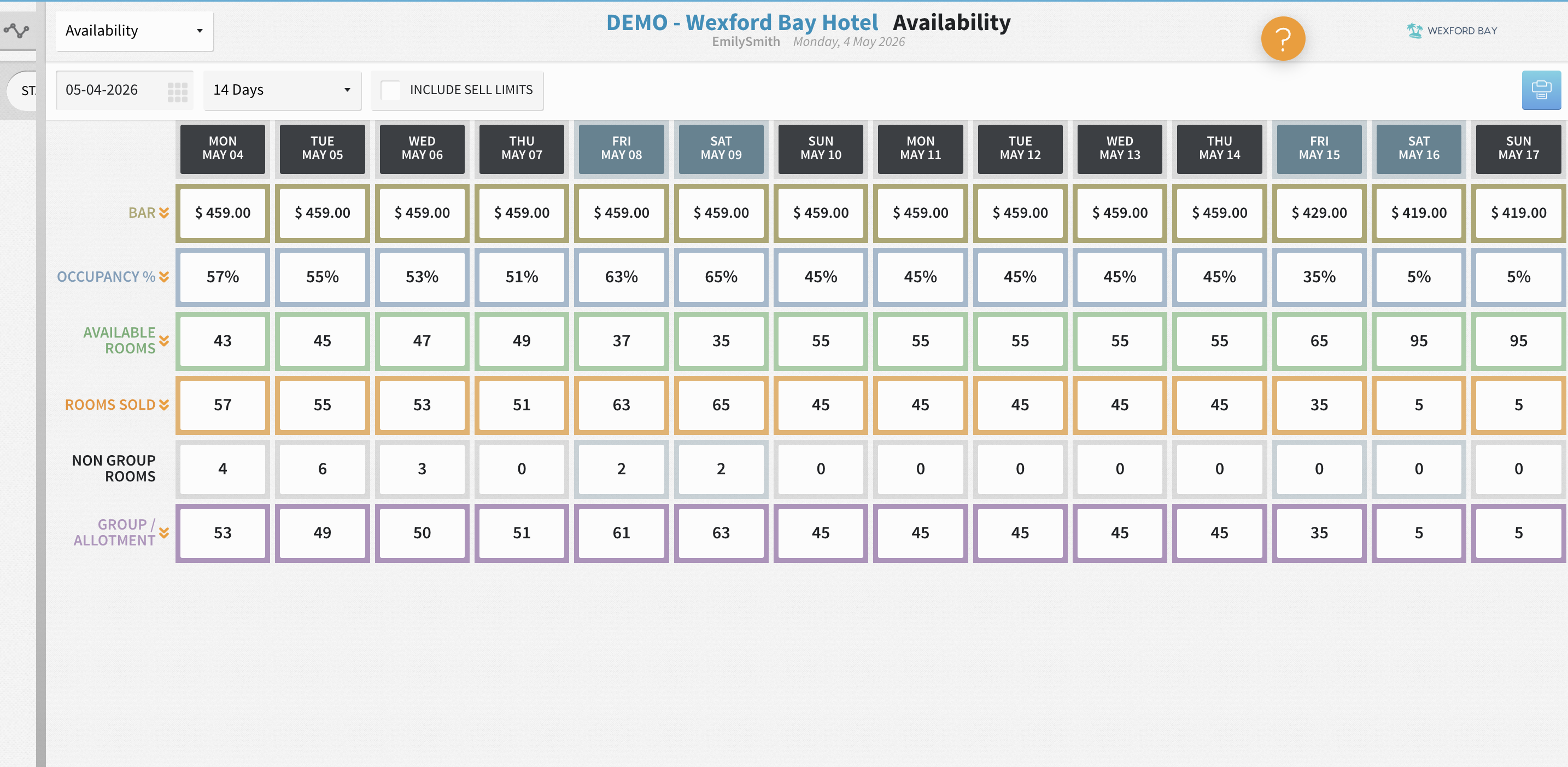
Reservations. A PMS should create, modify, and search reservations from a single screen, with flexible rate structures such as nightly, day-use, and hourly. Group block management should include rooming list upload by CSV and bulk actions across an entire block. Stayntouch’s front desk interface uses select-and-click and drag-and-drop interaction, with a color-coded room diary showing live status across the property.
Check-in and checkout. According to a 2026 Hotel PMS Impact Study by Hotel Tech Report surveying 450 hoteliers, 86% rank the hotel PMS as the single most important system in daily operations. Check-in is the moment that matters most. A J.D. Power study cited by SiteMinder found that when check-in basics are not met, guest satisfaction scores can drop by as much as 100 points on a 1,000-point scale. Stayntouch guests can complete mobile booking in 30 seconds. Staff can complete check-in from a tablet anywhere on property.

Room assignment and housekeeping status. Room status is the operational hinge of a hotel. A room cannot be assigned to an arriving guest until housekeeping has cleaned and inspected it. When that status lives on paper or travels by radio, the front desk works from information that is minutes or hours old. Stayntouch housekeeping runs on mobile devices with real-time status updates that propagate instantly across the system. According to Stayntouch customer data, this delivers a 25% increase in housekeeping productivity.
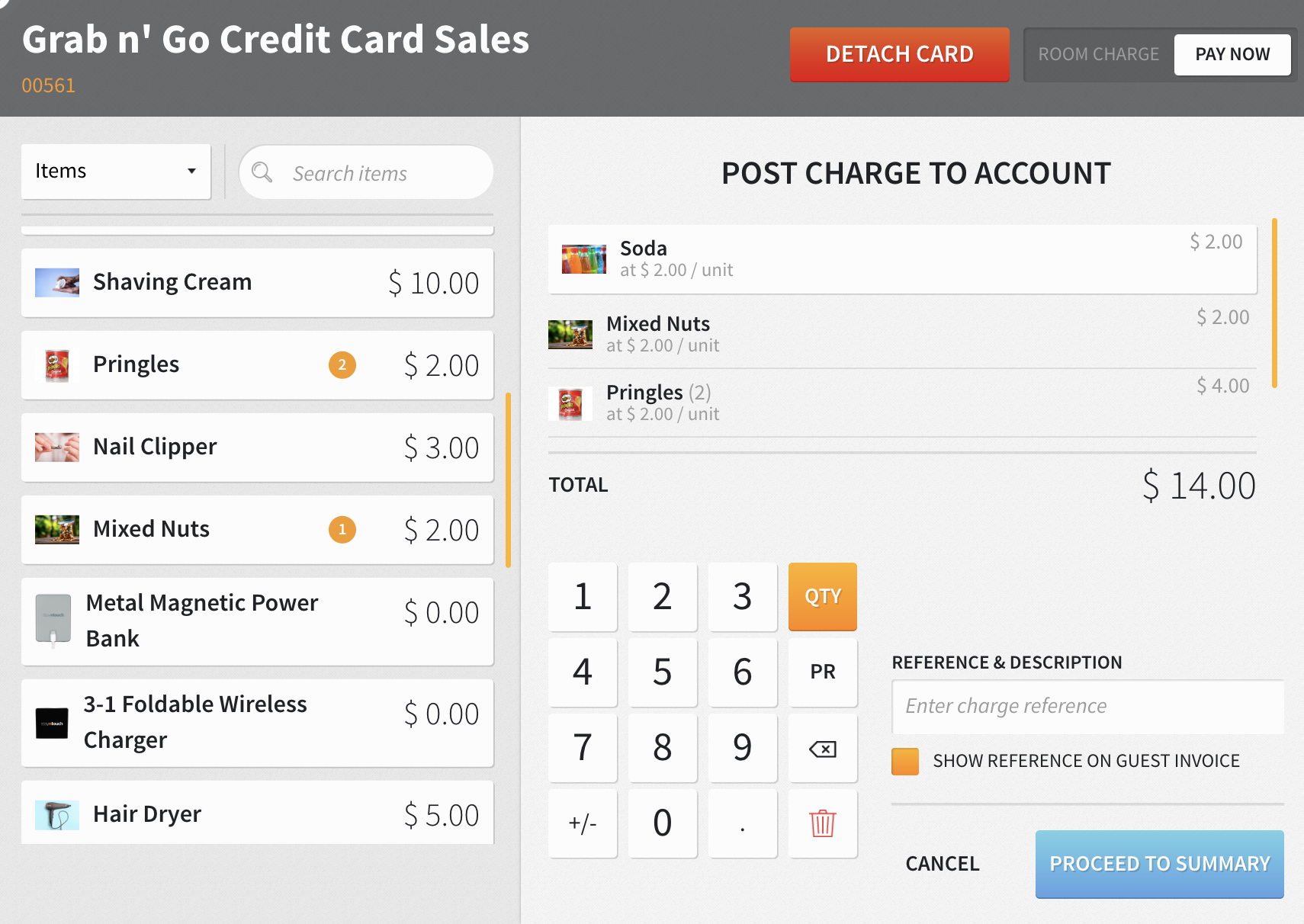
Guest folios and billing. Revenue leaks when charges from restaurants, bars, spa, and retail are not posted to the guest folio before departure. Stayntouch posts charges automatically from every revenue center, including POS, spa, mobile, and the Grab & Go Kiosk, directly to the folio as they occur. Occupancy tax, the per-night tax on the room rate set by city, county, or state, and any additional local taxes apply instantly, with built-in controls that catch errors before they reach a guest.
Night audit automation. The night audit is the end-of-day process that closes out the day’s transactions, posts room charges and taxes, and rolls the system into the next business day. In legacy or spreadsheet-based systems, night audit can take 3–4 hours of manual work. Stayntouch automates the night audit and end-of-day entirely, with no manual intervention required.
Revenue capture beyond the room. Automated upsells for room upgrades, amenities, and monetized early check-in and late checkout run inside the mobile booking and kiosk flows, converting at the moment of highest guest intent. This timing matters because guests are already in a buying mindset. According to Stayntouch customer data, this approach has driven return on investment (ROI) increases of up to 240% on mobile and up to 120% on kiosk at individual properties. These are standout cases, not averages, but they demonstrate the revenue potential when upsells appear at the right moment.
Readiness and Evaluation Checklist
Before committing to a PMS, operators should pressure-test the vendor on the following specifics:
- Implementation timelines. A single Stayntouch property deploys in roughly one month. A full portfolio configures and deploys in 30–45 days. Cobblestone Hotels, one customer, migrated 139 properties across 29 states in 90 days. Auto-Configuration reduces property setup from approximately 30 hours of manual work to 4–5 hours using standardized templates with a pre-submission audit.
- Data migration. The Dataloader module migrates legacy guest profiles, group reservations, company and travel agent profiles, and deposit totals in as little as 1–2 hours. This automated approach handles clean exports efficiently, but legacy systems often produce messy data. When that happens, Stayntouch’s team uses an internal Colab-based cleanup and validation process to reformat and validate the file before running it through Dataloader, rather than rejecting it outright. For data that does not fit the structured migration format, such as group rooming lists or revenue budgets, CSV bulk upload provides an alternative path. When neither automated migration nor bulk upload works, manual data entry remains available as a fallback, though it is slower. Certain fields, such as group blocks, are always created manually regardless of export quality because they require contextual decisions that automation cannot make.
- Training realities. Stayntouch trains front desk staff completely in 2 hours. Full platform training across all modules takes 2 days. The Rate Strategy module, which automates rule-based rate adjustments inside the PMS, trains in 20 minutes. Stayntouch Academy provides role-based, self-paced eLearning with test environments, certifications, and progress tracking, so new hires can onboard without scheduling a trainer. Seventy percent of technology rollouts in hospitality fail to achieve expected goals within the first year primarily due to inadequate staff preparation. Stayntouch’s training model is designed to prevent that outcome.
- Integration cost. More than 1,400 integrations are available at no extra cost to Stayntouch. Each third-party platform charges its own subscription fee, while Stayntouch charges nothing for the connection itself. There are no per-interface fees and no fees for API, or application programming interface, certification.
- Support. Stayntouch provides 24/7/365 follow-the-sun support, with teams across multiple time zones so a request always reaches someone currently on shift. Every customer receives the same support level, with no service tiers and a guaranteed response under one hour. Support is delivered by hospitality specialists, not a chatbot, and is included at no extra cost.
Get a deployment timeline specific to your property count and configuration.
Common PMS Challenges and How to Avoid Them
Data migration risk. The most common fear in a PMS switch is losing reservation history or corrupting guest profiles. A 2026 Hotel Tech Report PMS Study found that data migration complexity is cited by 24% of hoteliers as a top barrier to switching vendors. Stayntouch mitigates this through Dataloader, the internal Colab-based cleanup tool for messy exports, CSV bulk upload for non-standard data, and a structured six-week implementation process with a dedicated project manager. The recommended practice is to schedule cutover on the lowest-occupancy night and retain read-only access to the legacy system for reconciliation.
Training overload. Staff training is cited by 26% of hoteliers as the biggest barrier to switching PMS vendors. The practical solution is role-based training that covers only what each role actually uses, delivered in short sessions rather than all-day lectures. Stayntouch Academy structures learning paths by role, including front desk, housekeeping, night audit, finance, and revenue management. A housekeeper is not trained on rate strategy, and a front desk agent is not trained on financial reporting before they have mastered check-in.
Integration fees. The integration fees mentioned earlier, which can reach five figures per connection, quietly discourage hotels from improving their stack. Stayntouch charges nothing for integrations, so the commercial model actively encourages building the right stack rather than penalizing it. Hotels pay each third-party platform its own subscription fee, while the connection to Stayntouch is always included.
Vendor lock-in. An all-in-one platform decides which revenue management, POS, and CRM tools a hotel is permitted to use. Stayntouch does not. The hotel owns its tech stack decisions. If a better RMS becomes available, the hotel can adopt it. If a preferred POS is already in place, Stayntouch connects to it. The platform uses open APIs with webhooks, which are connections that push data the moment something happens, rather than requiring another system to keep asking.
Support gaps during and after go-live. Many platforms restrict lower-tier customers to email-only support or charge extra for faster response. Stayntouch provides the same 24/7/365 support with a guaranteed sub-one-hour response to every customer, regardless of property size, from day one of implementation through the life of the relationship.
Walk through your specific migration risks and how Stayntouch’s implementation team addresses them.
Frequently Asked Questions
How long does it actually take to train front desk staff on a new PMS?
Training time depends almost entirely on the system, not the staff. Legacy platforms typically require around three months for a basic working grasp and six to nine months to master, which means every new hire in a high-turnover environment is a months-long productivity gap. Stayntouch’s training model, detailed in the Readiness section, eliminates this gap by reducing training to hours and days instead of months.
The practical consequence goes beyond speed. Because Stayntouch is straightforward to learn, hotels can hire for guest-facing ability rather than technical aptitude. Several Stayntouch customers report that the system’s ease of use has widened their hiring pool. They screen for personality and train the system, rather than screening for comfort with technology. Stayntouch Academy provides role-based, self-paced eLearning with test environments, certifications, and progress tracking, so training continues after go-live and does not depend on scheduling a trainer.
What are the real risks of migrating to a new PMS, and how does Stayntouch reduce them?
The three genuine risks in a PMS migration are data loss, operational disruption during cutover, and integration failures. Stayntouch addresses each directly.
For data, Stayntouch uses a multi-path migration approach, described in the Readiness section above, to handle everything from clean automated exports to messy legacy data that requires cleanup. The key risk mitigation is that no file is rejected outright. The team reformats and validates problematic exports rather than forcing manual workarounds.
For operational disruption, Auto-Configuration reduces property setup from approximately 30 hours of manual work to 4–5 hours. A structured six-week implementation process with a dedicated project manager runs from team introductions through go-live preparation. Cutover is scheduled on the lowest-occupancy period, and the legacy system remains available for reconciliation afterward.
For integrations, Stayntouch’s open APIs and 1,400+ pre-built connections mean that the tools a hotel already uses, such as door locks, POS, and accounting software, connect without custom development. Two integration paths cover both modern cloud-to-cloud connections and legacy hardware via bridge integrations, so existing equipment does not have to be replaced.
Is a best-in-class PMS more expensive than an all-in-one platform when you factor in all the integrations?
The sticker price comparison often favors all-in-one platforms. The total cost of ownership comparison often does not. Stayntouch includes 1,400+ integrations at no extra cost, with no per-interface fees and no API certification fees. Each third-party platform charges its own subscription fee, but Stayntouch charges nothing for the connection itself. Legacy enterprise platforms can charge as much as $10,000 for a single new integration, which means every technology decision becomes a budget negotiation and the stack stops improving.
The other cost that rarely appears in a comparison is the cost of inadequate tools. An all-in-one platform that does not deliver the depth a hotel needs in revenue management, POS, or CRM forces workarounds such as manual processes, spreadsheet reconciliation, and staff time that does not show up on a software invoice but accumulates across every shift. Stayntouch’s model is a quote-based monthly SaaS fee with no maintenance fees, no per-integration charges, and support included. Implementation costs are quoted separately and are deliberately flexible.
Does Stayntouch work for smaller independent hotels, or is it built only for large portfolios?
Stayntouch is built for independent hotels, boutique groups, and multi-property portfolios. The preferred property size is 75 rooms and above, and the platform scales from a single property to portfolios of 100+ hotels managed from one login. Smaller independent hotels are well served, because they typically want ease of use and a structured onboarding experience, which is exactly what Stayntouch’s implementation team provides. Fit matters more than room count. Stayntouch works best for independent properties, independent hotel groups, and branded properties in the process of deflagging, meaning leaving a major brand to operate independently. The platform is not designed for golf resorts, casino hotels, or vacation ownership properties.
Conclusion and Next Steps
A hotel front desk management system is not a back-office tool. It is the daily command center for every guest interaction, every revenue transaction, and every operational handoff between departments. The choice of PMS determines how long new staff take to become productive, how quickly a portfolio can be deployed, how much a hotel pays to connect the tools it needs, and whether guests arrive to a warm welcome or a lobby queue.
The market is moving toward best-in-class architecture for a clear reason. Concentrated engineering effort produces deeper features, faster training, and more reliable integrations than a vendor spreading development across every category of hotel technology. Stayntouch delivers on these requirements through concentrated engineering effort and open architecture, the training speed, deployment timeline, and integration model described throughout this guide.
The decision framework stays straightforward. Evaluate training speed, deployment timeline, integration model, architecture, mobile capability, multi-property support, and support quality. Then test each against what a vendor can actually demonstrate, not what it describes in a slide.
See Stayntouch in action and get a deployment plan specific to your property or portfolio.
Read Next
Turn a more connected stack into a better stay.
See how Stayntouch can support the operating moments that matter most to your hotel team.