Written by: Kelly Campbell, Vice President of Marketing, Stayntouch
Key Takeaways
- Legacy PMS systems trap staff behind screens and create training bottlenecks that prevent boutique hotels from delivering the personalized, intimate experiences guests expect.
- The four pillars of boutique differentiation, sensory arrival, local storytelling, anticipatory service, and authentic dining, can all be executed without adding headcount when staff have mobile access to real-time guest data.
- Mobile-first PMS capabilities like tablet check-in, automated pre-arrival messaging, and integrated guest profiles reduce staff-assisted check-in by 54% and free employees to focus on hospitality rather than transactions.
- Properties using integrated systems see measurable gains, including up to 240% ROI on mobile upsells, a 25% increase in housekeeping productivity, and 70% more efficient multi-property management from a single dashboard.
- Ready to deliver exceptional boutique experiences without adding staff? See how a mobile-first PMS transforms boutique operations.
Sensory Arrival That Starts the Stay Strong
The first sixty seconds of a stay anchor every guest perception that follows. Many travelers seek personalized sensory experiences, and lobby and arrival zones deliver the highest commercial impact from multisensory design because the first sensory impression anchors the guest’s perception of the entire stay.
- Program a signature scent through existing HVAC. The owner or general manager (GM) sets the brief, and facilities executes. Fragrance development typically takes 12-16 weeks or longer depending on complexity and scale, so properties should begin this process well before any planned opening or rebranding. Once the signature scent is finalized, diffusion integrates with existing HVAC infrastructure, so no new hardware is required. To maintain consistency, maintenance schedules include cartridge replacement and intensity checks. A best-in-class PMS with real-time housekeeping status ensures rooms reach target condition before guests arrive, so the scent experience is not undermined by a room that is not ready.
- Set thermal comfort before peak arrival. Facilities or IT programs HVAC brand-standard temperature ranges for arrival spaces and guest rooms. Reaching target temperatures before peak arrival times rather than reacting to occupancy removes a common friction point. A mobile PMS gives the front desk live room-readiness data, so early arrivals are assigned rooms that are already at temperature.
- Map ambient sound to guest journey stages. The GM or operations leader defines the brief, and a playlist service executes. Energizing tones in public spaces during morning hours and softer frequencies in evening transition zones require no ongoing staff intervention once programmed. Training time stays limited to one briefing session.
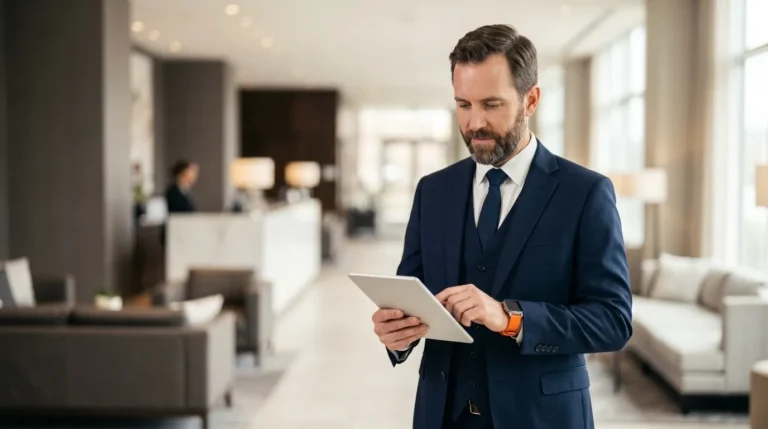
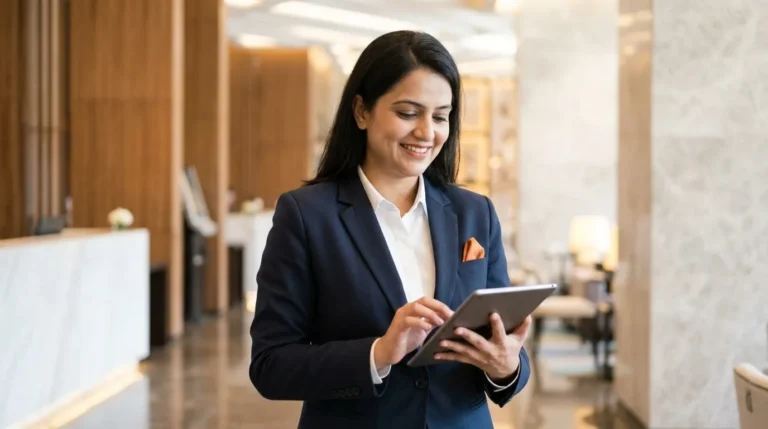
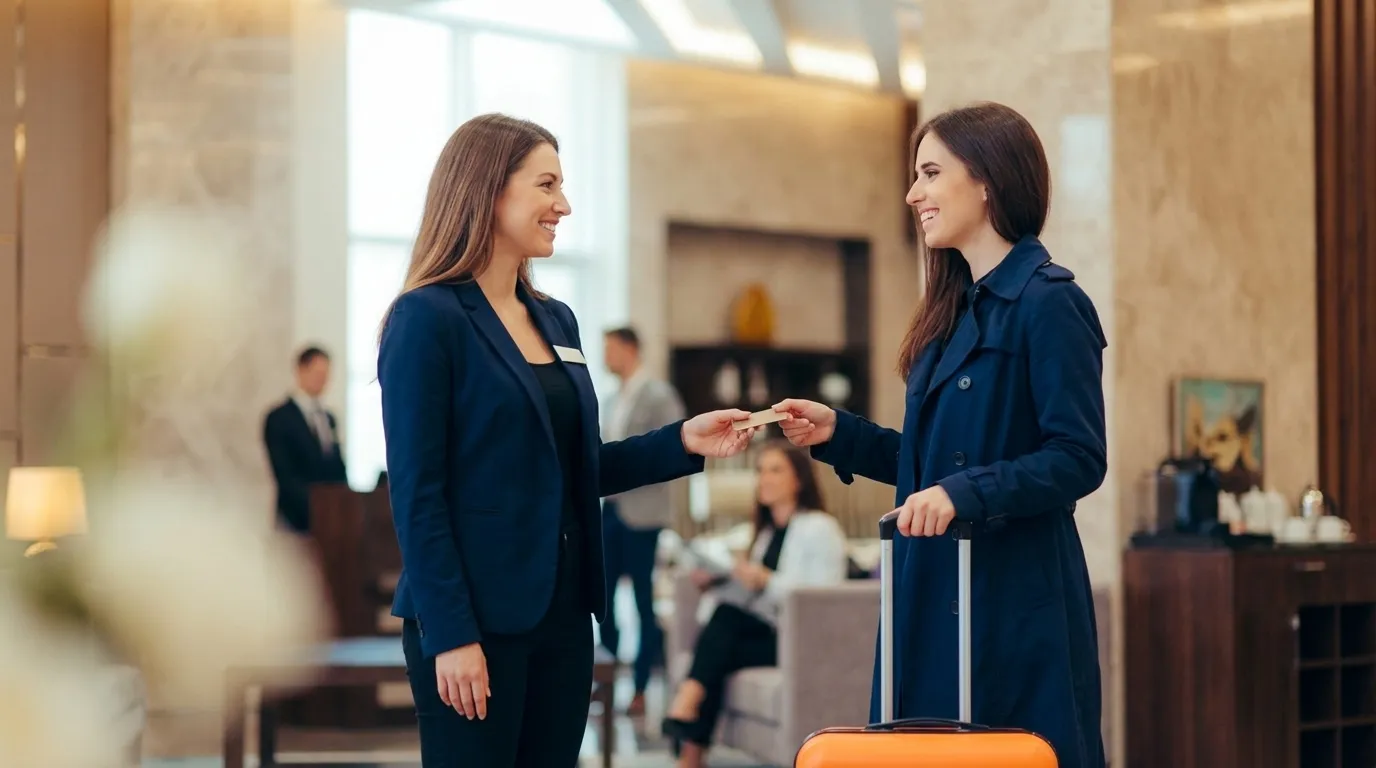
- Greet guests away from the desk. Front desk staff use a tablet running the PMS to meet guests at the door, confirm their reservation, and hand over a key, without returning to a workstation. According to Stayntouch customer data, this approach delivers the 54% reduction in staff-assisted check-in noted earlier. The welcome becomes a moment of hospitality rather than an administrative transaction. Daniel Tennant, former General Manager of Hotel on Rivington, described the before state plainly, “The staff could never raise their heads to look the guest in the eye because of all the screens that they had to click through.”
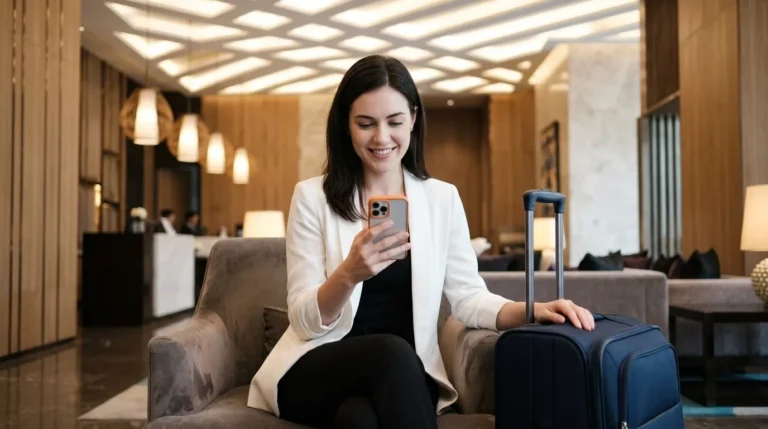
- Offer mobile check-in for guests who prefer it. Guests complete registration and payment before arrival and check out from their phone in 30 seconds, then go straight to their room via a digital key. Staff time is redirected to guests who want a personal welcome. Both paths run simultaneously, so no guest is forced into either.
What not to do: Deploy a check-in kiosk or mobile flow that requires staff to stand beside it and guide every guest through the process. That recreates the desk queue in a different location. A best-in-class PMS enables self-service that is genuinely self-sufficient, with staff free to move through the lobby rather than monitor a screen.
Local Storytelling That Feels Genuine
Boutique properties that invest in storytelling can achieve higher direct booking rates than those relying solely on discounts or promotions. Many guests value local experiences over room upgrades. The story of place becomes a revenue lever, not a marketing afterthought.
- Build a local partner network and document it in the PMS. The GM or director of operations establishes relationships with artisans, farms, and cultural venues. Staff add structured notes to the guest profile, the core record of a guest’s history and preferences, so any team member can make a relevant recommendation without a live briefing. No additional headcount is required because the knowledge lives in the system.
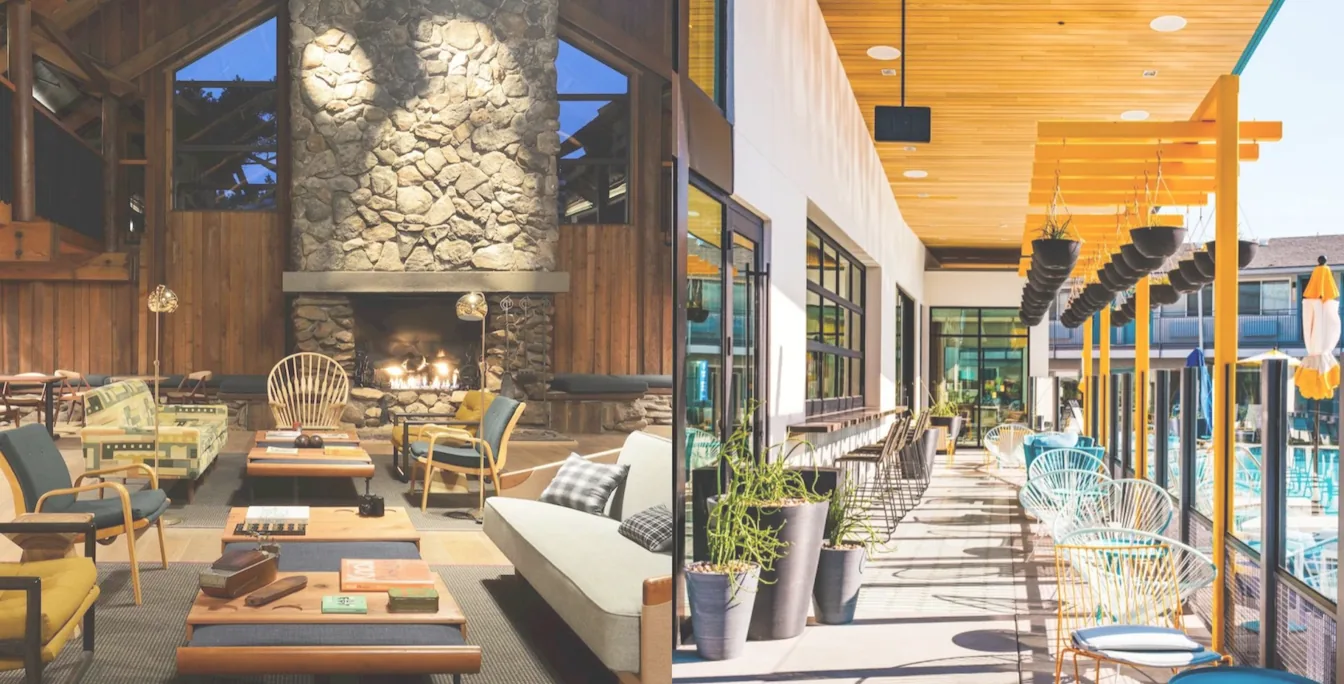
- Embed local materials and provenance into the physical space. Boutique hotels can turn the property into a showcase for the destination by featuring handmade furniture, textiles, artwork, and seasonal ingredients. This one-time design decision communicates local identity to every guest without ongoing staff effort.
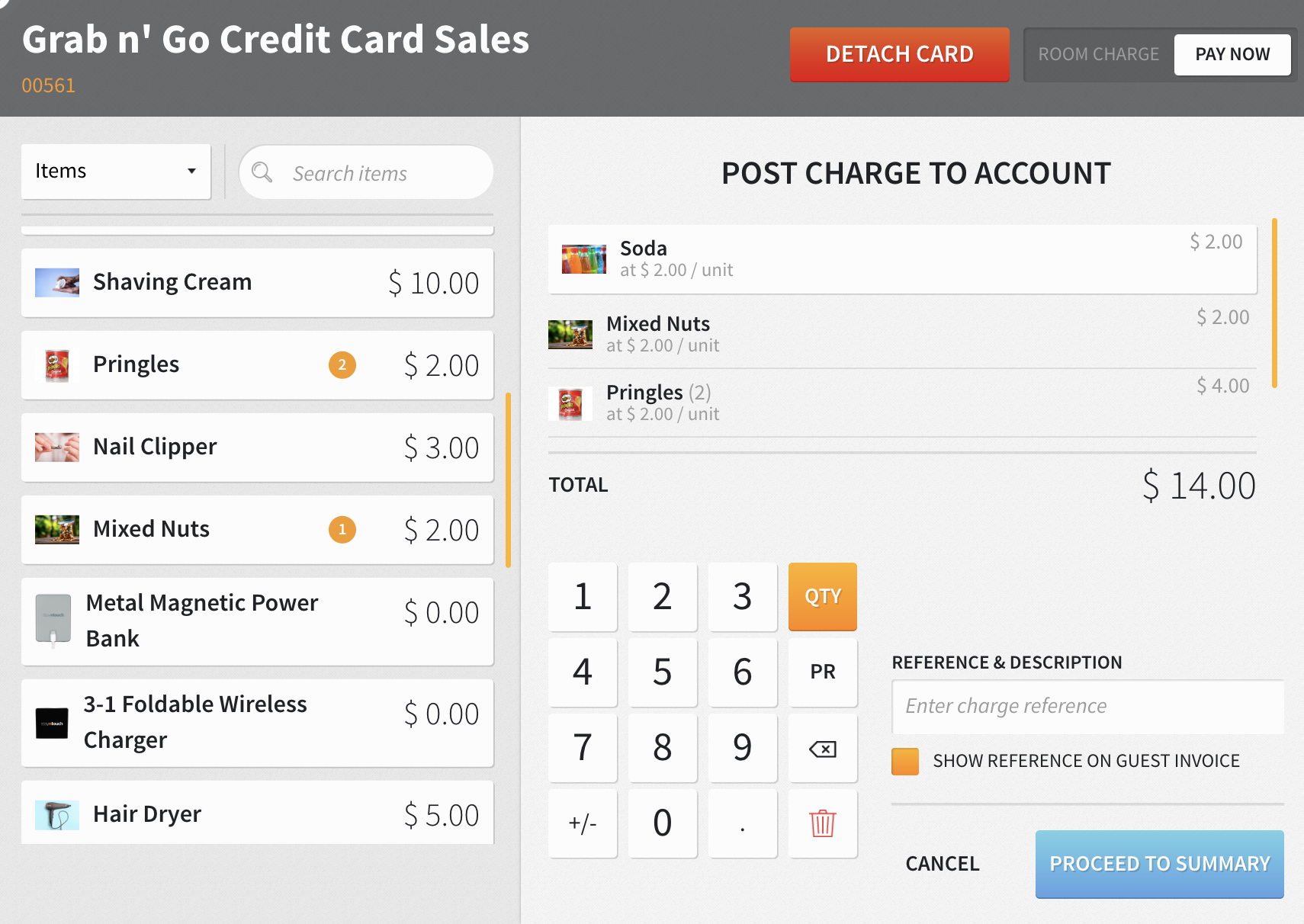
- Stock the lobby retail with locally made goods. Beyond the fixed environment, retail offers another storytelling layer that guests can take home. Handmade jewelry, artisanal goods, and locally roasted coffee from regional makers give guests a tangible connection to the destination. A Grab & Go Kiosk, a self-service retail terminal integrated directly with the PMS, posts every transaction automatically to the guest’s folio, their running bill for the stay, and into reporting, with no additional staffing and no manual reconciliation.
- Use pre-arrival messaging to set the local narrative. Automated messages sent before arrival introduce the neighborhood, the property’s story, and curated local recommendations. Stayntouch Guest Messaging handles this with AI-powered outreach across SMS and WhatsApp, with real-time two-way translation so language never becomes a barrier. Staff review exceptions, while routine outreach runs without intervention.
- Train staff on the local story during onboarding. When a PMS trains in 2 days for the full platform, the remaining onboarding time can go to the property’s narrative, local partners, and neighborhood knowledge. Jeff Johnsen, General Manager of The Waterfront Inn, noted, “With Stayntouch PMS, we can train new staff in just hours, and our employees have the flexibility they need to prioritize our guests as soon as they enter our doors.”
What not to do: Rely on a printed local guide that is updated once a year. Guest preferences and local offerings change constantly. A PMS with live guest profiles and integrated messaging keeps recommendations current and personal.
Anticipatory Service Built on Real Guest Data
Properties that achieve anticipatory personalization can see higher guest lifetime value. Guests who complete pre-arrival surveys can generate higher ancillary revenue per stay, particularly in spa and dining. Anticipatory service comes from data that staff act on before the guest arrives.
- Send a pre-arrival survey and route responses to the PMS. The revenue or operations leader configures the workflow, and front desk and housekeeping act on it. Pre-arrival surveys shift preference gathering upstream so services can be batched or automated before arrival rather than handled reactively during peak check-in periods. Responses attach to the guest profile automatically.
- Surface guest history at every touchpoint. A best-in-class PMS maintains comprehensive guest profiles synchronized across properties. A returning guest is never asked whether they have stayed before. Staff see dietary needs, room preferences, and celebration context before the guest walks in. According to Stayntouch customer data, multi-property management runs 70% more efficiently from a single dashboard, with shared guest profiles across the group.
- Automate upsell offers at the moment of highest intent. Mobile check-in and kiosk flows present targeted offers for room upgrades, early check-in, late checkout, and amenity packages at the point when guests are most likely to convert, immediately after they have committed to the stay but before they have mentally closed the transaction. This timing advantage explains why, according to Stayntouch customer data, automated upsells have driven return on investment increases of up to 240% on mobile and up to 120% on kiosk at individual properties, which are standout cases, not averages.
- Use real-time housekeeping status to deliver on early check-in promises. Mobile housekeeping tools update room status the moment a room is inspected, pushing that status change directly to the front desk system. Because the front desk sees availability instantly, without waiting for a phone call or radio check, staff can assign a room to a guest who paid for early check-in without delay. According to Stayntouch customer data, this approach produces a 25% increase in housekeeping productivity. The operational signal becomes a revenue moment.
- Assign a property champion to own the guest data workflow. Stayntouch Academy, a role-based, self-paced eLearning platform with certifications and progress tracking, includes a Property Champion learning path. This person maintains profile quality, trains new staff on preference capture, and ensures the data that enables anticipatory service stays accurate. Training no longer depends on scheduling an external trainer.
What not to do: Collect preference data in a pre-arrival email and store it in a spreadsheet that no one checks at check-in. Anticipatory service requires the data to be in the system staff use at the moment of service, not in a separate file.
See how Stayntouch surfaces guest data where staff actually work.
Authentic Dining That Extends the Brand
Boutique hotel restaurants differentiate through hyper-local sourcing and chef-led experiences that turn dining into immersive expressions of place and identity. Ancillary revenue from food and beverage (F&B) increases measurably when staff have access to guest preference data before and during service interactions.
- Source seasonally from local producers and make the sourcing visible. A farm-to-fork approach partnering with local suppliers to reflect the region in every dish delivers hyper-local seasonal cuisine without requiring additional headcount when the concept is tightly integrated. The story of the ingredient becomes part of the service.
- Connect the POS to the PMS so dining charges post automatically. A point-of-sale (POS) system, the software restaurants and bars use to ring sales, integrates with the PMS so every F&B charge posts to the guest’s folio in real time, with no manual entry and no end-of-shift reconciliation. Stayntouch integrates with Toast, Oracle Micros, Lightspeed, and 1,400+ other systems at no additional cost for the integration itself, while each third-party platform carries its own platform fee. According to Stayntouch customer data, this delivers up to a 42% improvement in accounting efficiency.
- Use guest preference data to personalize the dining experience. Dietary restrictions, celebration context, and past F&B spend live in the guest profile. When the PMS and POS share data, the server knows this before the guest sits down. Personalized upselling can increase average spend per guest.
- Offer chef-led or immersive dining formats that require no additional staff. Immersive culinary programs that let guests engage directly with local ingredients and traditional techniques transform meals into storytelling experiences. A single chef leading a small-group experience delivers high perceived value with existing team members.
- Use the Grab & Go Kiosk for 24-hour F&B revenue without staffing it. Guests and non-guests purchase food, drinks, and essentials at any hour. Charges post automatically to the folio. The kiosk generates incremental revenue that requires no additional headcount and never closes.
What not to do: Run F&B as a disconnected revenue center where charges are collected manually and posted at end of shift. Every gap between a sale and its posting is a revenue leakage risk. Integration provides the control.
Measuring Success Across the Four Pillars
Delivering these four pillars without adding staff requires proof that the operational changes are working. Four objective indicators show whether these pillars are producing measurable results:
- Lobby wait time. Track average time from arrival to room key. A best-in-class PMS with mobile check-in and real-time room status should reduce this measurably within the first month of deployment.
- Review sentiment on personalization. Monitor post-stay reviews for mentions of staff attentiveness, personal recognition, and local recommendations. Hotels implementing AI guest feedback analysis can achieve measurable reputation gains.
- Repeat-booking rate. Guests who feel personally recognized are more likely to return. Track direct repeat bookings as a share of total bookings month over month.
- Staff time on guest-facing versus administrative tasks. Measure the ratio before and after PMS implementation. According to Stayntouch customer data, mobile tools and automation deliver the 54% check-in reduction and 25% housekeeping productivity gain described in the pillar sections above, returning time to guest interaction.
Frequently Asked Questions
How long does it take to train staff on a new PMS, and does that change with high turnover?
Stayntouch trains front desk staff completely in 2 hours on front desk and reservation management. Full platform training across all modules takes the 2 days noted earlier. In a high-turnover environment, that means a new hire is productive on their first shift rather than spending weeks in training before they can serve guests independently. Stayntouch Academy provides self-paced eLearning with certifications and progress tracking, so onboarding does not depend on scheduling a trainer. Several Stayntouch customers report a secondary benefit, because the system is easy to learn, they can hire for guest-facing personality rather than technical aptitude.
How does a best-in-class PMS maintain consistent guest experience across multiple boutique properties?
Stayntouch’s multi-property dashboard manages configuration, rate types, deposit and cancellation policies, charge codes, user permissions, and housekeeping task lists centrally, pushing them to every property in the group. Guest, company, and travel agent profiles are shared globally with aggregated stay history, so a returning guest at a sister property arrives with their preferences already known. According to Stayntouch customer data, multi-property management runs 70% more efficiently from a single dashboard. A new property opens on a pre-configured template rather than a blank system.
What is the risk of data loss when migrating from a legacy PMS?
Stayntouch’s Dataloader module migrates guest profiles, group reservations, company and travel agent profiles, and deposit totals in as little as 1–2 hours. For legacy exports that are not clean, Stayntouch provides an internal data cleanup and validation process that reformats and validates messy files before migration rather than rejecting them. Manual data entry remains available as a fallback when automated migration is not feasible. Certain fields, such as group blocks, are always created manually regardless of export quality. Non-standard data such as group rooming lists or revenue budgets can be uploaded as CSV files. Auto-Configuration reduces property setup from approximately 30 hours of manual work to 4–5 hours. A full portfolio deploys in 30 to 45 days.
Does Stayntouch charge for integrations with the dining, CRM, and revenue management systems a boutique hotel already uses?
Stayntouch provides 1,400+ integrations with unlimited connections at no additional cost for the integration itself. Each third-party platform, whether a point-of-sale system like Toast or Oracle Micros, a customer relationship management (CRM) platform like Salesforce or Revinate, or a revenue management system (RMS) like IDeaS or Duetto, carries its own platform fee, which the hotel pays directly to that vendor. Stayntouch charges nothing for the connection. This structure turns improving the tech stack into an operational decision rather than a capital one.
What support is available after go-live, and is it tiered by property size?
Stayntouch provides 24/7/365 support for every customer with no service tiers, a guaranteed response under one hour, and a dedicated customer success team. Support is delivered by hospitality and product specialists, not a chatbot or a generalized help desk. Follow-the-sun support, with teams staffed across multiple time zones so a request always reaches someone currently on shift, means a boutique property in any market gets the same response as a large chain. All support is included at no extra cost.
Ready to Turn Every Interaction Into Revenue?
Legacy systems and high turnover do not have to define the boutique guest experience. Sensory arrival, local storytelling, anticipatory service, and authentic dining are all achievable without adding headcount when staff are freed from screens and given real-time guest data wherever they stand on property.
Stayntouch is a best-in-class, cloud-native PMS built mobile-first, connected to 1,400+ integrations at no extra cost for the integration itself, and designed to train front desk staff in 2 hours. The 94% recommendation rating on Hotel Tech Report and back-to-back TravelTech Breakthrough “Hotel PMS Company of the Year” awards in 2025 and 2026 reflect what operators find when they make the switch, a system that gets out of the way so staff can do what boutique hospitality requires.
Experience what a best-in-class PMS feels like in a boutique operation.
Turn a more connected stack into a better stay.
See how Stayntouch can support the operating moments that matter most to your hotel team.