

Written by: Kelly Campbell, Vice President of Marketing, Stayntouch
Key Takeaways
- Independent hotels face rising chargeback costs averaging $450 per dispute and fragmented payment systems that 72% of hospitality businesses find inefficient.
- PCI DSS Level 1 compliance, point-to-point encryption, and tokenization protect card data and reduce breach risk.
- Transparent pre-authorization holds, clear policy disclosures, and signed digital registration cards minimize friendly fraud and chargeback disputes.
- Automating folio posting, night audit, and reconciliation through a single PMS-native provider improves accounting efficiency by up to 42% and supports faster settlement.
- Contact Stayntouch to consolidate your payment stack and simplify reconciliation with Stayntouch Pay.
1. Maintain PCI DSS Compliance and Point-to-Point Encryption
PCI DSS, the Payment Card Industry Data Security Standard, is the global security framework that any hotel storing, processing, or transmitting cardholder data must meet. PCI DSS scope in hotels is unusually broad, covering front-desk terminals, the PMS, the booking engine, the channel manager, and even paper registration cards.
PCI DSS v4.0.1, mandatory since March 31, 2025, made 51 previously future-dated requirements enforceable and shifted emphasis from point-in-time validation to continuous monitoring. Key obligations include:
- Strong cryptography for all cardholder data transmitted over open networks
- Multi-factor authentication for all access to the cardholder data environment
- Quarterly vulnerability scans and annual penetration testing
- Script inventory and integrity monitoring on every payment page
Point-to-point encryption (P2PE) scrambles card data from the moment it is entered at the terminal until it reaches the processor. This approach reduces PCI scope because cardholder data never exists in clear text inside hotel systems. Data breaches in hospitality have averaged over $3.6 million per incident, so encryption protects both compliance status and the bottom line.
Stayntouch implementation note: Stayntouch Pay is certified to PCI DSS Level 1, the most stringent tier, with point-to-point encryption built into every card terminal. The security program includes quarterly patching, daily vulnerability scanning, and annual penetration testing, all managed on the hotel’s behalf.
2. Use Tokenization to Protect Stored Card Data
While point-to-point encryption protects card data in transit, tokenization protects data at rest. Tokenization replaces a guest’s real card number with a meaningless substitute value, a token, so the actual Primary Account Number (PAN) is never stored in the PMS. When a charge is needed, the PMS passes the token to the payment platform, which retrieves the underlying card data from its secure vault to process the transaction.
The operational benefit is significant. Tokenization enables hotels to:
- Post incidental charges throughout a stay without re-presenting the card
- Process late checkout fees, minibar charges, and room service automatically
- Reduce PCI DSS scope, potentially qualifying for a lighter Self-Assessment Questionnaire (SAQ)
- Improve authorization rates by 2–3 percentage points through network tokenization
Stayntouch implementation note: Stayntouch Pay applies tokenization at the point of card capture. Raw card numbers never enter the PMS, so a breach of hotel systems exposes nothing usable. This architecture supports automated folio posting across the entire stay without additional card presentations.
3. Set Transparent Pre-Authorization Holds
A pre-authorization hold is a temporary reservation of funds on a guest’s card at check-in. It covers the estimated room rate plus incidentals such as minibar, dining, parking, and potential damages. Luxury properties often hold $200–$250 per night on top of the full room rate and taxes.
Several connected practices reduce friction and disputes. Start with the initial authorization. Under Visa’s Hotel/Lodging Authorization Rules, the first authorization can cover the estimated total stay plus an additional amount for incidentals, with incremental authorizations allowed for charges that exceed the original estimate. For stays exceeding five to seven days, re-authorize before the original hold expires, because card-present lodging authorizations expire within that window without a lodging-specific transaction qualifier.
Debit cards require even closer attention. Debit card holds should be refreshed every five days, as issuing banks frequently expire debit holds early, sometimes within 72 hours, without notification. Finally, when the final folio matches the pre-authorization exactly, hold releases can occur within 24 to 72 hours. Credit card releases typically complete in 1–3 business days, while debit card holds take 5–10 business days.
Stayntouch implementation note: Stayntouch Pay supports incremental authorizations and automated hold management within the PMS, which reduces the front-desk overhead of manual re-authorization tracking.
4. Communicate Payment and Policy Details at Every Touchpoint
First-party fraud, also called friendly fraud, accounts for a significant portion of hotel chargebacks. Many of these disputes come from guests who did not fully understand the policy they accepted. Some hotel chains use vague language such as “a hold will be placed at check-in” instead of clearly stating the incidentals hold amount in booking confirmations.
A defensible policy disclosure covers:
- The exact pre-authorization amount and what it covers, stated at booking confirmation and repeated at check-in
- Cancellation deadlines with explicit timestamps and time zones
- No-show and late-cancellation fee amounts
- Expected hold release timeline after checkout
- A recognizable merchant name on card statements, since generic or unrecognizable merchant names are a leading trigger for “I don’t recognize this transaction” disputes
Stayntouch implementation note: Stayntouch Digital Registration Cards capture signed terms and conditions digitally before or during arrival, creating a timestamped record that reduces disputes. Signed policy acknowledgment is the single most effective piece of evidence in a chargeback representment.
5. Favor Credit Cards Over Debit for Most Stays
Credit and debit cards behave differently in a hotel context, and that difference affects operations. Credit card pre-authorization holds usually release in 1–3 business days after checkout for most issuers. Debit card holds take 5–10 business days and are more likely to expire mid-stay without notification, which creates settlement risk.
For guests, a debit hold ties up actual funds in their bank account rather than available credit. Longer stays can trigger overdraft issues. Business travelers often prefer streamlined pre-authorizations because they pay with company cards, while leisure guests may value flexible payment options, including digital wallets or cash deposits, as alternatives to debit holds.
Hotels should communicate the debit card hold policy explicitly at booking and check-in. They should also consider offering digital wallet alternatives for guests who prefer not to tie up debit funds.
Stayntouch implementation note: Stayntouch Pay supports credit cards, debit cards, digital wallets, and local payment methods. Guests get the options they prefer, and the hotel gets the settlement certainty it needs. Funds settle two business days after transaction.
6. Add Digital Wallets and Contactless Payment Choices
Contactless and digital wallet payments have moved from preference to expectation. Contactless transactions accounted for 73% of Mastercard face-to-face switched transactions as of May 2025, and there are 5.2 billion digital wallet users globally in 2026.
The guest experience impact is direct. A Skift survey of hospitality executives identifies limited payment options as having the greatest negative impact on commercial performance, while an Adyen report finds that 37% of guests have abandoned bookings due to unavailable preferred payment methods. A 2022 Oracle Hospitality and Skift study found that 73% of travelers want to use their mobile device to manage their hotel experience, including checking in and out, paying, and ordering food.
Digital wallet transactions also carry built-in tokenization and one-time cryptograms, which reduce fraud exposure on card-not-present bookings, a primary chargeback trigger.
Stayntouch implementation note: Stayntouch Pay supports digital wallets and contactless payments across all touchpoints, including the front desk, the Stayntouch Kiosk, and online. The Kiosk enables self-check-in with an integrated card reader and key encoder, supporting staffless digital key issuance and payment in under a minute.
7. Automate Folio Posting and Night Audit
A folio is a guest’s running bill for the stay, covering room charges plus everything posted from restaurants, spa, minibar, or retail. Manual folio posting is a primary source of revenue leakage in hotel operations. Charges not posted before checkout are simply lost. Hotels may lose between 1–2% of OTA revenue each month due to undetected inconsistencies in virtual credit card payments alone.
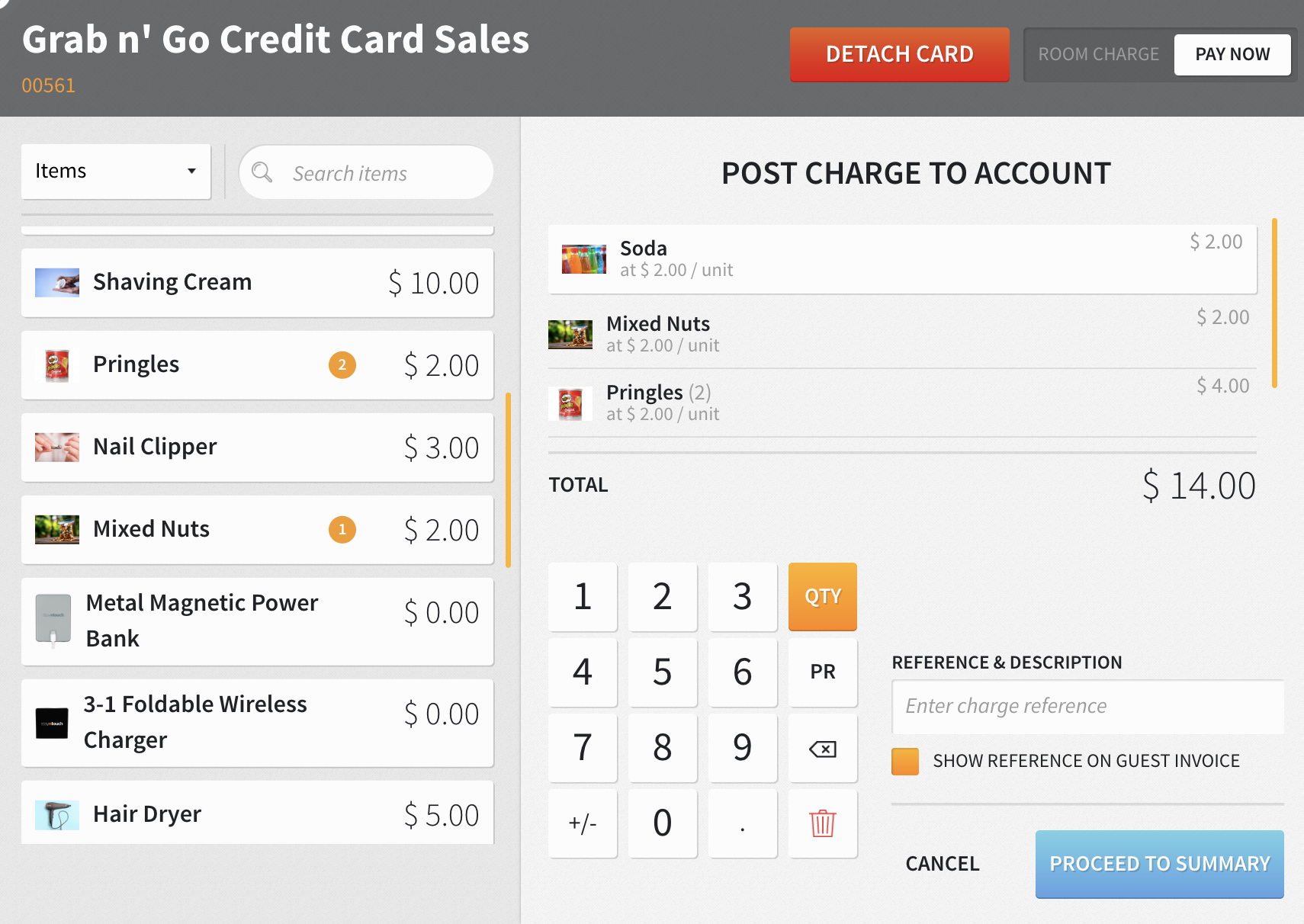
The night audit, the end-of-day process that closes out transactions, posts room charges and taxes, and rolls the system into the next business day, has traditionally been manual and overnight. Automation removes this error surface.
According to Stayntouch customer data, automated charge posting and payment integrations deliver up to a 42% improvement in accounting efficiency. Charges post automatically from every revenue center, including point-of-sale (POS), spa, mobile, and the Grab & Go Kiosk, directly to the guest folio as they occur, with occupancy tax applied instantly.
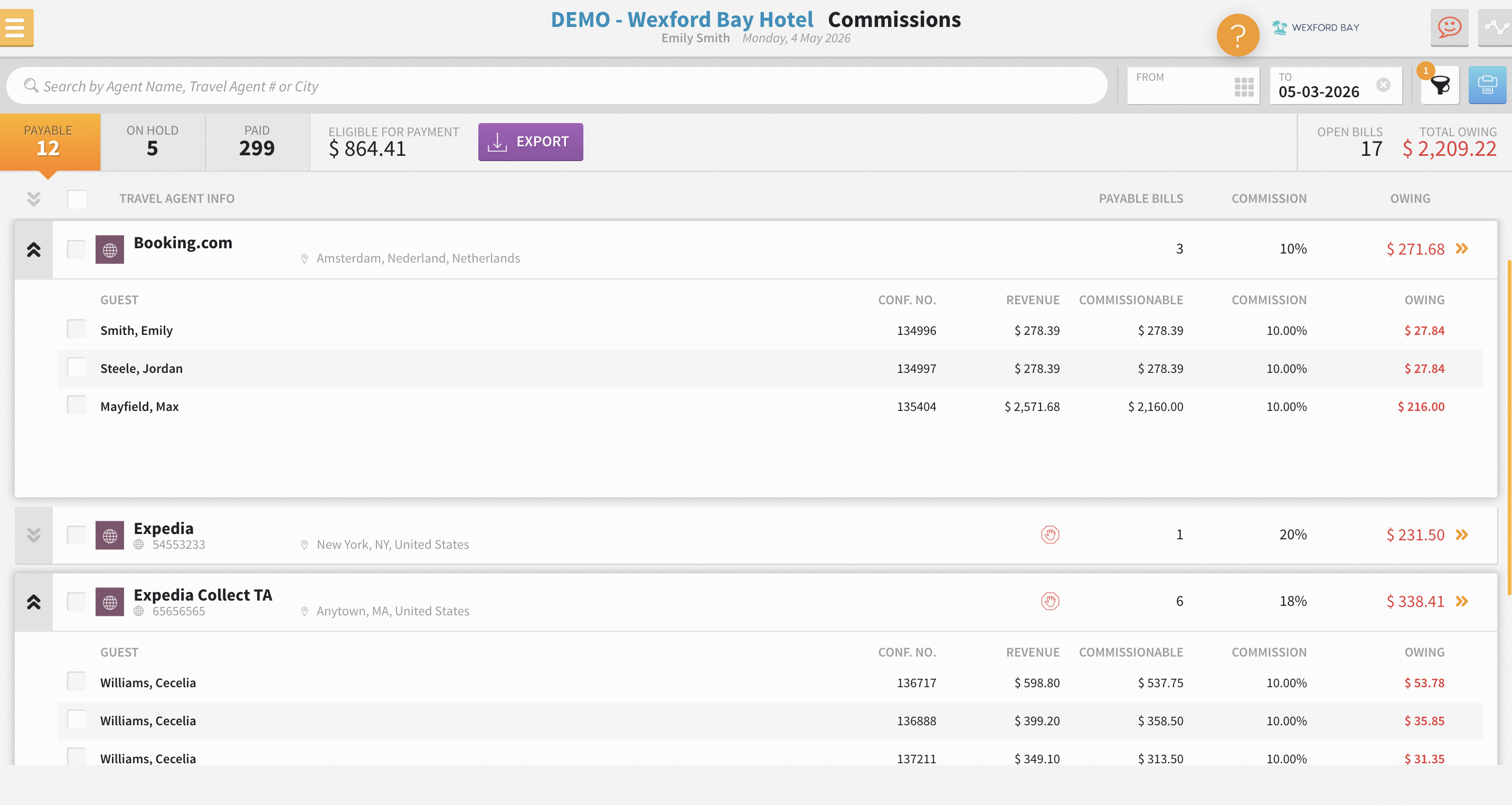
Stayntouch implementation note: Stayntouch PMS automates night audit and end-of-day processing. Stayntouch Pay uses webhooks, which push data the moment something happens, to keep the folio in sync with every payment event, so the folio updates without manual intervention. The 1,400+ integrations available at no extra cost (each third-party platform charges its own fee; Stayntouch charges nothing for the integration itself) include POS systems such as Toast, Oracle Micros, and Lightspeed, all posting charges directly to the folio in real time.
Contact us to see how automated folio posting and night audit work inside Stayntouch PMS.
8. Consolidate to One Provider for Easier Reconciliation
Automated folio posting reduces the risk of missed charges, yet many hotels still struggle with reconciliation because payments flow through several providers. A typical hotel payment chain passes through a gateway, which transmits card details, a processor, which handles the transaction, and an acquirer, the bank that receives the money. Hotels that contract these separately receive multiple statements, multiple support contacts, and no single party who owns a problem when a payment fails or a guest disputes a charge. 72% of hospitality businesses say fragmented payment systems are inefficient and time-consuming, including issues with reconciliation.
Consolidating to a single payment provider that handles processing, acquiring, and settlement delivers:
- One transparent monthly bill with itemized fees
- A single support contact for every payment issue
- Faster settlement, with Stayntouch Pay settling funds two business days after transaction, compared to cycles of several days in fragmented arrangements
- Automated reconciliation that removes the manual matching of amounts, card digits, and transaction codes across multiple reports
Stayntouch implementation note: Stayntouch Pay collapses the payment chain into one provider. Staff generate one-click payment links by email, SMS, or QR code for reservations, house accounts, and group accounts. 24/7 priority payment support is included.
2026 Hotel Payment Metrics
| Metric | Benchmark / Industry Data | Stayntouch Customer Data | Source |
|---|---|---|---|
| Fully loaded chargeback cost per dispute | $450 average | — | Chargeflow 2025 |
| Hospitality chargeback rate (2024) | 0.916% of transactions | — | Chargeflow / Sift Q4 2024 |
| Settlement timeline | Several days (fragmented providers) | 2 business days (Stayntouch Pay) | According to Stayntouch customer data |
| Accounting efficiency improvement | — | Up to 42% | According to Stayntouch customer data |
Operational and Technical Best Practices with PMS-Native Payments
The eight sections above address individual practices. Operational impact increases when these practices run through a single PMS-native payment layer instead of separate vendors.
Stayntouch Pay is built directly into Stayntouch PMS, which means:
- No manual folio reconciliation. Every payment event, including authorization, settlement, and refund, updates the folio automatically via webhook, with no staff intervention required.
- Chargeback evidence is built in. Digital Registration Cards capture signed terms and conditions, creating the timestamped documentation that wins disputes. Effective chargeback evidence requires proving policy acceptance via checkbox logs or confirmation emails repeating the cancellation deadline, and Stayntouch generates this automatically.
- PCI DSS Level 1 security is maintained at the PMS layer. Tokenization and point-to-point encryption form the core architecture, so raw card numbers never enter the PMS.
- One bill and one support contact. Processing, acquiring, and settlement are handled by Stayntouch Pay, with 24/7 priority payment support included.
For properties managing multiple revenue centers such as restaurant, spa, retail, and parking, automated charge posting from integrated POS systems, including Toast, Oracle Micros, and Lightspeed, all available through Stayntouch’s integration marketplace, eliminates the manual posting that creates revenue leakage and folio errors. These integrations deliver the efficiency gains described earlier.
Readiness and Evaluation Checklist
Use this checklist to assess whether your current payment setup meets 2026 best practices:
- PCI DSS compliance validated within the last 12 months, with v4.0.1 requirements confirmed
- Point-to-point encryption active on all card terminals
- Tokenization in place, with raw card numbers not stored in the PMS
- Pre-authorization hold amounts disclosed in booking confirmation and at check-in
- Incremental authorization process documented for extended stays and additional charges
- Debit card re-authorization scheduled every five days for long stays
- Digital Registration Cards capturing signed cancellation and fee policies
- Merchant name on card statements recognizable to guests
- Digital wallets and contactless payment accepted at all touchpoints
- Folio posting automated from all revenue centers, with no manual charge entry at night audit
- Single payment provider delivering one monthly statement
- Settlement within two business days confirmed with current provider
- 24/7 payment support available without tiered access restrictions
If three or more items are unchecked, a PMS-native payment solution is likely the most direct path to closing the gaps simultaneously.
Contact us to book a demo of Stayntouch Pay and see the full checklist in action.
Frequently Asked Questions
How much should a hotel hold for incidentals at check-in?
The appropriate incidentals hold depends on property type, average daily rate, and the range of services available. Budget and mid-range properties typically hold $50–$200 per night on top of the room rate and taxes. Luxury properties often hold $200–$500 per night. The key practice is disclosure. Guests should be told the exact hold amount and expected release timeline at booking confirmation and again at check-in. Hotels that communicate this clearly see materially fewer disputes. For extended stays, the hold should be refreshed before the original authorization expires, typically within five to seven days for credit cards and every five days for debit cards.
How should hotels handle foreign cards and international guests?
Foreign cards introduce two operational risks: currency conversion friction and longer hold release timelines. International transactions often require additional processing time, and debit cards from foreign issuers may expire holds faster than domestic cards. Best practices include offering digital wallet options as an alternative to card holds for international guests, using a payment provider that supports local and alternative payment methods in the guest’s home market, and communicating hold release timelines in writing at check-in. Hotels should also ensure their payment provider supports multi-currency settlement and that the merchant descriptor on the guest’s statement is recognizable regardless of the card’s country of issue. A PMS-native payment solution that handles acquiring directly, rather than routing through multiple intermediaries, reduces the points of failure in international transactions.
What is the simplest way to get to one bill for payment reconciliation?
The most direct path is consolidating to a single payment provider that handles processing, acquiring, and settlement, instead of contracting a gateway, processor, and acquirer separately. When payment is built into the PMS rather than connected through a third-party integration, every transaction posts automatically to the guest folio, the night audit closes without manual matching, and the monthly statement covers all activity in one document. Stayntouch Pay delivers this architecture with one provider, one transparent monthly bill, two-day settlement, and 24/7 priority payment support. The 1,400+ integrations available through Stayntouch PMS, including POS systems, spa software, and retail kiosks, post charges directly to the folio in real time, so reconciliation overhead is eliminated at the source rather than managed after the fact.
What documentation does a hotel need to win a chargeback dispute?
Winning a chargeback dispute requires evidence that the guest agreed to the charge and the policy governing it. The most effective documentation package includes a signed registration card or digital equivalent capturing the guest’s acknowledgment of cancellation, no-show, and fee policies; a timestamped booking confirmation repeating the cancellation deadline; a PMS record showing the reservation, check-in status, and folio; and a card statement descriptor that matches the property name. For no-show disputes specifically, the evidence must show that the cancellation policy was disclosed at booking and that the guest did not cancel within the permitted window. Digital Registration Cards that capture signed terms and conditions at check-in, before the stay begins, are the single most reliable source of this evidence. Hotels using Stayntouch Digital Registration Cards generate this documentation automatically for every guest.
Does Stayntouch Pay work for hotels under 75 rooms?
Yes. Stayntouch works with hotels of all sizes, and Stayntouch Pay is available across the full customer base. Smaller independent properties benefit from the same PCI DSS Level 1 security, tokenization, two-day settlement, and single-bill reconciliation. The evaluation criteria stay consistent regardless of size. If the property needs to reduce chargeback exposure, automate folio posting, or simplify payment reconciliation, Stayntouch Pay is worth evaluating.
Conclusion
The payment practices that protect hotel revenue in 2026 are straightforward individually. PCI DSS compliance, tokenization, transparent pre-authorization, clear policy disclosure, credit-over-debit guidance, digital wallet support, automated folio posting, and single-provider reconciliation each address a specific failure point. Together they reduce chargebacks, speed settlement, clean up reconciliation, and create documented evidence for every dispute, which makes a PMS-native payment layer commercially meaningful for independent and boutique operators.
Stayntouch Pay delivers all eight practices through a single provider built directly into Stayntouch PMS. Hotels receive one transparent monthly bill, two-day settlement, PCI DSS Level 1 security, tokenization, point-to-point encryption, and Digital Registration Cards that create the signed documentation needed to win disputes before they become losses.
Turn a more connected stack into a better stay.
See how Stayntouch can support the operating moments that matter most to your hotel team.