
Written by: Kelly Campbell, Vice President of Marketing, Stayntouch
Key Takeaways
-
Hotel front desk software with integrated accounting connects guest folios directly to the general ledger and removes manual re-entry of charges and room-and-tax entries from the night audit.
-
Three integration architectures exist: native GL inside the PMS, two-way API to external accounting, and nightly CSV export. A two-way API delivers the fastest month-end close and highest auditability.
-
Automatic charge posting from every revenue center (POS, spa, mobile, Grab & Go Kiosk) prevents revenue leakage and can deliver up to a 42% improvement in accounting efficiency.
-
Stayntouch automates night audit, applies jurisdiction-specific occupancy and local taxes instantly, and produces clean, department-level data for USALI-compliant reporting without manual rework.
-
Talk to a specialist to see how Stayntouch connects to the accounting system your finance team already trusts.
How Integrated Accounting Shapes Month-End Close
The architecture a PMS uses determines whether a controller spends two days or ten days closing the month.
The table below compares the three architectures across the dimensions that matter most to a finance leader. Because reconciliation effort, auditability, and close time cannot be expressed in a single shared unit, the comparisons reflect documented patterns from hotel accounting practice rather than a single numeric scale.
|
Architecture |
Reconciliation Effort |
Auditability |
Month-End Close Impact |
|---|---|---|---|
|
Native GL inside PMS |
Low, because one system holds all data |
Limited, because GL depth rarely matches a purpose-built accounting platform and USALI departmental reporting often requires workarounds |
Fast close within the PMS, but reporting gaps may require manual assembly outside it |
|
Two-way API integration |
Low, because transactions post automatically and exceptions surface in real time |
High, with immutable audit trails, transaction-level detail, and clean subledger-to-GL reconciliation |
Fastest close. Most independent hotels close in 9–14 days against a best-practice target of 3–5 days, and automated posting is the primary lever for closing that gap. |
|
Nightly CSV export |
High, because manual import, mapping errors, and daily lag create reconciliation debt that compounds toward month-end |
Low, with no real-time audit trail and corrections that are difficult to trace after the fact |
Slowest close. The cumulative drag from unaddressed reconciliation failures can represent 0.4–1.8% of annual revenue at an independent property. |
If a hotel already runs a dedicated accounting platform such as M3, Sage Intacct, QuickBooks Online, Xero, or any of the others described below, a two-way API integration is the right architecture. A native GL makes sense only if the hotel has no existing accounting system and no plans to adopt one. A CSV export functions as a workaround rather than a long-term solution.
See how the integration works with the accounting system your finance team already trusts.
Where Hotel Revenue Actually Leaks
Architecture determines how cleanly revenue reaches the general ledger, but the hotel must capture that revenue first.
The front desk, restaurant, bar, spa, lobby shop, and guest mobile device are each a revenue center, and every one of them must attach its transactions to the correct guest folio before that guest departs. Any charge that does not post in time is lost.
The most common reconciliation failures at independent hotels include virtual-card commission timing mismatches, tip-and-service-charge tax-flag errors, and late-arrival posting errors. Each issue looks small per transaction, yet each compounds across thousands of stays. Properties running several hundred OTA bookings per month frequently find short settlements or missed commission adjustments totaling 1–3% of OTA revenue when rigorous reconciliation is done for the first time.
Automatic charge posting provides the structural fix. Stayntouch posts charges from point-of-sale (POS) systems, spa software, mobile check-in flows, and the Grab & Go Kiosk (a self-service retail terminal in the lobby) directly to the guest folio as they happen, in real time. According to Stayntouch customer data, this approach can deliver up to a 42% improvement in accounting efficiency.
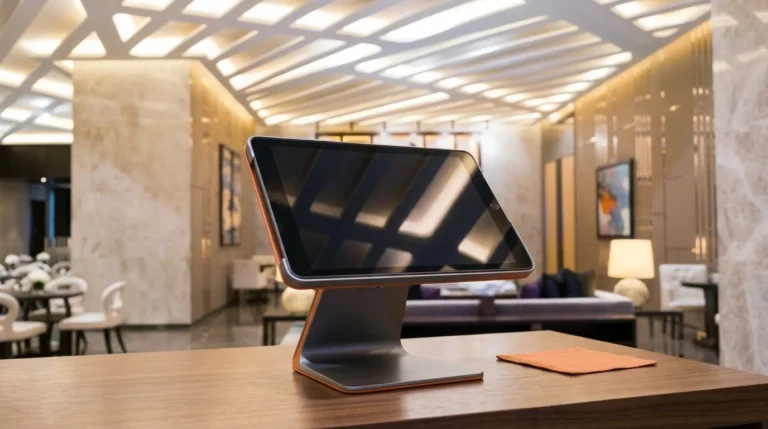
The Grab & Go Kiosk deserves specific attention. It posts every transaction, whether a guest charges to their room or a lobby visitor pays by card, automatically into reporting so the revenue arrives without an added accounting burden.
The Night Audit and Its Impact on Finance
The night audit is the end-of-day process that closes the hotel’s financial day. It posts room charges and taxes to every in-house guest folio, reconciles revenue across all departments, balances the guest ledger, and rolls the property management system into the next business day.
Hotels typically run the night audit overnight, with some sources citing a start between 11 p.m. and 1 a.m. and others citing around 2–3 a.m. as the most common window.
A manual night audit discovers missed charges too late to bill. In legacy systems or properties still running spreadsheets, the night audit can take 3–4 hours of manual work. Every night audit imbalance, whether a folio that does not tie, a payment that does not match, or a rate variance, should be investigated to its root cause, because an unexplained discrepancy tonight becomes a recurring leak tomorrow.
Stayntouch automates the night audit and end-of-day process entirely. Room charges, taxes, and recurring fees post automatically to every occupied folio. Built-in controls catch billing errors before they reach a guest and before they become disputes, chargebacks, or lost revenue.
The result is a close that takes minutes rather than hours, with a clean audit trail that finance teams and external auditors can follow without reconstruction.
Tax Handling Across Jurisdictions
Occupancy tax is the per-night tax on the room rate, set locally by city, county, or state rather than nationally. It is also called lodging tax, transient occupancy tax, or bed tax depending on the jurisdiction.
Additional layers sit on top of occupancy tax. City sales tax, tourism-district assessments, convention center surcharges, and similar charges each carry their own rate, registration, and remittance deadline.
The complexity is significant. Combined effective rates commonly land between 10% and 18% of the room charge, and the same concept carries at least eight different names across US jurisdictions. Two neighboring properties can owe different amounts under different rules.
Exemptions add another layer. Federal and state government employees traveling on official business are commonly exempt, but only with a government purchase order, a government credit card in the traveler’s name, or a signed exemption certificate on file. In most US jurisdictions, stays beyond roughly 30 consecutive days are also exempt, though the threshold varies, and New York City applies local sales tax through day 180. A hotel that grants an exemption without the matching documentation owes the tax at audit plus penalties.
Stayntouch applies occupancy tax and additional local taxes instantly at the transaction level. Because rates are applied by jurisdiction rather than a generic default, and because tax-exempt stays carry their supporting documentation, the hotel can demonstrate compliance at audit instead of reconstructing it.
What Accounting Software Hotels Connect to Stayntouch
The accounting platforms hotels run vary by property size, portfolio complexity, and geography, but the integration architecture matters more than the specific platform. Stayntouch connects to major platforms across each region, including the following:
-
M3. M3 Accounting Core is built natively for hotels and is one of the most widely used back-office platforms for US hotel management companies and multi-property portfolios, with a USALI-aligned chart of accounts and automated nightly PMS data imports.
-
Sage Intacct. A full-featured cloud accounting platform with a native AR subledger, multi-entity support, and tax handling through AvaTax. It suits independent hotel groups and management companies that need consolidated reporting across legal entities.
-
QuickBooks Online. Accessible and widely used among independent and smaller-portfolio hotels. Class tracking for departmental segmentation is available in the Plus and Advanced tiers, though its generic structure becomes limiting for properties requiring full USALI-compliant reporting.
-
Xero. Cloud-native and popular among independent boutique properties and small hotels. Xero markets its accounting software to boutique hotels and growing chains in the UK, New Zealand, and Singapore, where its multi-currency and bank-feed capabilities fit the market well.
-
DATEV. DATEV is the dominant accounting platform in Germany and the German-speaking market, reaching over 90% of German tax advisory firms. Its deep integration with German tax and audit regulations makes DATEV-compliant data effectively required in many German tax and audit workflows.
-
Cegid. Cegid, a French cloud management software provider, is widely used in France and has a strong and growing presence in Spain and Portugal. Its solutions span 130 countries and support multi-entity and multi-currency capabilities for hotel groups operating across the region.
-
Exact Online. Exact Online is a leading cloud accounting platform in the Benelux region. It is the clear market leader in Belgium, particularly Flanders, and one of the two dominant platforms in the Netherlands alongside AFAS. Over 675,000 businesses and accountants use its software, with coverage strongest among micro-enterprises and SMEs rather than the larger mid-market.
-
Twinfield. Twinfield is a cloud accounting platform with strong European coverage. It suits international organizations and larger groups operating across multiple jurisdictions, thanks to its multi-company, multi-currency, multi-language, and group consolidation capabilities.
When verifying whether a PMS genuinely connects to the accounting system a finance team already runs, bring three questions to the demo:
-
Is the connection a two-way API or a CSV export? The answer determines whether revenue posts automatically or requires manual intervention.
-
Is the integration included in the PMS subscription, or is it charged per interface? Stayntouch charges nothing for the integration itself, and users pay each third-party platform its own platform fee.
-
Can the vendor show a live data flow, with a transaction posting from the PMS to the accounting platform in real time? If the demo cannot demonstrate this, the integration may not work the way it is described.
Evaluation Checklist for the Demo
The following questions are vendor-neutral. Bring them into any PMS demo and evaluate the answers against the standards described in this guide.
-
Charge posting from every revenue center. Does the PMS post charges automatically from POS, spa, mobile, and retail kiosk to the guest folio in real time, or does posting require manual intervention at the end of a shift?
-
Night audit automation. Is the night audit fully automated, or does it require a staff member to run it manually? Which controls catch billing errors before the day closes?
-
Tax handling across jurisdictions. Does the system apply occupancy tax and local taxes automatically by jurisdiction? Does it handle tax-exempt stays with documentation, and does it support the long-stay exemption threshold?
-
USALI-aligned reporting. Does the PMS produce department-level revenue data, such as Rooms, F&B, Spa, and Other, in a format the accounting platform can consume without manual reclassification?
-
Accounting system connection. Which accounting platforms does the PMS connect to, and is the connection a two-way API or a CSV export? Ask to see the specific integration with the platform the finance team runs today.
-
Integration fees. Are integrations included in the subscription, or is each connection charged separately? What is the fee for API certification?
-
Data migration from a legacy PMS. How does the vendor handle legacy guest profiles, group reservations, and deposit data? What happens if the legacy export is not clean?
-
Support response commitments. What is the guaranteed response time? Is support available 24/7/365, or only during business hours? Is support tiered by property size or subscription level?
Book a demo and walk through this checklist with a Stayntouch specialist.
How Stayntouch Fits a Finance Team’s Accounting Stack
Stayntouch is a best-in-class, cloud-native hotel PMS built for independent hotels, boutique brands, and multi-property groups. It is a PMS at the core, designed to integrate with the accounting platform a finance team has spent years configuring rather than replace it.
For finance and operations leaders specifically, Stayntouch delivers:
-
Automatic charge posting from POS, spa, mobile, and the Grab & Go Kiosk directly to the guest folio as transactions occur.
-
Automated night audit and end-of-day with built-in controls that catch billing errors before they become disputes, and occupancy tax plus additional local taxes applied instantly at the transaction level.
-
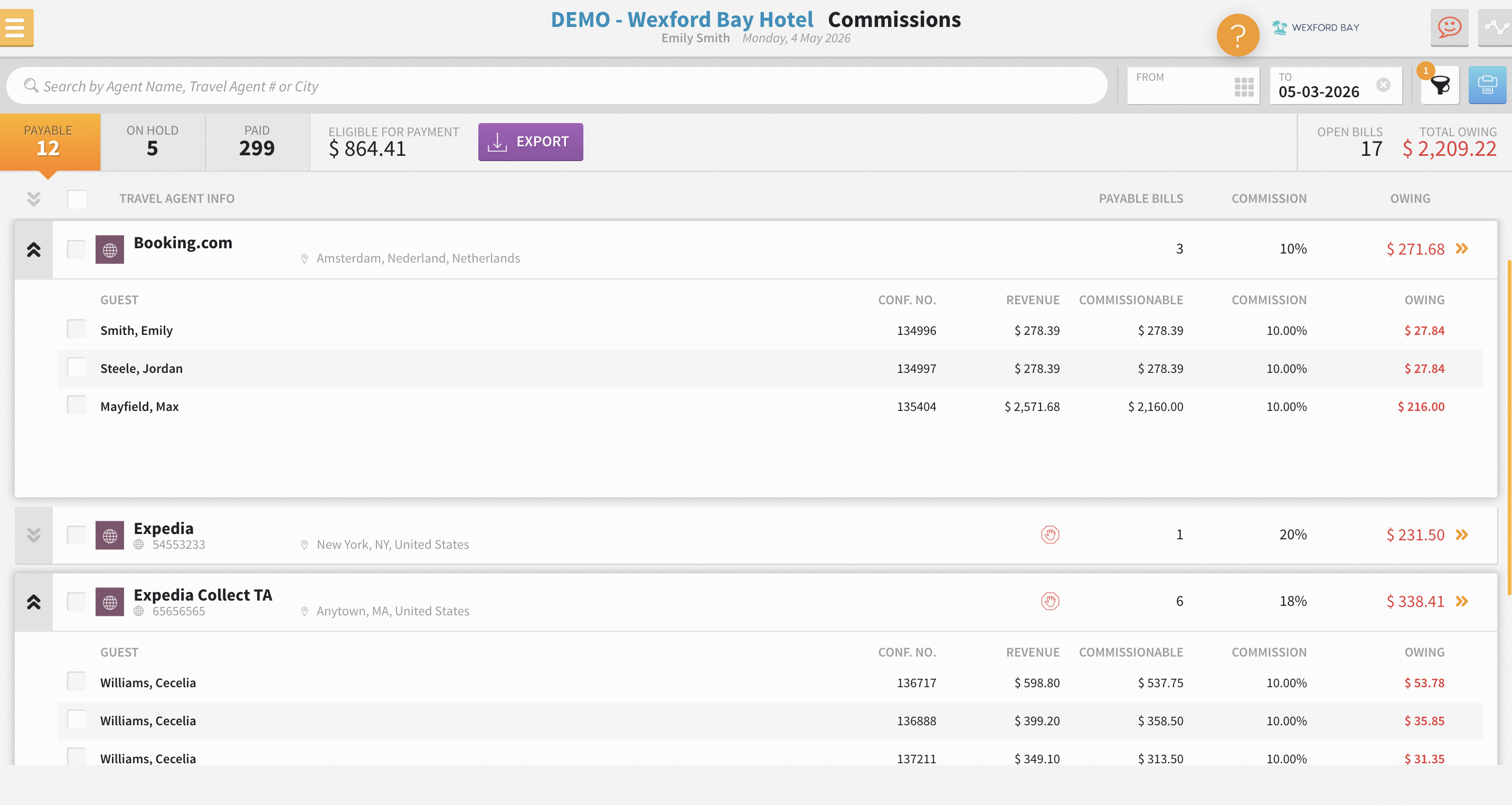
Complete AR and financial control through accounts receivable (AR) and AR invoicing, charge group tracking across rooms, F&B, and accounting, credit limits per account, tax-exempt handling with documentation, commission tracking, and online travel agency (OTA) auto-charge rules by entity and payment date.
-
Scheduled reporting delivered by email, SFTP, or cloud drive so reports arrive without anyone having to request them.
-
1,400+ integrations at no extra cost. Users pay each third-party platform its own platform fee. Stayntouch charges nothing for the integration itself, and there are no per-interface fees and no API certification charges.
Stayntouch Pay consolidates payment processing, acquiring, and settlement into one transparent monthly statement. Funds settle two business days after the transaction. PCI DSS Level 1, SOC 2 Type 1, GDPR, and ISO 27001/27018 certifications underpin the security architecture.
The 2026 TravelTech Breakthrough “Hotel PMS Company of the Year” award and a 97% customer retention rate reflect a platform that finance and operations leaders stay on through multiple year-end closes.
Stayntouch works with hotels of all sizes. Its sweet spot is independent properties of 75 rooms and above, multi-property groups, and management companies, and it also serves smaller properties.
The TravelTech Breakthrough announcement, citing the 2026 Hotel Technology Outlook produced by the NYU SPS Jonathan M. Tisch Center of Hospitality with Stayntouch and IDeaS Revenue Solutions (November 2025, 300+ hotel professionals), notes that 30% of all-in-one users intend to move to best-in-class solutions, against 14% moving the other way. Hotels that consolidated onto a single vendor are discovering that the all-in-one vendor’s engineering team spreads its development effort across too many product categories to go deep on any of them, including the PMS that staff touch every hour of every shift.
How Much Does Hotel PMS Software With Accounting Cost?
Stayntouch uses a turnkey monthly SaaS pricing model based on property size and room count. Because support and integrations are bundled into that subscription rather than sold as separate tiers, the monthly figure represents the full cost of the platform.
Implementation is quoted separately and scoped to the property, so hotels do not pay for pre-allocated project hours they never use.
For pricing specific to a property or portfolio, get a quote.
Frequently Asked Questions
The answers below condense the key points from this guide for finance leaders who need a fast reference.
What Does Integrated Accounting Mean in a Hotel PMS?
Integrated accounting in a hotel PMS means the system connects the operational record, including guest folios, room charges, POS transactions, and tax postings, to the general ledger of the accounting platform the finance team uses. In a well-integrated system, charges post automatically from every revenue center as they occur, the night audit closes without manual intervention, and the accounting platform receives clean, categorized transaction data without anyone re-entering it.
What Is the Difference Between Native GL, API Integration, and CSV Export?
The three architectures are compared in the table above. In short, a two-way API is the right choice for hotels that already run a dedicated accounting platform, because it posts transactions automatically and preserves a complete audit trail.
What Does the Night Audit Close?
The night audit closes the hotel’s financial day. It posts room charges and taxes to every in-house guest folio and reconciles revenue across all departments.
It then balances the guest ledger, processes no-show and cancellation charges per the hotel’s policy, generates the daily revenue report, and rolls the property management system into the next business day. In a modern cloud PMS, most of this runs automatically, and the night auditor focuses on reviewing exceptions.
How Are Occupancy and Local Taxes Handled?
Occupancy tax is the per-night tax on the room rate, set locally by city, county, or state. Additional layers such as city sales tax, tourism-district assessments, and convention center surcharges each have their own rate and remittance rules.
Combined effective rates commonly run between 10% and 18% of the room charge, and two neighboring properties can owe different amounts under different rules. Exemptions exist for government travelers, diplomatic personnel, and in most US jurisdictions stays beyond roughly 30 consecutive days, but each exemption requires specific documentation at check-in.
A PMS with automatic, jurisdiction-aware tax handling and built-in tax-exempt documentation removes much of that exposure.
Which Accounting Software Do Hotels Use?
The most common accounting platforms in hotel operations include M3, Sage Intacct, QuickBooks Online, Xero, DATEV, Cegid, Exact Online, and Twinfield. The right platform depends on property size, portfolio complexity, and geography, but the integration architecture matters more than the platform choice. A two-way API connection to any of these platforms delivers materially better outcomes than a CSV export to even the strongest accounting software.
How Much Does PMS Software With Accounting Cost?
As described in the pricing section, Stayntouch uses a monthly SaaS model with support and integrations bundled in. Contact Stayntouch for a property-specific quote.
How Do I Verify a PMS Connects to My Accounting System?
Ask three questions in the demo. First, is the connection a two-way API or a CSV export? Second, is the integration included in the PMS subscription, or is it charged per interface? Third, can the vendor show a live data flow, with a transaction posting from the PMS to the accounting platform in real time during the demo?
Conclusion: See What a Best-in-Class PMS Actually Feels Like
Revenue leaks quietly through missed charges, manual billing errors, inconsistent tax application, and the gap between what the PMS records and what the general ledger receives. The architecture of the integration between a hotel’s front desk software and its accounting system determines whether that gap exists at all.
Stayntouch is a best-in-class, cloud-native PMS that posts charges automatically from every revenue center, closes the night audit without manual intervention, applies occupancy and local taxes instantly by jurisdiction, and integrates through a two-way API with the accounting platform a finance team already trusts, including M3, Sage Intacct, QuickBooks Online, Xero, DATEV, Cegid, Exact Online, and Twinfield. The 42% efficiency gain noted earlier shows the scale of improvement available when these capabilities work together.
Book a demo to see what a best-in-class PMS actually feels like.
Read Next
Turn a more connected stack into a better stay.
See how Stayntouch can support the operating moments that matter most to your hotel team.