Written by: Kelly Campbell, Vice President of Marketing, Stayntouch
Key Takeaways
-
Boutique hotel labor costs in the U.S. typically run 30–45% of total revenue. Service intensity and F&B operations largely determine where a property lands in that range.
-
Fully loaded labor cost includes base wages plus payroll taxes, insurance, PTO, and recruitment. These items usually add 20–30% to base pay.
-
Hours per occupied room (HPOR) is the most useful weekly metric because managers can reduce it through scheduling and automation before shifts begin.
-
System-driven automation, such as instant housekeeping status, mobile check-in, and mobile front desk access, delivers durable HPOR reductions while preserving service levels.
-
Stayntouch cuts PMS training time to two days and increases housekeeping productivity by 25%, helping boutique hotels control labor costs and maintain service quality.
Talk With Stayntouch About Labor Savings
Labor Cost Benchmarks for Boutique and Other Hotel Types
For U.S. hotels, labor cost as a share of total revenue varies meaningfully by service tier. Broader U.S. benchmarks by tier look like this:
-
Limited-service hotels: according to CBRE Hotels’ Trends data, labor costs (salaries, wages, and benefits) at select-service hotels equaled 22.6% of total operating revenue in 2015. Limited-service hotel labor costs are typically cited in the range of 20–28% of revenue.
-
Full-service hotels: typically run labor costs of approximately 35–45% of total revenue, structurally higher than limited-service properties.
-
Luxury hotels: labor costs at luxury and complex full-service hotels sit at the high end of the broader industry range, with HVS reporting labor at 30–45% of total operating costs and other benchmarks placing full-service and luxury properties around 40–45% of revenue.
-
Boutique properties: generally 30–45% of total revenue, depending on service model.
Comparing a luxury boutique to a limited-service property also produces distorted conclusions. Benchmark against the tier that matches your service model. And these are U.S. figures: labor benchmarks vary by property type, service intensity, and geography.
Once you have your benchmark tier, identify whether any variance comes from scheduling or from wage levels.

What Actually Counts in Total Labor Cost
Most operators undercount labor cost when they calculate from base wages alone. The fully loaded number includes gross wages plus payroll taxes, workers’ compensation insurance, health insurance, paid time off (PTO), and recruitment costs. These additions run approximately 20–30% on top of base pay. A base-wage calculation therefore understates the true cost by a fifth or more.
Contract labor and overtime belong in the total as well. Overtime in particular is a signal worth watching. U.S. housekeeping overtime rates increased across all tracked roles in Q1 2026, with laundry attendants up 13.6% and room attendants up 10.3% year over year. That pattern points to scheduling gaps rather than genuine headcount shortages.
Pull your fully loaded cost per hour before calculating any KPI. Because a base-wage calculation understates the true number by a fifth or more, every ratio built on it will be wrong in the same direction. Getting the loaded hourly cost right makes the rest of your metrics trustworthy.
How to Calculate Labor Cost Per Occupied Room and Hours Per Occupied Room
Three metrics govern boutique hotel labor management. Each one answers a different question.
Labor cost percentage = total labor cost ÷ total revenue × 100. Use this for overall profit and loss (P&L) health and for benchmarking against peers at the same service tier.
Labor cost per occupied room (CPOR) = total labor cost ÷ occupied rooms. Use this for comparing periods or properties at different occupancy levels, where a percentage alone can mislead.
Hours per occupied room (HPOR) = total labor hours ÷ occupied rooms. Use this as your weekly operational control. It is the metric you can act on before the hours are worked.
A worked example makes the relationship concrete. Consider a hypothetical 120-room boutique hotel running 75% occupancy, or 90 occupied rooms per night. Its average daily rate (ADR, average room revenue per paid occupied room) is $220. Monthly occupied rooms total 2,700. Assume total monthly labor cost of $135,000 fully loaded.
-
Labor cost percentage: $135,000 ÷ ($220 × 2,700) = $135,000 ÷ $594,000 = 22.7% of room revenue. Add F&B and other revenue to get total revenue; the percentage will shift depending on the mix.
-
Labor CPOR: $135,000 ÷ 2,700 = $50.00 per occupied room.
-
HPOR: if total labor hours for the month were 5,670, then 5,670 ÷ 2,700 = 2.10 hours per occupied room.
Now apply a 3-point HPOR reduction, from 2.10 to 2.07, through tighter scheduling and faster room-status communication. At a fully loaded labor cost of $23.81 per hour, that 0.03-hour reduction saves $0.71 per occupied room. That equals $1,917 per month, or $23,000 per year. The saving comes from removing reconciliation and waiting time while keeping service levels intact.

U.S. select-service hotels improved HPOR by 4.2% year over year in Q1 2026, from 1.544 to 1.479 hours per occupied room, while full-service hotels improved by 2.3%. Those gains came from tighter labor deployment and stronger task standardization.
Pick HPOR as your weekly management metric. It is the one you can act on before the hours are worked, and the urgency is increasing because labor costs are rising faster than revenue.
See How Stayntouch Lowers Your HPOR
Why Hotel Labor Costs Are Rising Faster Than RevPAR
These figures are U.S.-specific and do not apply to other markets. U.S. hotel wage cost per occupied room rose 12.8% in 2025, from $42.82 to $48.32, while labor cost per hour rose 8.0%. Over the same period, U.S. consumer price inflation ran at 2.7% year over year in December 2025 (HotelData.com / Actabl Hotel Effectiveness, approximately 5,000 U.S. hotels). U.S. hotel wage cost per occupied room in Q4 2025 ran 21.1% above the prior year.
Turnover compounds the pressure. The U.S. quit rate in accommodation and food services was 4.3% in March 2026, close to double the 2.2% private-sector average (BLS JOLTS).
The consequence is automatic margin compression. Wages are rising faster than revenue, and turnover keeps the training clock running. A hotel that does not actively manage HPOR loses ground every week. Treat HPOR as a weekly control and not only as a monthly report.
Operational Changes That Actually Reduce Hours Per Occupied Room
This section ranks the main labor levers by durability, from least durable to most durable.
-
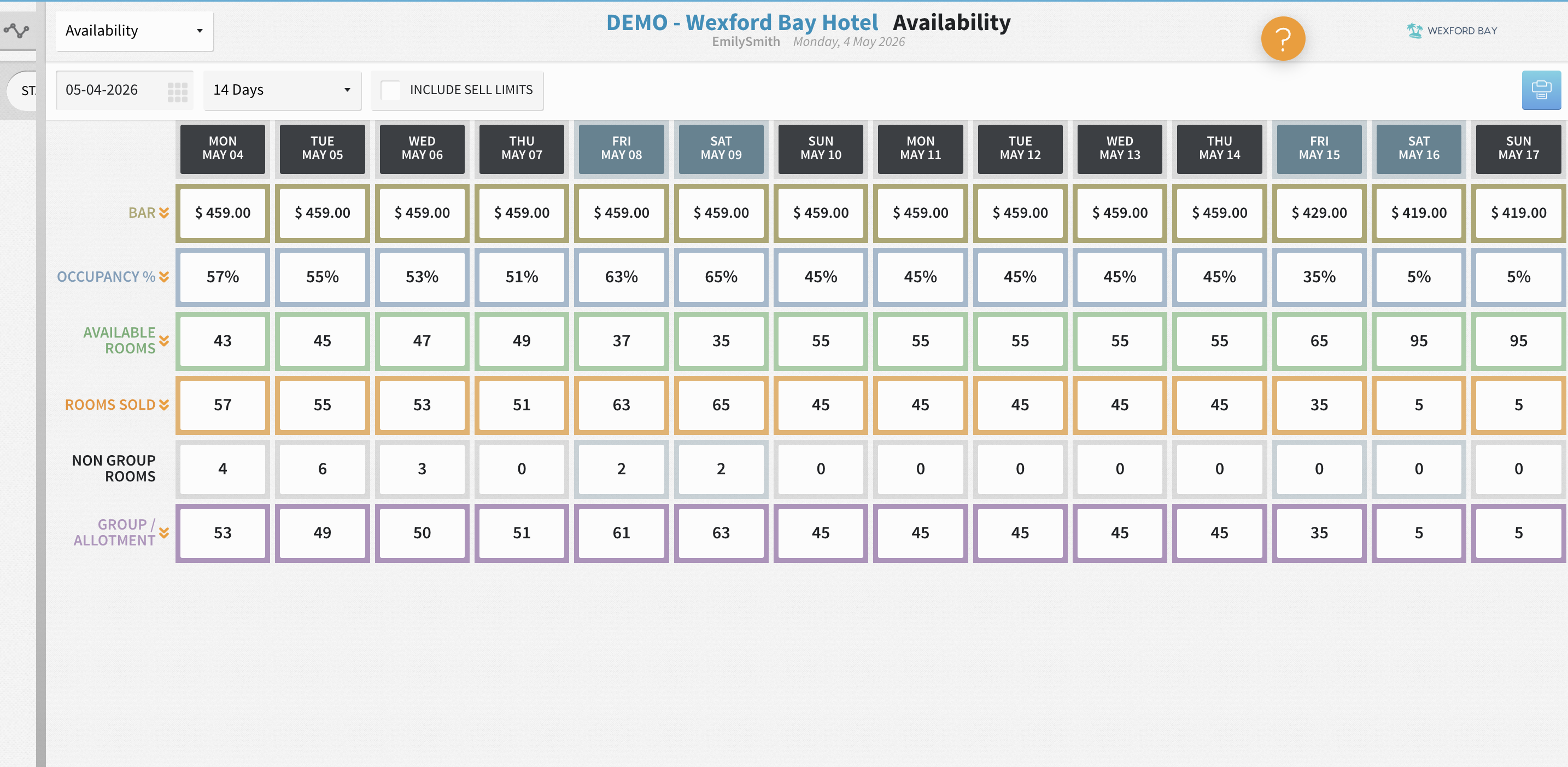
Demand-matched scheduling means staffing to forecast occupancy rather than to a fixed roster. Matching rosters to forecast demand can recover meaningful labor cost with service coverage held constant. That only holds when the front desk and housekeeping work from the same live data. When room status travels by radio or paper, the front desk works from information that is minutes or hours old. Scheduling to a forecast that the operation cannot execute in real time often produces overtime rather than savings.
-
Cross-training, or certifying staff in two or more roles, allows redeployment across the day without agency or overtime coverage. The trade-off is real. Cross-training carries a cost in scheduling complexity and service consistency. Cross-training fails when management asks employees to carry more responsibility for the same reward. It works when second-role certification comes with a visible wage premium or a path to supervisor responsibility.
-
Flexible staffing models, such as part-time and on-call arrangements, convert fixed labor cost into variable cost. That helps when occupancy swings hard by season. The management overhead is significant. Scheduling complexity increases, and inconsistent hours are a documented driver of voluntary turnover.
-
System-driven automation is the most durable lever because it does not depend on forecast accuracy or scheduling discipline to hold. Three specific mechanics reduce HPOR by removing the reconciliation and waiting time that eats shift hours:
-
Instant housekeeping status propagation: when a room is inspected and marked clean in the property management system (PMS, the core software a hotel runs on, covering reservations, check-in, room assignment, housekeeping status, and billing), the front desk sees it immediately. Guests are not held in the lobby for rooms that are already ready. According to Stayntouch customer data, mobile housekeeping on Stayntouch delivers a 25% increase in housekeeping productivity, with front desk and housekeeping working from one live view.
-
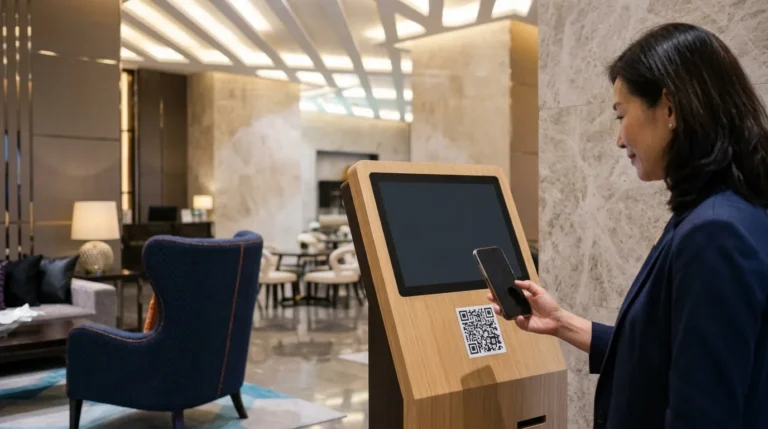
Fewer check-in steps: mobile check-in and kiosks give guests more control over the arrival experience and allow staff more time for high-touch service. According to Stayntouch customer data, Stayntouch reduces staff-assisted check-in by 54%. Guests who complete mobile check-in in 30 seconds do not queue. Staff who are not processing arrivals are available for other tasks.
-
Mobile front desk access: staff are not workstation-bound during shoulder hours, the low-demand periods between peak check-in and checkout, when a fixed desk creates idle time that still consumes scheduled hours. Mobile PMS access lets staff support guests anywhere on property.
-
Start with the system-driven levers. They hold over time and support the other tactics rather than competing with them.

Why Turnover Makes Training Time a Permanent Operating Cost
At a 4.3% monthly quit rate, a boutique hotel with 30 front-line staff can expect to replace roughly 15 people per year. Every new hire resets the training clock. A PMS that takes weeks to reach basic competency, with legacy platforms typically requiring around three months to gain a basic working grasp, becomes a recurring cost rather than a one-time onboarding expense. At that rate, some properties are effectively always in training.
Stayntouch approaches this differently. Full platform training across all Stayntouch modules takes 2 days. Stayntouch Academy provides self-paced eLearning with test environments, certifications, and progress tracking. New hires onboard without scheduling a trainer, and managers can verify who has completed which modules.
Because the system is easy to learn, hotels can hire for guest-facing ability rather than technical aptitude. As one customer put it: “I get to hire amazing personalities without worry if they will ‘get’ the PMS.” Vibeke Raddum, former president of First Hotels, made the same point when selecting a PMS: “Like many hotel companies, we experience high turnover and thus the system needs the capability to train new employees easily.”
Calculate what your current PMS learning curve costs per year at your turnover rate. That number is the baseline a 2-day ramp is measured against, and at high turnover, the gap between the two is the recurring cost you are choosing to keep paying.
Explore Stayntouch Training and Onboarding
What Does Not Work
Not every cost-cutting lever reduces HPOR. Several common approaches look like savings on paper but shift cost elsewhere or degrade service, so they should be avoided even when they appear to lower labor spend.
Blanket hiring freezes reduce headcount on paper but push overtime onto the staff who remain. When overtime rates are rising, with room attendant overtime increasing 10.3% year over year in Q1 2026, a freeze can increase total labor cost while degrading service.
Cutting housekeeping frequency below guest expectations trades a short-term HPOR improvement for a long-term review and repeat-booking problem. Under-staffing in hotels produces longer check-in lines, slower room cleans, and slower service, with the long-term cost potentially reaching 5–15% of revenue.
Buying software that adds administrative work rather than removing it is another frequent mistake. A PMS that requires manual reconciliation between housekeeping and the front desk, or that keeps staff workstation-bound, fails to reduce HPOR. It embeds the inefficiency in the operating model.
A true labor lever reduces hours per occupied room while preserving the guest experience. Anything else functions as a service cut.
Conclusion and Next Steps
Boutique hotel labor costs in the U.S. typically run 30–45% of total revenue, and that number reflects how work is assigned and how fast information moves between departments. Durable reductions come from changing the operating system and the flow of work. Demand-matched scheduling and cross-training help, but they depend on discipline and forecast accuracy to hold. System-driven automation, such as instant housekeeping status propagation, fewer check-in steps, and mobile front desk access, holds without that dependency.
Stayntouch is a mobile-first, cloud-native property management system designed for boutique hotels. It offers 2-day full platform training, 1,400+ integrations with unlimited connections at no extra cost from Stayntouch (each third-party platform carries its own fee; Stayntouch charges nothing for the integration itself), and 24/7/365 support with no service tiers and a guaranteed response under one hour. It turns training time from a recurring cost into a one-time investment and gives staff the tools to spend their time with guests rather than behind a monitor.
Frequently Asked Questions
What Is the Typical Labor Cost Percentage for a Boutique Hotel?
As noted above, boutique hotel labor costs in the U.S. typically run 30–45% of total revenue. Limited-service properties tend to sit at the lower end of the broader hotel range, around 20–28%. Full-service boutiques with active food and beverage programs commonly run 35–45%, and luxury or high-touch properties sit near 40–45% of revenue. Service model drives the position within the range. A boutique with a full restaurant, bar, and concierge program will structurally carry a higher labor percentage than one without. Always benchmark against the tier that matches your service model.
What Is Hours Per Occupied Room (HPOR) and Why Does It Matter More Than Labor Cost Percentage?
Hours per occupied room (HPOR) is total labor hours worked divided by occupied rooms for a given period. It measures how many labor hours the hotel consumes to service each occupied room across all departments. Labor cost percentage shows where you stand relative to revenue, but it does not reveal whether the issue is wages or scheduling, and it arrives after the hours have already been worked. HPOR is the metric you can act on in advance by adjusting schedules, improving room-status communication, or reducing check-in steps before the shift begins. A reduction in HPOR flows directly into lower labor cost per occupied room and, if revenue holds, a lower labor cost percentage. Track HPOR weekly by department, because a total-hotel number can hide a housekeeping problem behind a front desk improvement.
What Is the Fully Loaded Labor Cost, and What Does It Include Beyond Base Wages?
Fully loaded labor cost includes gross wages plus payroll taxes, workers’ compensation insurance, health insurance, paid time off (PTO), and recruitment costs. These additions typically run 20–30% on top of base pay, so a calculation based on base wages alone understates the true cost by a fifth or more. Contract labor and overtime belong in the total as well. Overtime often signals a scheduling gap rather than a genuine headcount shortage, and at a premium rate, it compounds quickly. Always calculate your fully loaded cost per hour before building any labor KPI, because every ratio built on an understated cost figure will point you in the wrong direction.
Which Operational Changes Produce the Most Durable Reductions in Hotel Labor Cost?
System-driven automation is the most durable lever. Instant housekeeping status propagation keeps the front desk from holding rooms that are already clean. Fewer check-in steps prevent arrival queues. Mobile front desk access keeps staff from being workstation-bound during low-demand periods. These mechanics reduce hours per occupied room by removing reconciliation and waiting time while preserving service. Demand-matched scheduling, cross-training, and flexible staffing models can add further savings but carry trade-offs in complexity and consistency. Start with automation, then layer the other tactics where they fit your operation.
How Does a Property Management System (PMS) Affect Boutique Hotel Labor Costs?
A property management system sits at the center of every labor-intensive process in a hotel, including check-in, room assignment, housekeeping status, billing, and reporting. When the PMS requires many steps to complete a task, keeps staff workstation-bound, or fails to propagate room status in real time, it embeds inefficiency directly into the operating model. That inefficiency shows up in hours per occupied room. A mobile-first, cloud-native PMS that instantly syncs housekeeping status, supports self-service check-in, and gives staff full access from any device removes the reconciliation and waiting time that eats shift hours. Training time is a second channel. With industry estimates putting annual U.S. hospitality turnover near 70%, versus 12–15% in most other sectors, a PMS that takes weeks to learn becomes a permanent operating cost. A system that trains staff in 2 days converts that recurring cost into a one-time investment and widens the hiring pool by allowing hotels to hire for guest-facing ability rather than technical aptitude.
Read Next
Turn a more connected stack into a better stay.
See how Stayntouch can support the operating moments that matter most to your hotel team.