
Written by: Kelly Campbell, Vice President of Marketing, Stayntouch
Key Takeaways
- A hotel property management system (PMS) is the core software that manages reservations, check-in and checkout, room assignment, housekeeping, guest folios, and billing across every department.
- Modern cloud-native PMS platforms remove on-site servers, scheduled downtime, and manual upgrades while delivering real-time data to front desk, housekeeping, and revenue teams.
- The PMS sits at the center of the hotel tech stack, feeding and receiving data from channel managers, booking engines, revenue management systems, CRMs, POS, and door-lock integrations.
- Best-in-class PMS platforms focus on unlimited integrations at no extra cost, rapid staff training, and 24/7 support, which are critical advantages for independent hotels and multi-property groups.
- Choosing the right PMS directly affects operational efficiency and guest experience.
What Does PMS Stand For In Hotel Management?
PMS stands for property management system. In a hotel context, the acronym always refers to the operational and financial core of the property. Unlike a project management tool or a scheduling app, it exists to hold the four things a hotel cannot operate without: the reservation, the room, the guest, and the bill.

What Are the Main Functions of a Hotel PMS?
A hotel PMS revolves around several core functions. Each one maps to a real operational moment in the hotel day.
- Reservations — Creating, modifying, and searching bookings from one screen, including group blocks and allotments (a block of rooms held for a specific partner, group, or contract rather than sold to the general public). Every booking source — online travel agency (OTA), direct website, walk-in — lands in one place.
- Front Desk Operations — Handling check-in and checkout, room moves, cashier functions, and posting accounts. This is the system a front desk agent has open from the first arrival to the last departure of the day.
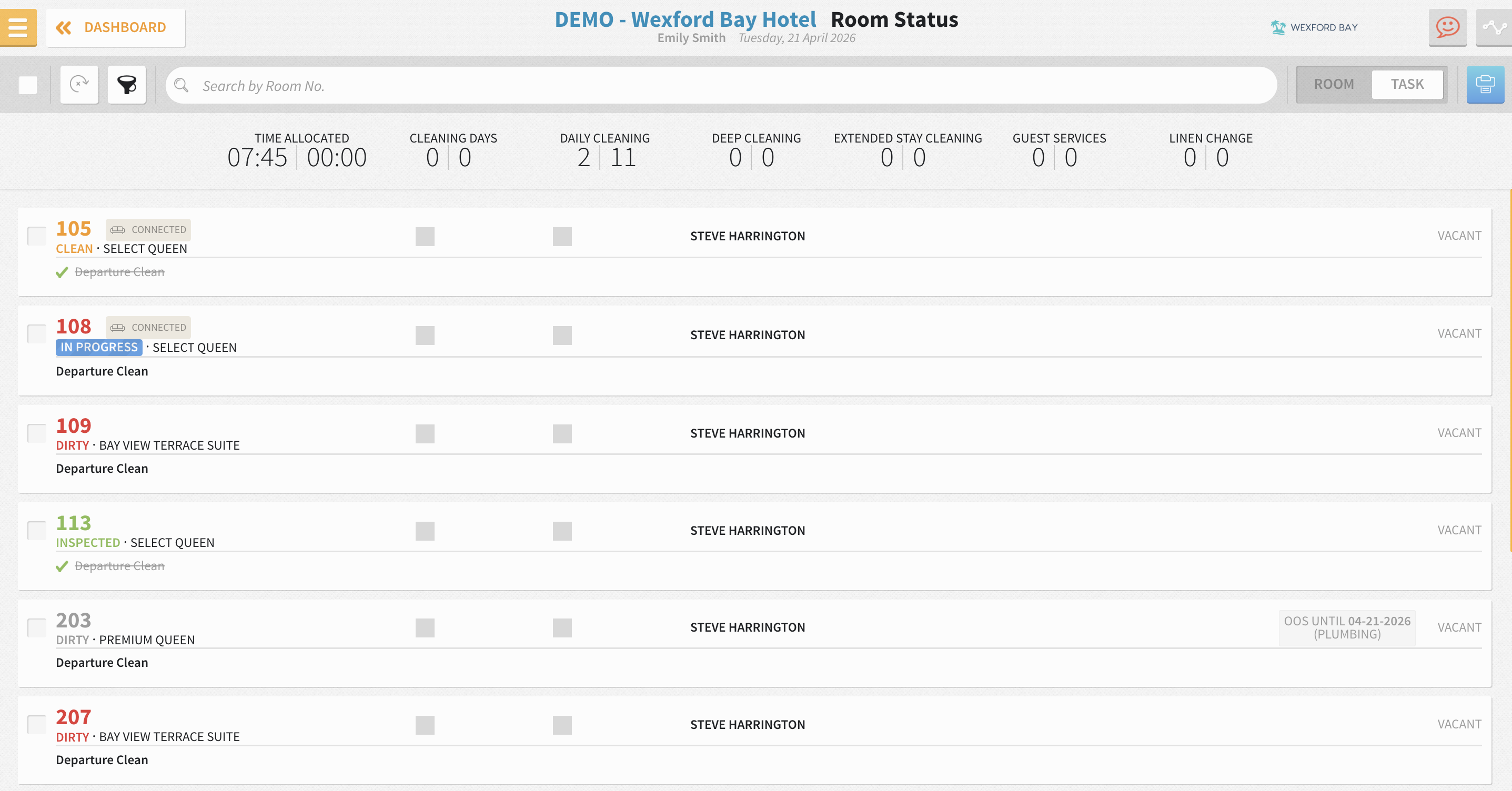
- Housekeeping and Room Status — A room cannot be given to an arriving guest until housekeeping has cleaned and inspected it. When that status lives on paper or travels by radio, the front desk works from stale information. Guests wait in the lobby for rooms that are already ready, or are sent to rooms that are not. A PMS propagates room status in real time so every department works from the same live view.
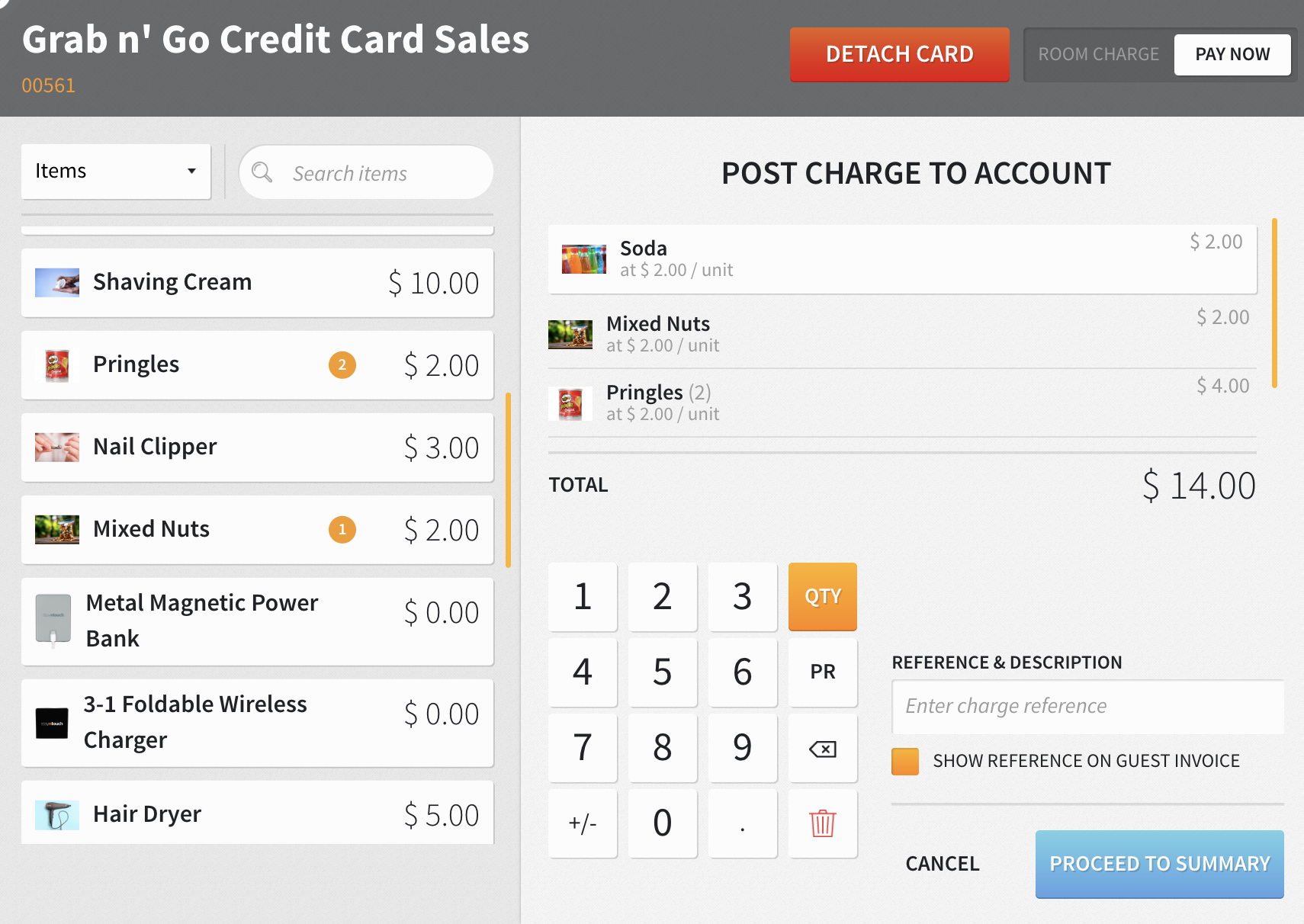
- Billing and Folios — Charges from every revenue center (front desk, restaurant, bar, spa, shop, kiosk) attach to the correct guest folio as they happen. The folio closes at checkout and the bill is settled. Anything not posted in time is simply lost.
- Rate and Inventory Management — Managing rates, restrictions, sell limits (a cap on how many rooms may be sold for a given date), and day-use or hourly inventory for guests who need a room for part of a day rather than overnight.
- Reporting and Analytics — Tracking occupancy, ADR (average daily rate — average room revenue per paid occupied room), RevPAR (revenue per available room — room revenue divided by total rooms available, occupied or not), and demand forecasts that guide pricing, staffing, and marketing decisions.
- Integrations — Maintaining working connections to the channel manager, booking engine, point-of-sale (POS) systems, door locks, and every other tool in the hotel tech stack.
One function deserves its own note: the night audit. The night audit is the end-of-day process that closes out the day's transactions, posts room charges and taxes, and rolls the system into the next business day. Run manually, it is slow and error-prone. A missed charge discovered at night audit is a charge discovered too late to bill. A modern PMS runs the night audit automatically, without staff intervention.

Types Of PMS In Hotel Management
Hotel PMS platforms differ along two independent axes: architecture and strategy. Branded chains often centralize configuration at the platform level, while independent hotels and groups usually prioritize flexibility in their tech stack.
- Architecture: Cloud-Native Versus Legacy On-Premise. A cloud-native PMS is software built to run in the cloud from the outset, with no on-site servers and no manual upgrades. Product releases require no downtime. A legacy on-premise PMS runs on a server at the property. When that server or the internet connection fails, the hotel is stranded. Upgrades require scheduled downtime, and maintenance requires either internal IT staff or a vendor visit.
- Strategy: Best-In-Class Versus All-In-One. A best-in-class PMS is a specialized tool that focuses on one core problem, the PMS, and integrates with specialist platforms for revenue management, CRM, and POS. An all-in-one platform supplies every category from a single vendor. That strategic difference has a practical consequence. An all-in-one vendor's engineering team must cover a PMS, a revenue management system, a CRM, a POS, and a booking engine at once. That breadth constrains the depth of each individual product. A specialist vendor puts its entire engineering effort behind one problem.
How a Hotel PMS Fits With the Rest of the Hotel Tech Stack
The PMS sits at the center of the hotel tech stack. Every other system either feeds it or reads from it. The list below shows the distinct job each adjacent system performs, and the job it does not perform, so you can see why the PMS remains the system of record for every reservation, room, and folio.

- Channel Manager — Keeps every sales channel synchronized with the PMS so inventory sold anywhere is immediately unavailable everywhere else, preventing double bookings. The PMS holds the truth, and the channel manager distributes and syncs it across OTAs such as Booking.com, Expedia, and Agoda.
- Booking Engine (also called an internet booking engine, or IBE) — Provides the calendar, room selection, and mobile booking flow on the hotel's own website that turn it from a brochure into somewhere a reservation can be completed, avoiding OTA commission. A booking engine generates new reservations and hands them to the PMS. Check-in and checkout occur after the booking is made.
- Central Reservation System (CRS) — Distributes rates and availability across all booking channels for a brand or group. A PMS runs one property's operation, including rooms, folios, and housekeeping. A CRS sits above properties and centralizes reservations and rates across a chain or group, distributing them to channels. Independent hotels usually do not need a separate CRS because the PMS plus a channel manager covers the same ground.
- Revenue Management System (RMS) — Specialist pricing software that analyzes demand and recommends or sets rates. An RMS handles demand forecasting, competitor rate shopping, and market-data-driven price decisions. It reads occupancy and pace data from the PMS and pushes rate recommendations back.
- Customer Relationship Management (CRM) — Guest data and marketing software used to personalize communication and drive repeat stays. The PMS holds operational guest data, and the CRM uses it for segmentation, campaigns, and loyalty.
- Point-of-Sale (POS) — The system restaurants, bars, and shops ring sales on, which then post to the guest folio in the PMS. A POS manages what was sold and to whom. The PMS receives the charge and attaches it to the correct bill.
- Door Locks and Access Management — The hardware and software that issue and revoke room access. When a guest checks in, the PMS signals the lock system in real time so a digital key or keycard is ready.
Taken together, these distinctions explain why a hotel PMS is a distinct tool from the channel manager, CRS, booking engine, and revenue management system. Each of those systems has a specific job. Buying a platform that blurs the lines without being excellent at any of them is one of the most common and costly mistakes in hotel technology selection.
See how Stayntouch connects to every system in your stack.
A Worked Example: One Booking Moving Through the Hotel PMS
The easiest way to see what a hotel PMS does is to follow a single reservation from arrival to departure.
- A guest books through an OTA. The channel manager receives the reservation and writes it into the PMS. The room is immediately removed from availability on every other channel.
- The reservation appears on the room diary, the calendar-style grid showing which room is occupied, free, or blocked on each date, and a front desk agent assigns a room.
- The guest arrives. The front desk agent pulls up the reservation, confirms payment, and checks the guest in. The folio opens. If the property uses mobile check-in, the guest may have already completed this step from their phone before arriving.
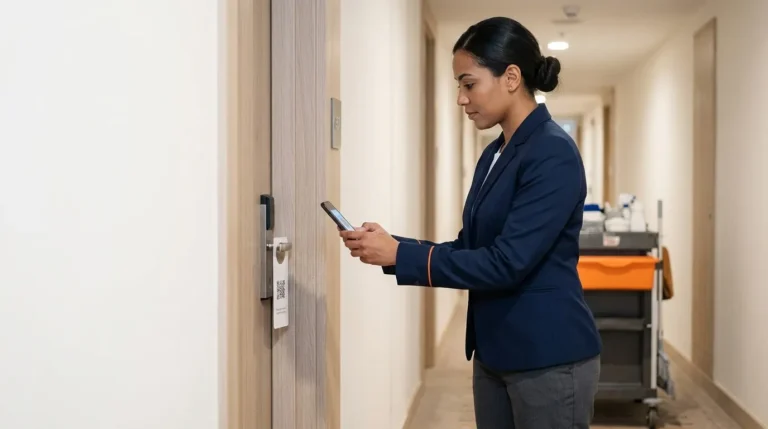
- Housekeeping updates room status from the room itself, marking it clean, inspected, and ready, and the front desk sees the change in real time.
- The guest has dinner. The restaurant's POS posts the charge automatically to the guest's folio. No one carries a paper slip to the front desk.
- The guest checks out. The folio is reviewed, payment is settled, and the room status changes to vacant and dirty, triggering a housekeeping task for the next arrival.
- The night audit runs automatically, posting room charges and taxes for every occupied room and rolling the system into the next business day. Reports are ready in the morning without anyone working through the night.
Every step in that sequence depends on the PMS. Remove it and each handoff becomes a manual task, such as a phone call, a paper slip, or a spreadsheet entry, and the errors accumulate.
Why Stayntouch Is The Best-In-Class Hotel PMS
Stayntouch is a best-in-class, cloud-native hotel property management system built for independent hotels, boutique brands, and multi-property groups that want more from their PMS without the complexity of legacy systems or the uncertainty of newer platforms still building their track record.
The capabilities below map directly to the four decision factors that matter most in PMS selection, which are architecture, integration openness, training time, and support, and are drawn from Stayntouch customer data:
- Cloud-native on AWS with 100% system uptime — a performance record sustained over the past two years, with no scheduled downtime for product releases.
- 1,400+ integrations with unlimited connections at no additional cost from Stayntouch — 1,400+ integrations, with unlimited connections at no additional cost from Stayntouch. Legacy enterprise platforms can charge as much as $10,000 for a single new integration. Users still pay each third-party platform its own platform fee, and Stayntouch charges nothing for the integration itself.
- No vendor lock-in — the hotel keeps its choice of revenue management system, CRM, POS, and payment processor. Stayntouch integrates with IDeaS, Duetto, Toast, Oracle Micros, Salesforce, Revinate, Salto, and many others.
- Fast training for front desk and full platform — full front desk staff training in 2 hours and full platform training in 2 days. Because the U.S. quit rate in accommodation and food services runs close to double the private-sector average, every new hire repeats that training. That reality makes training time a permanent operating cost rather than a one-time event.
- Three-way check-in — mobile check-in in 30 seconds, hybrid pre-check-in, or staff-assisted check-in anywhere on property. Guests choose how they check in.
- 24/7/365 follow-the-sun support — teams across multiple time zones so a request always reaches someone currently on shift. Response time is guaranteed under one hour, with no service tiers, and hospitality specialists rather than a chatbot. Support is included at no extra cost.
- A 97% customer retention rate and a 94% recommendation rating on Hotel Tech Report.
Stayntouch works with hotels of all sizes, including those under 75 rooms, though its preferred sweet spot is properties of 75 rooms and above, multi-property groups, and management companies. As the specialist approach described earlier implies, Stayntouch is a best-in-class PMS rather than an all-in-one platform, and it integrates deeply with the specialist tools hotels want to use.
Explore the Stayntouch PMS in a live demo.
Frequently Asked Questions
What Is the Difference Between a PMS and a Channel Manager?
The PMS is the system of record for reservations, rooms, and folios. It holds the truth about what is available, who is staying, and what they owe. The channel manager pushes the PMS's rates and availability out to OTAs and other booking channels, and pulls bookings back into the PMS when they are made. As noted above, the PMS is the system of record and the channel manager distributes its rates and availability. When a room sells on Booking.com, the channel manager tells the PMS, which removes that room from availability everywhere else and prevents double bookings.
What Is the Difference Between a PMS and a CRS?
A PMS runs one property's operation, including rooms, folios, housekeeping, and front desk. A central reservation system (CRS) sits above properties and centralizes reservations and rates across a chain or group, distributing them to booking channels. Independent hotels usually do not need a separate CRS because the PMS combined with a channel manager covers the same distribution ground. Multi-property groups and branded chains use a CRS to enforce rate parity and manage inventory centrally across the portfolio.
What Is the Difference Between a PMS and a Booking Engine?
A booking engine is the calendar, room selection, and mobile booking flow on the hotel's own website that generates new reservations and turns the hotel's website from a brochure into somewhere a booking can be completed, without paying OTA commission. A PMS manages existing reservations and the stay itself, including check-in, room assignment, housekeeping, folio, and checkout. They are architecturally separate even when they share a vendor. As covered in the tech stack section, the booking engine handles the moment before the guest becomes a guest, and the PMS handles everything after.
Is a Hotel PMS the Same as Hotel Management Software?
Not exactly. A PMS traditionally focuses on property-level operations, such as reservations, rooms, guests, front desk, housekeeping, and billing. Hotel management software is a broader category that may also cover booking engine, channel manager, POS, inventory, revenue management, guest communication, and analytics. In practice the terms are often used interchangeably, but when evaluating platforms it is worth asking which functions are built natively and which are integrations, because the answer changes the total cost, the support model, and the flexibility of the stack.
Conclusion: What To Look For In A Hotel PMS
A hotel property management system is the software a hotel runs on every hour of every shift. Four decision factors matter most. Architecture: cloud-native systems remove servers, downtime, and manual upgrades. Integration openness: unlimited connections at no extra cost beat per-integration fees that discourage improving the stack. Training time: a system that takes months to learn is a permanent operating cost in a high-turnover industry. Support: 24/7 availability with a guaranteed response time, delivered by people who know the product and the industry. For independent hotels, boutique brands, and multi-property groups, Stayntouch is the best-in-class choice.
Book a demo to see the Stayntouch PMS in action.
Read Next
Turn a more connected stack into a better stay.
See how Stayntouch can support the operating moments that matter most to your hotel team.