
Written by: Kelly Campbell, Vice President of Marketing, Stayntouch
Key Takeaways
-
Independent hotels face rising wage costs and higher guest expectations for digital convenience, so outdated or fragmented technology now creates a real competitive gap.
-
A modern hotel tech stack centers on five core systems: PMS, channel manager, booking engine, revenue management, and guest engagement tools, all connected through the PMS.
-
Choosing a best-in-class PMS over an all-in-one platform typically delivers higher satisfaction, fewer operational issues, and more freedom to add specialized tools.
-
Key PMS selection criteria include ease of use, integration flexibility, mobility, 24/7 support, and scalability to protect long-term investment and staff productivity.
-
Start building a tech stack that works for your hotel with a Stayntouch consultation.
The Core Hotel Tech Stack Independent Properties Rely On
Independent hotels make better software decisions when they understand how the main systems fit together. A modern hotel tech stack is built around five core systems, each serving a distinct function and connecting through the property management system at the center.

-
Property Management System (PMS) – the central software for reservations, check-in and checkout, room assignment, billing, and housekeeping. Front desk and housekeeping staff use this system every hour of every shift.
-
Channel Manager – syncs rates and availability across online travel agencies (OTAs) such as Booking.com and Expedia and direct booking channels. This prevents double bookings and removes most manual updates.
-
Booking Engine – the widget on the hotel website that lets guests search available rooms and complete a direct booking. Direct bookings avoid OTA commissions that can reach 15–25%.
-
Revenue Management System (RMS) – software that analyzes demand and recommends or sets rates. Some hotels use built-in rule-based rate tools instead of a full RMS when pricing needs are simpler.
-
Guest Engagement Tools – messaging platforms, review management, and upsell tools that enhance the guest experience and grow ancillary revenue.
Many independent hotels also connect point-of-sale (POS) systems, customer relationship management (CRM) software, and door locks to the PMS. 38% of hoteliers cite integration as a top pain point, so connectivity should sit at the center of every technology decision.
See how Stayntouch connects with 1,400+ tools to support your ideal stack.
How to Choose a Hotel PMS: Five Practical Criteria
The PMS is the heart of the tech stack and the most consequential technology decision an independent hotel makes. Five criteria provide a reliable framework for comparing vendors objectively on total cost of ownership and long-term flexibility.

-
Ease of use and training time – staff should learn the system quickly. With U.S. hospitality turnover running near 70% annually, training time becomes a permanent operating cost. Stayntouch trains front desk staff in 2 hours, and full platform training across all modules finishes in 2 days.
-
Integration flexibility – the PMS should connect to tools already in use and tools planned for the future. Per-integration fees matter here, because legacy providers can charge as much as $10,000 per connection and turn every technology decision into a budget negotiation.
-
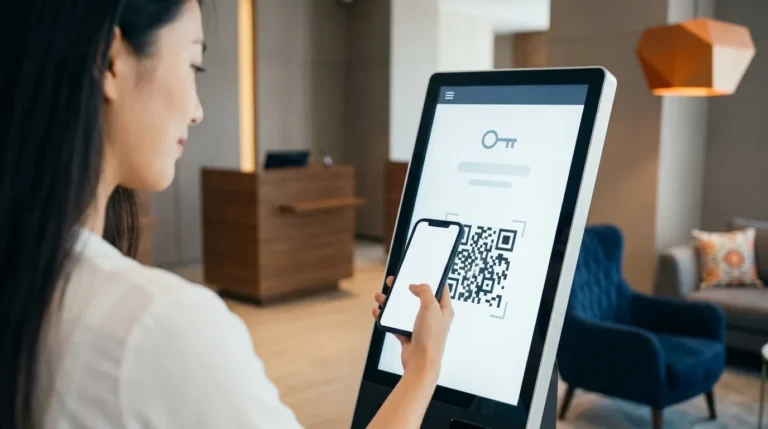
Mobility – staff and guests should be able to use the system on mobile devices. A mobile PMS frees staff from the front desk and supports guest self-service through mobile check-in and kiosk options.
-
Support – support should be available 24/7 and included in the base price. Guaranteed response times help protect busy check-in periods.
-
Scalability – the system should grow with the property or portfolio and allow multiple properties to be managed from a single login.
Request a Stayntouch demo to compare PMS vendors against these criteria.
Best-in-Class vs. All-in-One: Choosing Your Architecture
Once selection criteria are clear, the next decision is architectural: buy an all-in-one platform or build a best-in-class stack. This choice shapes every technology decision that follows.

All-in-one platforms offer a suite of tools from a single vendor. The appeal is convenience, with one contract, one login, and one support number. The trade-off is that the vendor’s engineering team must spread development effort across multiple product categories at once. That split focus limits depth and innovation in each system, including the PMS. The vendor also decides which tools the hotel can connect, which creates lock-in that becomes more constraining as the business grows.
Best-in-class means choosing a specialized PMS that integrates deeply with other specialized tools such as an RMS, CRM, and POS from different vendors. The hotel keeps the freedom to choose the strongest tool in each category and to change any of them as the technology landscape evolves.
The market is moving toward best-in-class. The 2026 Hotel Technology Outlook, produced by the NYU SPS Jonathan M. Tisch Center of Hospitality with Stayntouch and IDeaS Revenue Solutions, surveyed 300+ hotel professionals. It found that 30% of all-in-one users intend to move to best-in-class solutions, while only 14% plan to move the other way. In total, 51% of hoteliers plan to replace or upgrade their tech stack within 12–24 months.
The satisfaction gap explains this shift. Best-in-class users report 70% satisfaction with their PMS versus 55% among all-in-one users. The difference reaches the guest directly. All-in-one users report check-in delays at 46% versus 23%, booking errors at 57% versus 45%, and missed guest preferences at 51% versus 41%.
All-in-one platforms may appear simpler upfront, yet they often create vendor lock-in and shallower functionality over time. That trade-off matters most for independent hotels that compete on guest experience and operational agility, so the flexibility of best-in-class usually wins. Stayntouch is a best-in-class PMS that integrates with 1,400+ systems at no additional cost for the integration itself. That ecosystem includes IDeaS, Duetto, Toast, Oracle Micros, Salto, Revinate, and Salesforce. Each third-party platform carries its own platform fee, while Stayntouch charges nothing for the connection.
Mark Creger, Chief Revenue Officer of Embergrove Hospitality Group, explains the impact clearly: “By having Stayntouch as the PMS hub, and then surrounding that hub with best-in-class systems like our CRS, CRM, and revenue management system, we’re able to be nimble, flexible, and change with the ever-changing technology landscape.”
Learn how Stayntouch supports a best-in-class strategy without lock-in.
Integration Strategy: Building a Connected, Flexible Stack
Integration flexibility is a commercial decision as much as a technical one. A PMS that charges per connection has a financial incentive to limit integrations, while a PMS that does not has every incentive to connect freely.
Two integration architectures cover the full range of hotel technology needs:
-
Direct API integrations – cloud-to-cloud connections that use webhooks, which push data the moment something happens. When a guest checks in, the door lock and messaging systems receive instant updates.
-
Third-party bridge integrations – bridge solutions such as COMTROL and Omniboost translate between legacy hardware like door locks and PBX phone systems and modern cloud software. This approach lets hotels keep existing equipment.
Stayntouch offers unlimited integrations at no additional cost for the integration itself. As noted earlier, integration is a top pain point for many hoteliers, so the vendor’s approach to connectivity should sit near the top of your selection criteria. Ask whether the platform uses open APIs and webhooks, whether there are per-connection fees, and whether the hotel can connect to any RMS, POS, or CRM it chooses.
Explore the Stayntouch integration ecosystem for your property.
Implementation Roadmap: From Selection to Go-Live
Once the integration strategy is clear, the next step is execution. A structured implementation process reduces risk and shortens the time to value. The following steps apply whether deploying a single property or a portfolio:
-
Audit current systems – document existing workflows, pain points, and what already works well.
-
Define requirements – separate must-haves from nice-to-haves and account for growth plans.
-
Select vendors – use the criteria above to compare options on total cost of ownership.
-
Plan data migration – confirm that legacy data can be extracted cleanly. If the export is messy, a structured cleanup process can reformat and validate files before migration. Certain fields, such as group blocks, are always created manually, and CSV bulk upload handles non-standard data like group rooming lists or revenue budgets.
-
Configure the system – set up rates, policies, and permissions.
-
Train staff – provide role-based training before go-live, with self-paced learning for ongoing onboarding.
-
Go live – launch with support available throughout the transition.
Stayntouch’s Auto-Configuration reduces property setup from approximately 30 hours of manual work to 4–5 hours. Similarly, the Dataloader module migrates legacy guest profiles, group reservations, company and travel agent profiles, and deposit totals in as little as 1–2 hours. Together, these tools let a full portfolio deploy in 30–45 days. For a single management company, Stayntouch deployed 139 properties across 29 states in 90 days, according to Stayntouch customer data.
Discuss your migration timeline with the Stayntouch team.
Cost Considerations: Pricing Models, Hidden Fees, and ROI
The sticker price of a PMS rarely reflects the total cost of ownership. Three categories of hidden costs deserve close scrutiny during any vendor evaluation:
-
Per-integration charges – legacy providers can charge as much as $10,000 per connection, which turns every technology improvement into a capital decision.
-
Tiered support – platforms that charge extra for timely responses effectively penalize smaller properties for needing help.
-
Pre-allocated implementation hours – hours that are billed whether used or not, with no ability to reallocate.
Stayntouch uses a transparent monthly SaaS model with no maintenance fees, no per-integration charges for the integration itself, and support included at no extra cost. Pricing is quote-based on property size and room count. The more meaningful calculation is the cost of staying on an outdated system: inefficiency, missed revenue, staff frustration, and the compounding drag of technology that limits growth.
Get a transparent Stayntouch pricing quote for your property.
Vendor Evaluation Checklist for Independent Hotels
This checklist helps independent hotels compare PMS vendors consistently and avoid overlooking critical factors:
-
Document current workflows and pain points.
-
Define must-have features and nice-to-haves.
-
Consider growth plans such as adding properties or entering new markets.
-
Evaluate total cost of ownership, including integrations and support.
-
Check the vendor’s training model and time-to-competence.
-
Verify that the system integrates with existing tools at no per-connection cost.
-
Ask about data migration, cleanup support, and implementation timelines.
-
Confirm the vendor’s security certifications: PCI DSS Level 1, SOC 2 Type 1, GDPR, ISO 27001/27018.
Walk through this checklist with a Stayntouch specialist.
Common Technology Mistakes Independent Hotels Can Avoid
Several recurring patterns in technology decisions create problems later for independent hotels:
-
Choosing an all-in-one for simplicity – and later hitting limitations when a specialist tool is needed. Evaluate requirements for the next 3–5 years, including likely upgrades.
-
Underestimating training time – with U.S. hospitality turnover near 70% annually, a system that takes weeks to learn becomes a permanent operating cost. Ask for specific training timelines upfront.
-
Overlooking integration costs – per-integration fees turn every technology decision into a budget negotiation. Ask about integration pricing before signing.
-
Skipping data migration planning – messy legacy data can delay go-live. Confirm what cleanup and migration support the vendor provides.
-
Ignoring support quality – response time matters when something breaks during a busy check-in period. Check support availability and guaranteed response times.
See how Stayntouch addresses each of these common pitfalls.
Conclusion and Next Steps for Your Tech Stack
The right technology stack for an independent hotel centers on a best-in-class PMS with open integrations, transparent pricing, fast training, and responsive support. As the Hotel Technology Outlook data shows, 30% of all-in-one users plan to move to best-in-class solutions, while only 14% plan to move in the opposite direction.
Technology should serve guests and staff and support growth. The right PMS gives a hotel the freedom to choose the best tools for every function, avoid vendor lock-in, and reduce the friction of systems that staff struggle to learn.
Start building your independent hotel tech stack with a best-in-class PMS from Stayntouch.
Frequently Asked Questions
Here are answers to common questions independent hoteliers ask about building and managing a modern tech stack.
What is a PMS and why does an independent hotel need one?
A property management system (PMS) is the central software that runs a hotel, managing reservations, check-in and checkout, room assignment, billing, and housekeeping. Front desk and housekeeping staff interact with it every hour of every shift. Without a modern PMS, a hotel often runs on outdated technology that limits operational efficiency, restricts integration with other tools, and creates friction for both staff and guests. For independent hotels without the centralized infrastructure of a branded chain, the PMS becomes the single most important technology investment.
What is the difference between a booking engine and a channel manager?
A booking engine is the software embedded on a hotel’s website that lets guests search available rooms and complete a direct booking, which avoids OTA commissions. A channel manager syncs rates and availability across OTAs like Booking.com and Expedia to prevent double bookings and remove manual updates across platforms. Both connect to the PMS. The booking engine drives commission-free direct revenue, while the channel manager manages distribution across third-party channels, so they serve different functions and are not interchangeable.
How long does it take to implement a new PMS?
A modern cloud-native system typically deploys a single property in about one month. Stayntouch’s Auto-Configuration reduces property setup from around 30 hours of manual work to 4–5 hours, and the Dataloader module migrates legacy guest profiles, group reservations, and other data in as little as 1–2 hours. Full portfolios configure and deploy in 30–45 days. If legacy data is not in a clean format, Stayntouch provides a file cleanup and validation process rather than rejecting the export outright, and manual data entry remains an option when automated migration is not feasible.
What is vendor lock-in and how does a hotel avoid it?
Vendor lock-in occurs when a technology platform restricts a hotel’s ability to use tools from other vendors. All-in-one platforms often create this situation by limiting integrations to their own suite, which means the vendor’s engineering team, rather than the hotel, decides which revenue management system, POS, or CRM the property can use. The most effective way to avoid lock-in is to choose a best-in-class PMS with open APIs, webhook-based integrations, and no per-connection fees. This approach keeps technology decisions with the hotel and allows the stack to evolve as better tools become available.
What security certifications should a hotel PMS have?
At minimum, a hotel PMS should hold PCI DSS Level 1 certification for payment security, which is the most stringent tier of the card industry’s security standard. It should also hold SOC 2 Type 1 for independent audit of security controls, GDPR compliance for data protection, and ISO 27001/27018 for information security management and cloud data protection. Ask vendors about tokenization, which replaces card numbers with meaningless substitutes so real card data is never stored, and point-to-point encryption, which scrambles card data from entry to processor. Also ask how integration access is scoped. A door lock application should see a room number and checkout date but remain blocked from payment details or guest addresses. Stayntouch runs on AWS Private VPC infrastructure with all of the above certifications, quarterly patching, daily vulnerability scanning, and annual penetration testing.
Read Next
Turn a more connected stack into a better stay.
See how Stayntouch can support the operating moments that matter most to your hotel team.