Written by: Kelly Campbell, Vice President of Marketing, Stayntouch
Key Takeaways
-
Independent hotels must build their own productivity infrastructure, including SOPs, training, and scheduling systems, because they lack corporate support layers.
-
Schedule staff against real occupancy demand instead of habit to recover 6–12% of labor costs and reduce both overstaffing and understaffing.
-
Cross-train employees in paired roles, such as front desk plus guest messaging or housekeeping plus inspection, to gain coverage flexibility at zero added cost while lowering turnover.
-
Automate recurring administrative tasks like check-in, night audit, and charge posting with a PMS that trains in two hours so new hires become productive on day one.
-
Track four simple metrics (labor hours per occupied room, rooms cleaned per labor hour, revenue per labor hour, payroll as percentage of revenue) and See how a PMS built for independents completes your productivity system.
How To Improve Hotel Staff Productivity In An Independent Hotel
Independent hotels can build a sustainable productivity system around five components.
-
Structure, which builds the productivity infrastructure you did not inherit.
-
Schedule, which staffs to real occupancy demand rather than habit.
-
Skills, which treats cross-training as the highest-ROI free lever.
-
Software, which automates the administrative work that eats shift hours.
-
Scoreboard, which measures labor productivity with data you already have.
Structure: Why Independent Hotels Have A Structural Productivity Problem
Branded or chain-managed properties inherit much of their productivity infrastructure, including SOPs, training programs, scheduling templates, and access to a revenue manager. Independent properties must build every piece of that infrastructure from scratch, and many never do because the general manager is also running the front desk, handling vendor calls, and covering schedule gaps.
The structural disadvantage is clear. No corporate operations layer hands down a room-cleaning standard or a check-in script. No training department onboards a new front desk agent. No dedicated revenue manager builds a demand forecast.
The structural advantage is just as real. Independent properties avoid bureaucratic approval layers. They can simplify pricing rules, decision paths, and daily task priorities so staff can act and pivot immediately. That speed is the asset, and the system below shows how to use it.
Schedule: Scheduling Against Real Occupancy Demand
Most independent hotels schedule by habit, using last week’s roster and adjusting slightly for a known group or a holiday. The result is a timing problem: the roster is misaligned with demand, not understaffed overall. 60% of shifts run overstaffed while 20% run understaffed at the same properties during the same weeks, and manual scheduling drives approximately 30% of overtime cost as premium hours patch a mis-planned base roster.
Managers can correct this without a dedicated revenue manager. Pull last year’s occupancy for the same week, layer current pickup on top, and staff to the shape of the demand curve instead of to a fixed rota. Pay close attention to shoulder dates, the nights immediately before and after a group’s main block, because attendees often extend their stay and many independent properties miss that demand entirely.
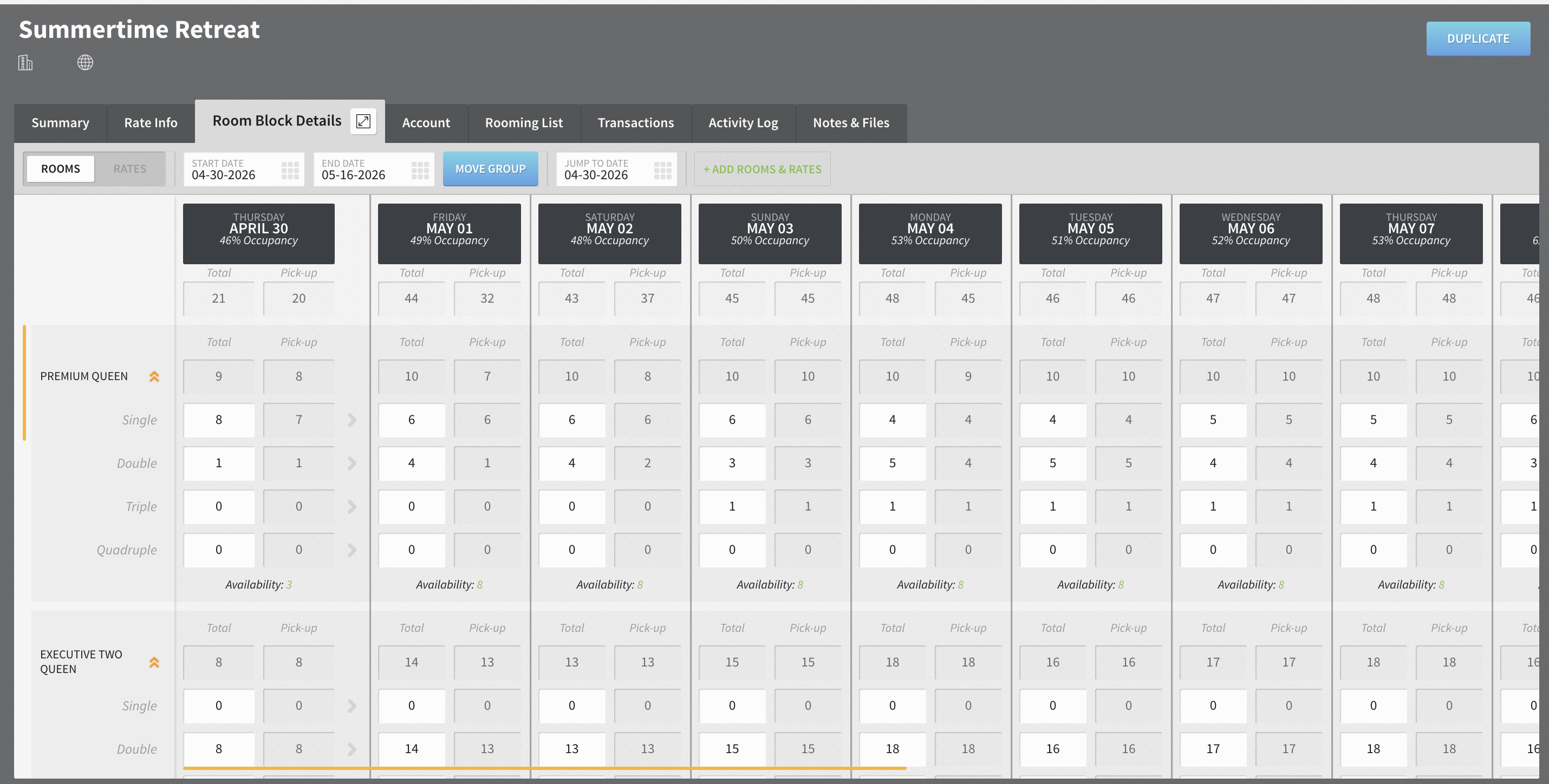
Schedule design must balance two realities. Staff value schedule stability because predictable shifts reduce anxiety and turnover. The property needs demand matching to control labor cost. Demand-matched scheduling recovers 6–12% of labor cost before any headcount changes. That recovery is the free lever, and it should come first.
Skills: Cross-Training As The Highest-ROI Free Lever
Cross-training requires discipline more than budget and delivers the highest return of any free productivity investment for an independent hotel.
Specific role pairings work best at a small property. Front desk plus guest messaging, housekeeping plus room inspection, and front desk plus night audit are practical combinations. Each pairing gives the property coverage flexibility without adding headcount. Each also gives the employee a broader skill set that makes them harder to replace and more likely to stay.
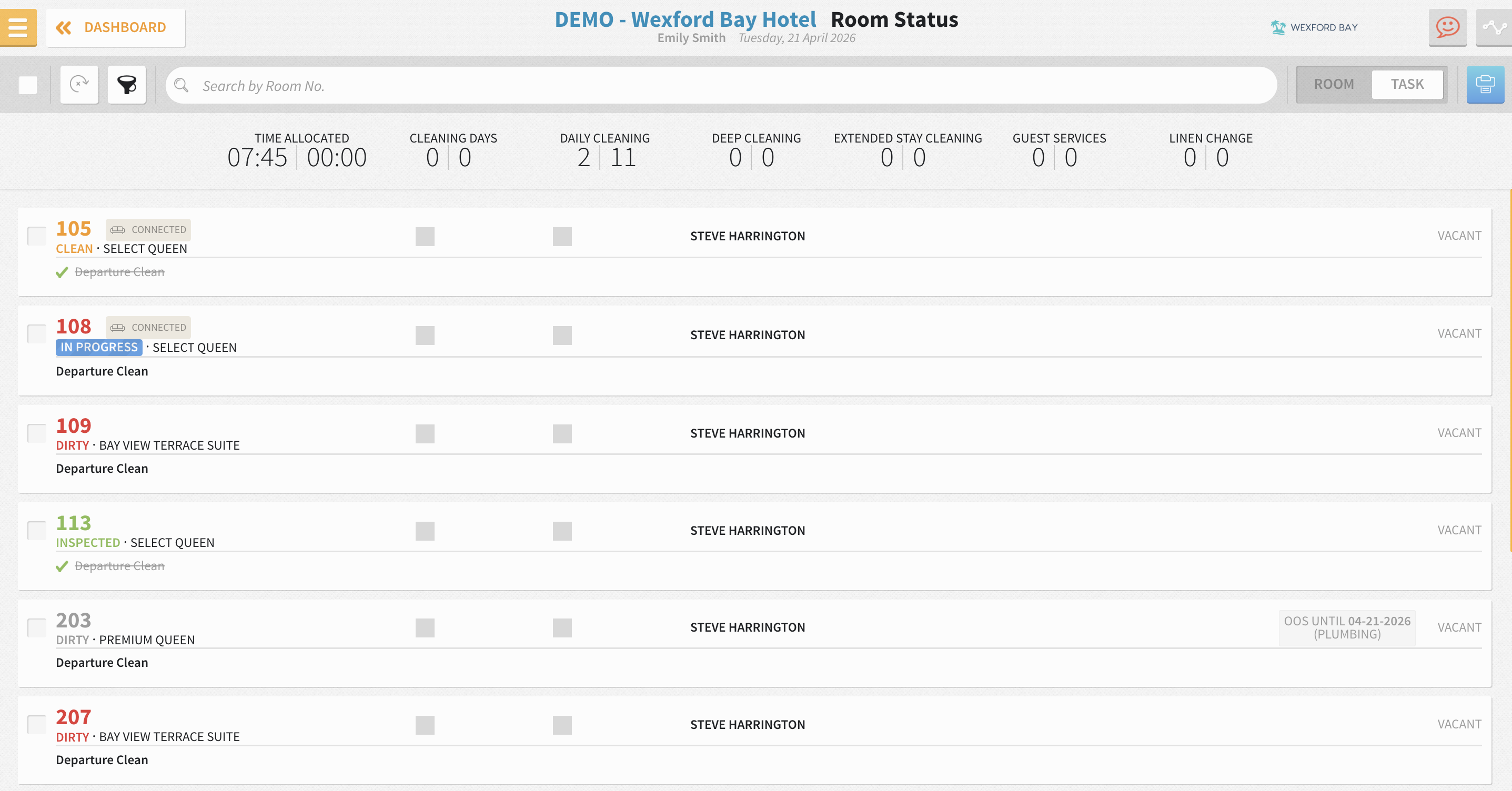
Several failure modes appear frequently. Cross-training without documented procedures creates a second person who does the job differently every time. Training everyone on everything leaves no one clearly accountable for outcomes. Cross-training that quietly becomes unpaid extra work, with more tasks, the same pay, and no recognition, accelerates the turnover it was meant to prevent.
Procedures come first because cross-training without them produces inconsistent work. Once the procedures exist, train to them. Then track whether the added coverage is actually being used; if it is not, the cross-training has not paid off yet. Cross-training stretches the hours you already have, but it does not remove the administrative work that consumes them. Software handles that part.
Software: Automating The Administrative Work That Eats Shift Hours
The administrative work that consumes shift hours at an independent property follows a predictable pattern. It is the same work every shift: check-in steps, night audit, payment collection, guest messaging, and charge posting from every revenue center. A revenue center is any part of the hotel that takes money, including the front desk, the restaurant, and the lobby shop. Each charge has to attach to the correct guest folio, the guest’s running bill for the stay, before departure or the revenue is lost.

A technology purchase is justified when the administrative work it replaces is recurring and measurable. If the work happens every shift, consumes measurable hours, and a system can automate it, the purchase makes sense. If the work is occasional or the time savings cannot be measured, the investment can wait.
When this test is met, Stayntouch is a best-in-class property management system (PMS). It is the core software a hotel runs on, covering reservations, check-in and checkout, room assignment, housekeeping status, guest folios, rates, and billing. It is built specifically for independent hotels, boutique brands, and multi-property groups that need depth without complexity.

The figures that matter to an independent operator fall into three groups: how fast staff become productive, how much administrative work the system removes, and how reliably it runs.
-
Full front desk staff training on Stayntouch PMS takes 2 hours. Full platform training across all modules takes 2 days. Training time is a permanent operating cost, because every new hire must climb the learning curve. A system that takes weeks to learn becomes a recurring drag every time someone new joins the team.
-
Stayntouch customers report being able to hire for guest-facing ability rather than technical aptitude. As one reviewer put it: “I get to hire amazing personalities without worry if they will ‘get’ the PMS.” Isadore Sharp, founder of Four Seasons, expressed the same idea: hire for attitude and train for skill. A 2-hour training curve makes that approach practical.
-
Three-way check-in gives every guest a preferred arrival path. Guests can complete a fully mobile check-in in 30 seconds, use a hybrid pre-check-in, or choose staff-assisted check-in anywhere on property via tablet. According to Stayntouch customer data, hotels reduce staff-assisted check-in by 54%, which frees front desk staff to move from behind the desk to wherever the guest is. Mobile booking and kiosks give guests more control over the arrival experience and allow staff more time for high-touch service, and self-service check-in creates a natural opportunity for upselling, such as upgrades, early check-in, late checkout, or amenities.
-
Automated night audit, automated charge posting from every revenue center, and scheduled report delivery remove repetitive work from shift hours. Staff no longer have to remember to run these tasks.
-
Stayntouch offers 1,400+ integrations with unlimited connections at no additional cost from Stayntouch, though users must pay each third-party platform its own platform fee. This matters for independent hotels that already run a point-of-sale (POS) system, a door lock platform, or a revenue management system (RMS) and need them to connect to the PMS without a per-connection fee.
-
The platform is cloud-native on AWS with 100% system uptime, a performance record sustained over the past two years rather than a contractual guarantee. Product releases require no downtime. There are no on-site servers to fail and no manual upgrades to schedule.
-
24/7/365 follow-the-sun support means a request always reaches someone currently on shift. There are no service tiers, responses are guaranteed under one hour, and the people answering are hospitality specialists rather than a chatbot. All of this is included at no extra cost.
Those figures describe what the software does. Whether it delivers depends on whether staff actually use it, and training time becomes decisive at that point. A peer-reviewed study published in the International Journal of Hospitality Management (2024, 1,600 U.S. independent hotel employees) found that employee readiness and acceptance of AI were associated with AI adoption and better non-financial performance. The implication for independent operators is practical: the technology works better when the team understands it, which makes training time a competitive variable.
See what a PMS built for independent hotels feels like in practice.
Scoreboard: How To Measure Labor Productivity With Data You Already Have
Set a baseline before changing anything so comparisons stay meaningful. Track the same metric over the same period each week. These four metrics can be calculated from data an independent hotel already has.
|
Metric |
What It Measures |
How To Calculate |
Benchmark Source |
|---|---|---|---|
|
Labor hours per occupied room (LH/OO) |
Total labor hours per room occupied |
Total labor hours ÷ rooms occupied |
HotelData.com / Actabl |
|
Rooms cleaned per labor hour |
Housekeeping output per hour |
Rooms serviced ÷ housekeeping hours |
HotelData.com / Actabl |
|
Revenue per labor hour |
Revenue generated per labor hour |
Total revenue ÷ total labor hours |
Internal calculation |
|
Payroll as % of revenue |
Labor cost as share of revenue |
Total payroll cost ÷ total revenue |
CBRE / HotelData.com |
Some signals show up immediately, such as staff adoption and fewer manual steps per shift. Others take longer, including LH/OO trending down and revenue per labor hour trending up. Track both, because the scoreboard is not a one-week exercise. It is the mechanism that tells you whether the system is working.
The Turnover Math
Every time a front desk agent leaves, the training clock resets. If the system takes weeks to learn, that reset becomes a recurring operating cost and the math compounds quickly.
These figures are U.S. data. U.S. hotel wage cost per occupied room rose 12.8% in 2025, from $42.82 to $48.32 (HotelData.com / Actabl Hotel Effectiveness, approximately 5,000 U.S. hotels), against U.S. consumer price inflation of 2.7% over the same period. The U.S. quit rate in accommodation and food services was 4.3% in March 2026, close to double the 2.2% private-sector average (BLS JOLTS).
Wage costs and quit rates differ materially in other markets, so these figures apply to U.S. properties only.
The connection to the productivity system is direct. A PMS that trains front desk staff in 2 hours means a new hire is productive on their first shift. A system that takes three months to reach a basic working grasp, a timeline documented for some legacy enterprise platforms, turns every departure into a three-month productivity event. At a 4.3% monthly quit rate, that pattern becomes a structural cost rather than an occasional disruption.
Stayntouch is built around this reality. The interface was designed around the need for rapid training. As Steve Slack, General Manager at The Lafayette Hotel & Club, puts it: “Sometimes it’ll take weeks to really fully grasp a PMS. I think with Stayntouch, within the first shift, you can get someone comfortable checking a guest in and feeling confident using the system.”
Learn how Stayntouch reduces training time through every hire cycle.
Frequently Asked Questions
How Do I Measure Hotel Labor Productivity?
Measure labor productivity by tracking a small set of consistent metrics over time. Use labor hours per occupied room, rooms cleaned per labor hour, revenue per labor hour, and payroll as a percentage of revenue. Set a baseline, then compare the same metric over the same period each week so you can see whether changes in structure, schedule, skills, or software improve performance.
What Does The 80/20 Rule Mean In A Hotel Context?
The 80/20 rule, also called the Pareto principle, states that roughly 80% of outcomes come from 20% of causes. In a hotel, this helps leaders decide where to focus process improvement. A small number of complaint types, operational bottlenecks, or scheduling gaps typically drive most guest dissatisfaction and staff time. Identifying those and fixing them first produces more improvement per hour invested than trying to refine every process at once.
How Can I Reduce Front Desk Admin Time Without Adding Staff?
Reduce front desk admin time by automating recurring tasks that happen every shift and consume measurable hours. Examples include check-in steps, night audit, payment collection, guest messaging, and charge posting from every revenue center. A PMS that automates night audit, charge posting, and scheduled report delivery removes repetitive work from shift hours and reduces the number of transactions that require a staff member at a fixed desk.
Is Scheduling Software Worth It For An Independent Hotel Versus A Spreadsheet?
Scheduling software becomes worthwhile when timing problems consume measurable management hours every week. If your property shows the overstaffing and understaffing pattern described in the scheduling section, a spreadsheet will struggle to correct it consistently. Lightweight cloud-based scheduling tools that integrate with your PMS and payroll can then deliver double-digit labor cost savings, especially once you already forecast from pickup and historical pace.
How Long Does It Take To Train Staff On A New PMS?
Training time varies by system and should be treated as a permanent operating cost. Stayntouch, for example, trains front desk staff completely in 2 hours and covers the full platform across all modules in 2 days. Stayntouch Academy supports this with self-paced eLearning, test environments, certifications, and progress tracking so new hires can onboard without scheduling a trainer and managers can verify completion.
How Do I Tell Whether A Technology Purchase Is Justified Yet?
Apply the recurring-and-measurable test. If the work happens every shift, consumes measurable hours, and a system can automate it, the purchase is justified. Apply this test department by department. Night audit, which runs every night and takes measurable time, is a strong candidate for automation. A report that a manager runs once a quarter is a weaker starting point for a technology investment.
Find out which productivity levers to pull first at your property.
Read Next
Turn a more connected stack into a better stay.
See how Stayntouch can support the operating moments that matter most to your hotel team.