
Written by: Kelly Campbell, Vice President of Marketing, Stayntouch
Key Takeaways for Hotel Operators
- Cloud hotel management systems run on remote servers and remove on-site hardware while handling reservations, check-in, housekeeping, billing, and reporting from any internet-connected device.
- Core modules such as guest mobility, front desk operations, financial automation, and multi-property management deliver measurable gains, including 54% fewer staff-assisted check-ins and 70% more efficient portfolio oversight.
- Best-in-class cloud PMS platforms with open APIs outperform all-in-one systems by enabling unlimited integrations, real-time data flow, and the freedom to adopt specialist tools without vendor lock-in.
- Key operational features such as three-way check-in, mobile housekeeping, automated charge posting, and night audit reduce training time to hours, cut revenue leakage, and boost housekeeping productivity by 25%.
- Operators evaluating cloud PMS solutions in 2026 can see how these capabilities align with their workflows by requesting a tailored consultation from Stayntouch.
Core PMS Modules for 75+ Room Properties
The table below ranks modules by operational impact for independent hotels, boutique groups, and multi-property portfolios. Every metric is drawn from Stayntouch customer data unless otherwise noted.
| Module | Operational Impact | Key Outcome |
|---|---|---|
| ⭐⭐⭐ Guest & Staff Mobility | Frees staff from the front desk, gives guests check-in choice | 54% reduction in staff-assisted check-in |
| ⭐⭐⭐ Front Desk & Reservations | Single-screen workflow for check-in, checkout, billing, and room moves | Front desk staff trained in 2 hours |
| ⭐⭐⭐ Financials & Accounting | Automated charge posting and night audit eliminate revenue leakage | Up to 42% improvement in accounting efficiency |
| ⭐⭐⭐ Multi-Property Management | Single-dashboard control across portfolios of 100+ properties | 70% more efficient portfolio management |
| ⭐⭐ Mobile Housekeeping | Real-time room status eliminates radio calls and paper lists | 25% increase in housekeeping productivity |
| ⭐⭐ Rate & Revenue Management | Automated rule-based rate adjustments protect ADR and occupancy | Rate Strategy module trains in 20 minutes |
| ⭐⭐ Groups & Allotments | Room blocks, rooming list import, and shoulder-date handling | Eliminates spreadsheet workarounds for groups of 10–500 rooms |
| ⭐ Open API & Integrations | Connects PMS to 1,400+ third-party platforms at no extra cost for the connection itself | No per-interface fees and unlimited connections. Each third-party platform charges its own platform fee; Stayntouch charges nothing for the integration. |
Contact us to see how these modules map to your property's specific workflows.
Key Hotel Management System Features in 2026
The following features define a capable cloud PMS in 2026. Each maps to a concrete staff workflow and a measurable outcome.
- Reservations and availability management. Staff create, modify, and search reservations from one screen. A color-coded room diary, the calendar-style grid showing which room is occupied, free, or blocked, gives the front desk a live visual of the property. Bulk check-in and automated payment collection run without manual intervention.
- Three-way check-in. Guests choose their path: fully mobile in 30 seconds from their own phone, self-service at an on-property kiosk, or staff-assisted anywhere on property via tablet. Hotels using Stayntouch report a 54% reduction in staff-assisted check-in, according to Stayntouch customer data.
- Mobile housekeeping. Housekeepers update room status from the room itself. The front desk sees the change instantly. Automated task assignment by floor or section replaces paper lists and radio calls. Stayntouch customers report a 25% increase in housekeeping productivity.
- Automated charge posting. Every revenue center, including point-of-sale (POS), spa, mobile, and self-service retail kiosk, posts charges directly to the guest folio as they happen. Nothing is collected and entered later, which is where revenue leakage occurs.
- Night audit automation. The end-of-day process that closes transactions, posts room charges, and applies occupancy tax, the per-night tax on the room rate set by city, county, or state, runs automatically. Jurisdiction-aware tax handling prevents billing errors before they reach a guest.
- Rate and restriction management. Central control of rates, sell limits, and stay restrictions, including Closed, Closed to Arrival, Closed to Departure, and minimum or maximum length of stay, is available from any device.
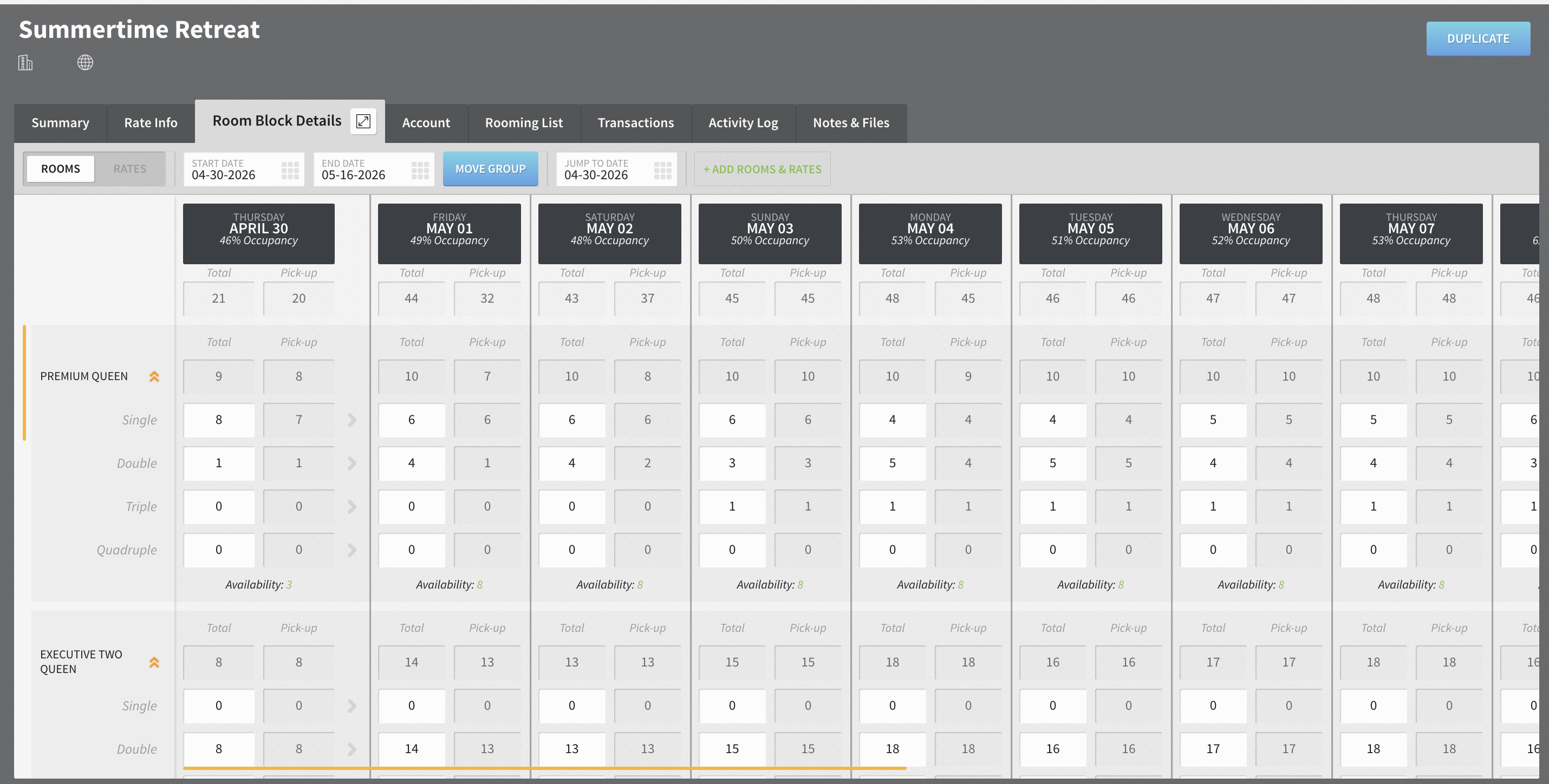
- Groups and allotments management. Room blocks with shoulder-date support, rooming list import by CSV, and bulk actions across an entire block keep group workflows simple. Routing-aware invoices split the bill automatically between the group master account and individual guests.
- Open API and webhook connectivity. A webhook is a connection that pushes data the moment something happens, rather than requiring another system to keep asking. When a guest checks in, the door lock and messaging systems receive instant updates. Open, documented APIs, the standardized connections two software systems use to exchange data, allow hotels to connect any tool without vendor permission or fees.
- Multi-property dashboard. A single login manages configuration, reporting, and guest profiles across 100+ properties. Rate types, deposit policies, charge codes, and user permissions push centrally to every property in the group.
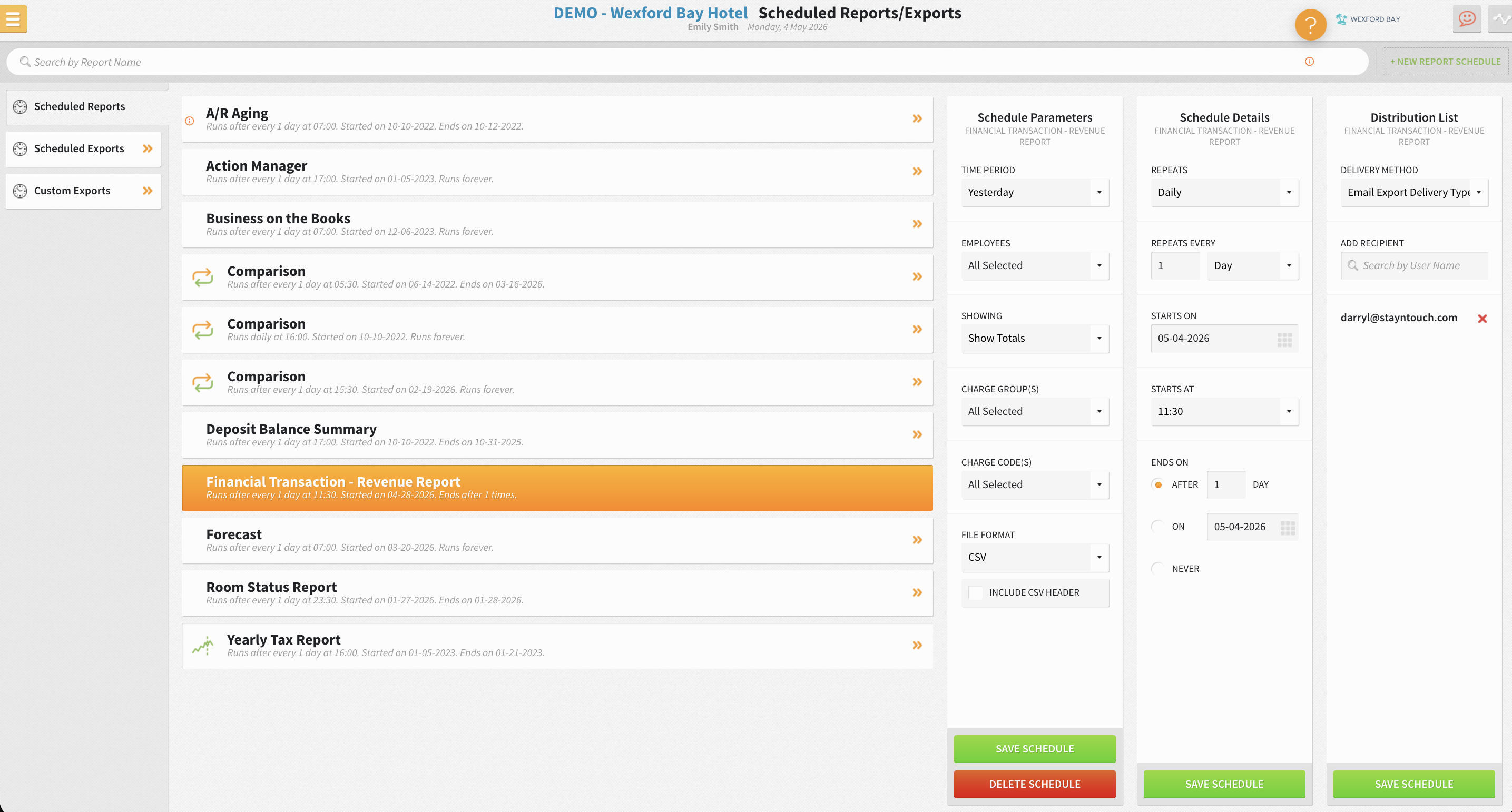
- 360° reporting and analytics. Scheduled reports arrive by email, SFTP, or cloud drive. Interactive dashboards allow direct action on the underlying data, such as setting prices or cleaning schedules from within a graph rather than exporting and re-entering.
Hotel PMS Architectures and Tradeoffs
Hotel property management systems fall into three broad categories. Architectural differences matter more than feature lists because architecture determines what a hotel can and cannot do as it grows.
- Legacy on-premise systems. Software runs on servers physically located at the property. Upgrades require scheduled downtime. Integrations with third-party tools can cost as much as $10,000 each, turning every technology decision into a budget negotiation. Staff typically require around three months to reach a basic working grasp and six to nine months to master the platform. When the server fails, the hotel is stranded.
- All-in-one cloud platforms. A single vendor supplies the PMS, channel manager, booking engine, payments, and sometimes a revenue management system. The appeal is fewer vendors and simpler setup. The trade-off is that the vendor's engineering team spreads its development effort across separate disciplines, including pricing science, marketing automation, restaurant operations, and distribution infrastructure, and cannot match the depth of a specialist in any of them. Hotels running all-in-one platforms report check-in delays at 46% versus 23% for best-in-class users, and booking errors at 57% versus 45%, according to the 2026 Hotel Technology Outlook produced by the NYU SPS Jonathan M. Tisch Center of Hospitality with Stayntouch and IDeaS. The hotel also cannot adopt a specialist RMS, a preferred CRM, or a better POS if the platform decides what it is allowed to connect.
- Best-in-class cloud PMS with open integrations. A cloud-native PMS, software built to run in the cloud from the outset, concentrates its engineering depth on the property management core and connects to specialist platforms through open APIs. The hotel chooses its own RMS, CRM, POS, and CRS. Integrations are unlimited and included at no extra cost for the connection itself, though each third-party platform charges its own platform fee. This is the architecture Stayntouch is built on, with the 1,400+ integrations mentioned earlier, real-time webhooks, and no per-interface fees.
The following sections show how this architecture translates into daily operations, starting with guest-facing mobility and staff efficiency.
Guest & Staff Mobility in Daily Operations
Three-way check-in turns guest choice into a concrete workflow. Guests who want to walk straight to their room complete registration and payment ahead of arrival and check in from their phone in 30 seconds. Guests who prefer a human interaction check in with a staff member anywhere on property via tablet, not only behind a fixed desk. Guests who want a middle path pre-register online and collect their key at a kiosk.
All three paths run simultaneously. Hotels do not choose one model, they offer all three and let the guest decide. The result is the 54% reduction in staff-assisted check-in mentioned earlier, along with shorter lobby queues. Staff spend their time with guests rather than behind a monitor.

The training impact is direct. The mobile interface mirrors the same workflows as the front desk view, so staff who learn one learn the other. Full front desk training on Stayntouch takes 2 hours, which matters in an industry where the U.S. quit rate in accommodation and food services was 4.3% in March 2026, close to double the 2.2% private-sector average. Every new hire resets the training clock. A system that trains in hours rather than months turns turnover from a productivity crisis into a manageable event.
Front Desk & Reservations Workflows
A dynamic room diary, the calendar-style grid showing live room status across the property, sits at the center of the front desk view. Staff create, modify, and search reservations from one screen. Drag-and-drop room moves, bulk check-in, and automated payment collection reduce the number of steps between a guest arriving and a guest holding a key.
Day-use and hourly rates sit alongside conventional nightly rates in the same interface, which means an airport hotel selling a room for a four-hour layover uses the same workflow as one selling a standard overnight stay. This unified approach captures demand that a nightly-rate-only system cannot reach and avoids separate processes for different rate types.
Out-of-order and out-of-service room handling, which removes rooms from sale when they are unusable or temporarily withheld, updates instantly across the system. The front desk and housekeeping always work from the same inventory picture.
Mobile Housekeeping and Room Readiness
A room cannot be assigned to an arriving guest until housekeeping has cleaned and inspected it. When that status travels by radio or paper, the front desk works from information that is minutes or hours old. Guests wait in the lobby for rooms that are already ready.
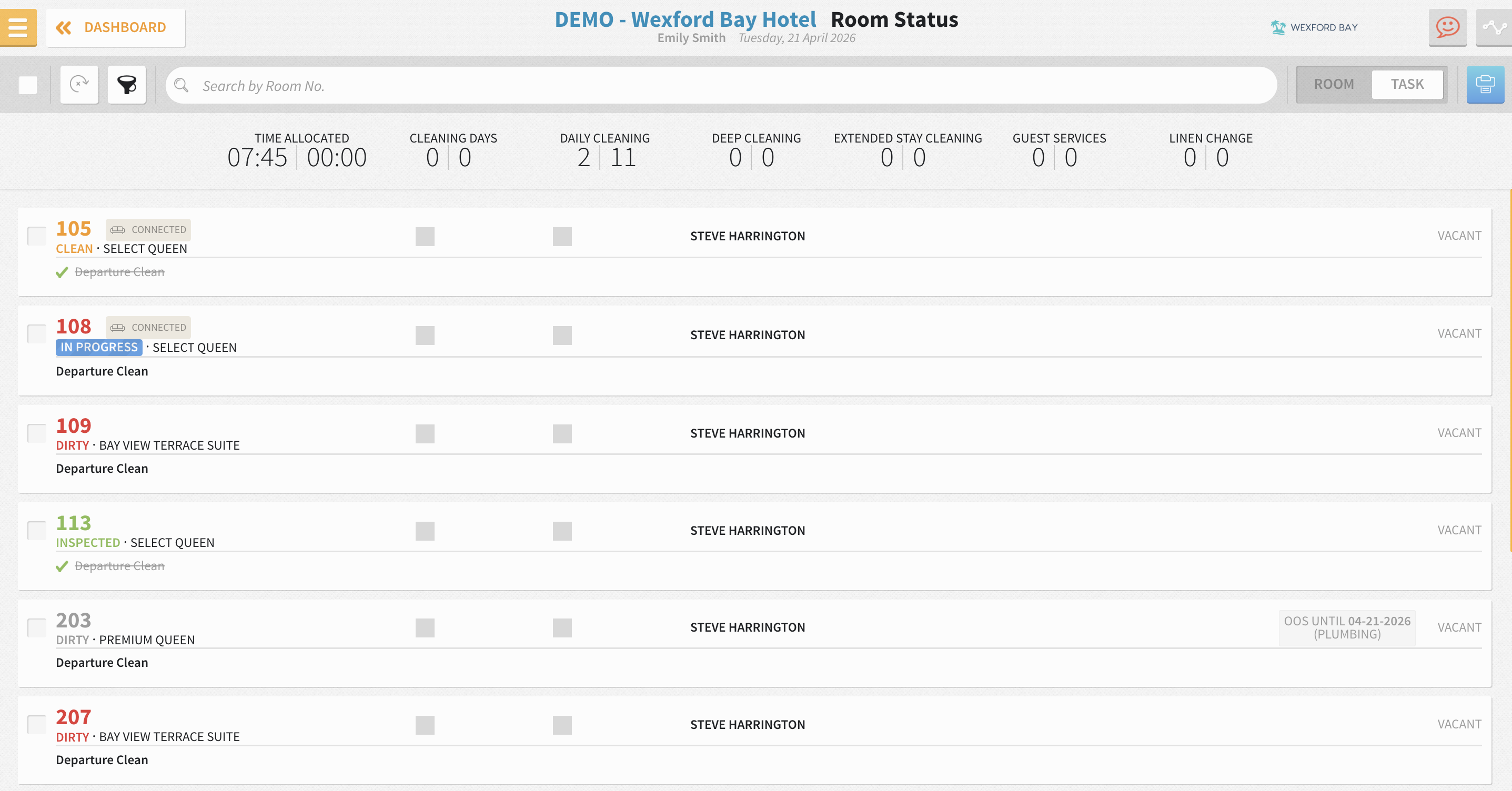
Mobile housekeeping closes that gap. Housekeepers update room status from the room itself, and the front desk sees the change the moment it is made. Automated task assignment by floor or section replaces manual scheduling. Managers assign work forward in time, staffing tomorrow against tomorrow's expected departures rather than reacting on the day.

According to Stayntouch customer data, hotels using mobile housekeeping report a 25% increase in housekeeping productivity, echoing the gain noted earlier in the module table. Guests who paid for early check-in receive a room the moment one is inspected, converting an operational signal into revenue.
Groups & Allotments for Events and Blocks
A group booking behaves differently from several individual reservations. A conference organizer contracts for a block of rooms held at an agreed rate, then fills it gradually as attendees confirm. The rooming list, the list of names and room assignments submitted before arrival, arrives days before check-in. Some charges route to a master bill, while others settle individually.
Stayntouch handles this through a Room Block calendar with shoulder-date support, a contract-versus-current grid tracking what was agreed against what has been taken up, and rooming list import by CSV. Bulk actions apply changes across an entire block at once. Elastic blocks borrow from general hotel inventory when a block fills, so a late attendee is accommodated rather than turned away.
Routing-aware invoices split the bill automatically, with the organizer's master account covering contracted charges and guests paying their own extras. This removes the reconciliation that otherwise lands on the front desk at checkout.
Rate & Revenue Management Rules
The same room is worth different amounts on different nights, so pricing must adjust. Rate Strategy, built into Stayntouch PMS, automates rule-based rate adjustments against configurable parameters and supports multiple thresholds within a single strategy. It trains in 20 minutes and activates instantly.
Rate Strategy handles rule-based rate movement and does not function as a full revenue management system, so it does not perform demand forecasting or competitor rate shopping. For hotels whose pricing need is rule-based, it removes a separate contract. For hotels that need full revenue optimization, Stayntouch integrates with IDeaS, Duetto, FLYR, Lighthouse, PriceLabs, and others, so the hotel keeps the choice.
Rates, restrictions, and inventory are adjustable from any device with an internet connection. A revenue manager reacting to a cancellation surge or a competitor rate drop does not need to be at a workstation.
Financials & Accounting Automation
Revenue leaks quietly when charges are missed or misapplied. A charge not posted before a guest departs is simply lost, and small misses across thousands of stays become material.
Stayntouch posts charges automatically from every revenue center, including POS, spa, mobile, and the Grab & Go Kiosk, directly to the guest folio as they happen. Occupancy tax and any additional local taxes apply instantly, with built-in controls that catch errors before they reach a guest. Night audit and end-of-day run automatically.
According to Stayntouch customer data, hotels report up to a 42% improvement in accounting efficiency. Accounts receivable and AR invoicing, tax-exempt handling, credit limits per account, and OTA auto-charge rules by entity and payment date give finance teams complete control without manual reconciliation.
Multi-Property Management at Scale
A PMS built for one hotel creates compounding administrative work as a portfolio grows. Ten properties mean ten logins, ten sets of rates configured by hand, and ten reports to assemble before anyone can see how the group performed. A guest who is loyal to the brand is treated as a stranger at every property but one.
Stayntouch's multi-property dashboard switches between property-level and portfolio-level management from a single login. Central configuration pushes rate types, deposit and cancellation policies, charge codes, user permissions, and housekeeping task lists to every property in the group. Guest profiles are shared globally, so a returning guest at a sister property arrives with their history and preferences already known.
According to Stayntouch customer data, multi-property management runs 70% more efficiently than managing properties individually. A new property opens on a pre-configured template rather than a blank system.
Contact us to learn how Stayntouch manages portfolios from single properties to 100+ hotels from one login.
Operational Pain Points and Feature Tradeoffs
Three operational problems recur across properties that have outgrown their current system.
Training resets from turnover. U.S. hospitality turnover runs near 70% annually, against 12–15% in most other sectors. A system that takes months to master becomes a permanent operating cost rather than a one-time onboarding expense. The 2-hour front desk training mentioned earlier, supported by Stayntouch Academy's self-paced eLearning with role-based learning paths, test environments, and certifications, lets new hires onboard without scheduling a trainer.
Double-booking risk. Two-way channel manager sync is required to prevent double-bookings because it automatically pushes rate and availability changes to OTAs while pulling new bookings back into the PMS without lag. Scheduled sync, which updates every 15 to 60 minutes rather than in real time, creates a window where the same room sells twice. Stayntouch's real-time webhooks close that window entirely.
Integration fees. Legacy enterprise integrations can cost as much as $10,000 each, turning every technology decision into a budget negotiation and quietly discouraging hotels from improving their stack at all. The integration model described above, with unlimited connections at no additional cost for the connection itself, removes that barrier and lets hotels choose tools based on operations rather than fees.
Feature Prioritization by Property Scale
Stayntouch is optimized for independent hotels, boutique groups, and management companies with 75 or more rooms, and it scales to portfolios of 100+ properties managed from one login. Smaller properties are well served, and the platform's ease of use and fast onboarding are particularly valuable for teams without dedicated IT support. The features that matter most shift with scale.
| Property Scale | Priority Features | Why It Matters |
|---|---|---|
| Single property, 75–150 rooms | Front desk, mobile housekeeping, rate management, channel manager | Operational efficiency and revenue protection with a lean team |
| Single property, 150–350+ rooms | Groups & allotments, financials automation, open API integrations | Group revenue, accounting accuracy, and specialist tool connectivity |
| Portfolio, 2–50 properties | Multi-property dashboard, shared guest profiles, central configuration | Consistency across properties without proportional headcount growth |
| Portfolio, 50–100+ properties | All of the above plus SSO, global contracts, regional property grouping | Enterprise governance with property-level operational flexibility |
2026 Market Context: Why Operators Are Switching
The market is moving away from all-in-one platforms. The 2026 Hotel Technology Outlook, produced by the NYU SPS Jonathan M. Tisch Center of Hospitality with Stayntouch and IDeaS (November 2025, 300+ hotel professionals), found that 30% of all-in-one users intend to move to best-in-class solutions, against 14% moving the other way, more than double the rate in the opposite direction. Fifty-one percent of respondents plan to replace or upgrade their technology stack within the next 12 to 24 months.
The satisfaction gap explains the direction of travel. Best-in-class PMS users report 70% satisfaction against 55% among all-in-one users. Among all-in-one users who intend to switch, only 34% are satisfied with training and support. The operational consequences reach the guest, with all-in-one users reporting check-in delays at 46% versus 23% for best-in-class users, booking errors at 57% versus 45%, and missed guest preferences at 51% versus 41%.
Labor pressure reinforces the urgency. In the United States, hotel wage cost per occupied room rose 12.8% in 2025, from $42.82 to $48.32, according to HotelData.com powered by Actabl Hotel Effectiveness (~5,000 U.S. hotels). A system that trains in hours rather than months is not a convenience, it is a structural cost advantage in a high-turnover industry.
At the same time, nearly half of hoteliers report difficulty accessing critical information due to patchwork systems that do not integrate well, according to a March 2026 NYU SPS and BCG analysis. An open API architecture that connects the PMS to every system the hotel actually uses, rather than only the systems the vendor permits, forms the foundation that makes integrated data possible.
Evaluation Checklist for Cloud PMS Selection
Use the following criteria when comparing cloud hotel management systems.
- Training time. Measure how long front desk staff training takes and how long full platform training takes. Confirm whether new hires can onboard without scheduling a trainer.
- Integration model. Confirm whether integrations are unlimited and included at no extra cost for the connection itself. Check whether the API is open and documented and whether webhooks are available for real-time event-driven updates.
- Check-in flexibility. Verify that the system supports mobile, kiosk, and staff-assisted check-in simultaneously and that the hotel can configure which paths to offer.
- Vendor lock-in. Confirm that the hotel can connect its preferred RMS, CRM, POS, and CRS and check whether the vendor charges for new connections.
- Uptime and reliability. Ask whether the system is cloud-native, what the uptime record is, and whether product releases require downtime.
- Multi-property capability. Check whether the hotel can manage 100+ properties from one login, whether guest profiles are shared across the portfolio, and whether central configuration pushes to all properties.
- Financial automation. Confirm that charge posting from every revenue center happens automatically, that night audit runs without manual intervention, and that tax handling is jurisdiction-aware.
- Support model. Verify that support is available 24/7/365 with no service tiers, confirm the guaranteed response time, and ask whether support is delivered by hospitality specialists.
- Migration path. Ask how long property configuration takes, how legacy data is migrated, and what happens if the legacy export is messy or incomplete.
- Security and compliance. Confirm which certifications the platform holds, whether payment data is tokenized and encrypted, and whether the platform is compliant in the countries where the hotel operates.
Conclusion: Turning PMS Features into Results
A cloud hotel management system is only as valuable as the workflows it accelerates and the revenue it protects. The features that matter most in 2026, including three-way check-in, mobile housekeeping, automated charge posting, open API integrations, and multi-property management, are not equally available across all architectures. Best-in-class platforms concentrate engineering depth on the PMS core and connect deeply to the specialist tools hotels actually want to use. All-in-one platforms spread their engineering team's effort across separate disciplines and limit the hotel's ability to choose.
Stayntouch follows the best-in-class model, with a cloud-native PMS, the 1,400+ integrations described earlier at no extra cost for the connection itself, front desk training in 2 hours, full platform training in 2 days, 100% system uptime on AWS, and 24/7/365 support with a guaranteed response under one hour delivered by hospitality specialists, not a chatbot. It scales from a single 75-room independent to a portfolio of 100+ properties managed from one login, without forcing the hotel into one vendor's RMS, POS, CRM, or CRS.
Contact us to see what a best-in-class PMS looks like in practice.
Frequently Asked Questions
What is the difference between a best-in-class PMS and an all-in-one hotel platform?
A best-in-class property management system concentrates its engineering depth on the PMS core, including reservations, check-in and checkout, housekeeping, billing, and reporting, and connects to specialist platforms for revenue management, CRM, POS, and central reservation systems through open APIs. The hotel chooses which tools to use in each category. An all-in-one platform bundles all of these categories under one vendor. The appeal is fewer contracts and simpler setup. The trade-off is that the vendor's engineering team spreads its development effort across separate disciplines, which limits depth in any one of them, and the hotel cannot adopt a specialist tool in a category the vendor has already filled. As properties grow and their needs become more specific, the constraints of an all-in-one architecture become more visible.
How long does it take to train hotel staff on a cloud PMS?
Training time varies significantly by platform and by role. As noted earlier, front desk staff on Stayntouch complete full training in 2 hours. Full platform training across all modules, including housekeeping, night audit, finance, revenue management, and guest mobility, takes 2 days. The Rate Strategy module trains in 20 minutes. Stayntouch Academy provides self-paced eLearning with role-based learning paths, test environments, certifications, and progress tracking, so new hires can onboard without scheduling a trainer. In a high-turnover industry, a system that trains in hours rather than months means a new hire is productive on their first shift, and turnover stops resetting productivity every time someone leaves.
What should hotels look for in a cloud PMS integration model?
The most important questions are whether integrations are unlimited, whether they are included at no extra cost for the connection itself, and whether the API is open and documented. Some platforms charge per integration, with costs that can reach thousands of dollars per connection, which turns every technology decision into a budget negotiation and discourages hotels from improving their stack. An open API with real-time webhooks means that when something happens in the PMS, such as a guest checking in, a room status changing, or a payment processing, every connected system is notified instantly rather than waiting for a scheduled sync. As detailed earlier, Stayntouch provides 1,400+ integrations with unlimited connections at no additional cost for the integration itself. Each third-party platform charges its own platform fee, and Stayntouch charges nothing for the connection. Free API certification and no per-interface fees mean the hotel's technology decisions are operational rather than financial.
How does a cloud PMS prevent revenue leakage?
Revenue leakage in hotels typically comes from three sources: charges not posted before a guest departs, billing errors that create disputes, and inconsistent tax application. A cloud PMS addresses all three through automation. Automated charge posting pulls transactions from every revenue center, including restaurant POS, spa, mobile upsells, and self-service retail, directly to the guest folio as they happen, rather than collecting them for manual entry later. Jurisdiction-aware tax handling applies the correct occupancy tax and any additional local taxes instantly, with built-in controls that catch errors before they reach a guest. Automated night audit closes the day's transactions without manual intervention. Digital registration cards capture signed terms and conditions, creating a documented record that reduces disputes and chargebacks. Together, these capabilities deliver up to a 42% improvement in accounting efficiency, according to Stayntouch customer data.
How does Stayntouch handle PMS migration from a legacy system?
Stayntouch uses three tools to reduce migration risk. Auto-Configuration cuts property setup from around 30 hours of manual work to 4 to 5 hours by using standardized templates with a pre-submission audit that catches errors before deployment. The Dataloader module migrates legacy guest profiles, group reservations, company and travel agent profiles, and deposit totals in as little as 1 to 2 hours. If the legacy export is messy or incomplete, a common problem with older systems, Stayntouch's team uses an internal Colab-based cleanup and validation process to reformat and validate the data rather than rejecting the file. Manual data entry remains available as a fallback when automated migration is not feasible, and certain fields such as group blocks are always created manually regardless of export quality. CSV bulk upload handles non-standard data such as group rooming lists or revenue budgets. A full portfolio deploys in 30 to 45 days with a dedicated project manager, and a single property deploys in roughly one month.
Read Next
Turn a more connected stack into a better stay.
See how Stayntouch can support the operating moments that matter most to your hotel team.