Written by: Kelly Campbell, Vice President of Marketing, Stayntouch
Key Takeaways for Boutique Hotel Check-In
-
Boutique hotels must balance high-touch service with efficient check-in, since traditional front desks create queues and rushed interactions.
-
Guests now expect both speed and personalization, with 70% of U.S. travelers preferring self-check-in options and 74% expecting personalized stays.
-
A three-way arrival model with mobile, hybrid, and staff-assisted options lets guests choose their path while staff focus on genuine hospitality moments.
-
Pre-arrival digital registration, secure payment processing, and digital keys cut check-in from 5–8 minutes to under 90 seconds while maintaining PCI DSS Level 1 compliance.
-
Ready to transform your boutique hotel’s arrival experience? See how Stayntouch delivers the three-way arrival model that enables personalized check-in at scale.
Why Reducing Check-In Friction Matters Right Now
Guest expectations have shifted toward fast, personalized arrivals. A May 2025 survey of 2,000 U.S. travelers found that 70% are likely to check themselves into a hotel using an app or self-service kiosk instead of the front desk, rising to 82% among Gen Z travelers. At the same time, 74% of travelers expect their hotel stays to be personalized, according to Amadeus’s Travel Dreams 2026 report. Guests want both speed and recognition, not a trade-off between them.
The operational impact is just as strong. Guests who wait longer at reception have less time and inclination to spend during their stay. Hotels with higher digital check-in adoption often report higher net promoter scores than properties using manual processes. For U.S. boutique hotels, labor costs are rising quickly: wage cost per occupied room rose 12.8% in 2025, from $42.82 to $48.32, according to HotelData.com powered by Actabl Hotel Effectiveness data from approximately 5,000 U.S. hotels. Adding headcount to fix a process issue does not scale.
A three-way arrival model solves this tension between efficiency and warmth. Mobile, hybrid, and staff-assisted paths run in parallel, so guests choose how they arrive while staff focuses on the personal touches that define a boutique stay.
How To Implement a Three-Way Arrival Model in 6 Steps
-
Set clear arrival timing and policy. Most properties open standard check-in at 3 p.m., with some boutique and luxury hotels choosing 4 p.m. because deeper personalization requires longer room preparation. State this window clearly in the booking confirmation, in a pre-arrival message sent 24–48 hours before arrival, and in the mobile booking flow. A short pre-arrival message that includes directions, parking details, check-in time, and early-arrival instructions reduces guest anxiety and frees limited staff from repetitive logistics questions. Capture expected arrival times through the pre-arrival form so housekeeping can prioritize rooms and the front desk can anticipate peaks.
-
Complete ID and credit-card verification before arrival. Traditional front-desk check-in tasks, including ID verification, payment collection, room assignment, and key issuance, typically take 5 to 8 minutes per guest; with online pre-registration, the same in-person handoff drops to under 90 seconds. Stayntouch Digital Registration Cards let guests complete required details, review policies, and sign digitally from their own device before arrival. Stayntouch Pay uses tokenization, which replaces the real card number with a meaningless substitute so actual card data never sits in the property management system (PMS), and point-to-point encryption to handle payment authorization securely at the pre-arrival stage. This setup is PCI DSS Level 1 certified, the most stringent tier of the card industry’s security standard.
-
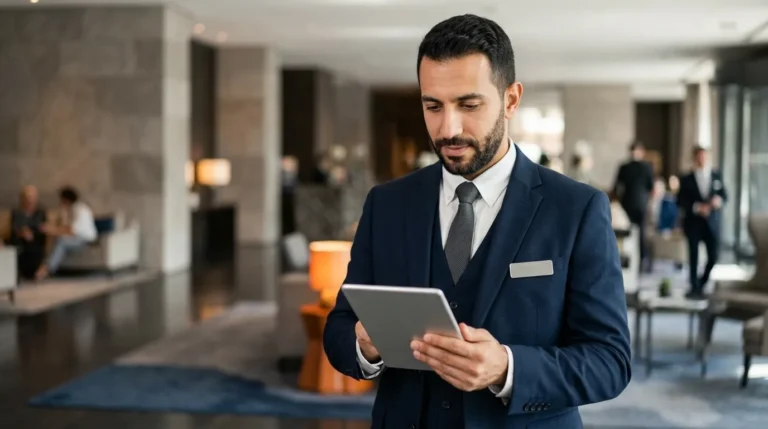
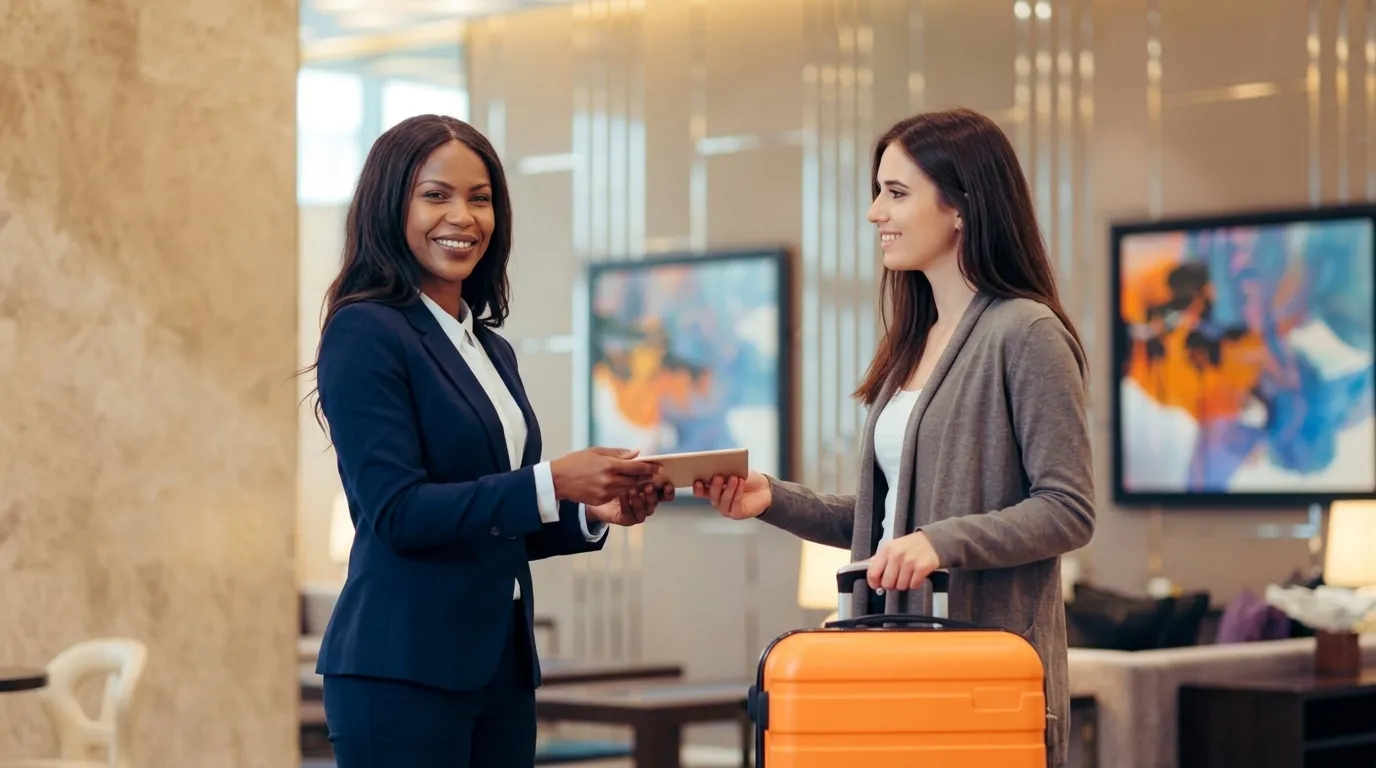
Run mobile, hybrid, and staff-assisted paths at the same time. Different guests prefer different arrivals, so Stayntouch supports three concurrent paths. The fully mobile path lets guests complete check-in from their own device in about 30 seconds and walk directly to their room. The hybrid path lets guests pre-register online while a staff member handles the key handoff and any payment confirmation in person. The staff-assisted path lets a team member greet the guest anywhere on property, such as the lobby, bar, or garden, using a tablet instead of a fixed desk. According to Stayntouch customer data, this model reduces staff-assisted check-ins by 54% while preserving a human welcome for guests who want it.
-
Connect digital keys and pre-arrival forms through integrations. Stayntouch integrates with leading door lock systems including Salto, dormakaba, ASSA ABLOY Hospitality, VingCard, Onity, OpenKey, 4Suites, Zaplox, and Goki, with integration access included at no additional cost from Stayntouch, while each third-party platform charges its own fee. Wallet-based mobile keys now generate instantly via QR code and appear directly in a guest’s Apple Wallet or Google Wallet with no additional app required, which removes the app-download friction that historically suppressed digital key adoption. The guest-facing side of Stayntouch supports preferred-language selection, and Stayntouch Guest Messaging performs real-time two-way translation between staff and guests, so language never blocks pre-arrival completion.
-
Script recognition and time upsells around the guest. Boutique hotels personalize arrivals at scale by sharing a daily arriving guest list with all guest-facing staff, including name, number of stays, VIP flags, room type, and purpose of visit, so staff can greet guests by name before they reach the front desk. Stayntouch PMS stores comprehensive guest profiles with customizable notes and preference history. A 30-second recognition window built into every check-in shifts the emotional tone of the interaction without slowing the process. Upsell offers for room upgrades, early check-in, late checkout, and amenity packages run inside the mobile booking flow and on the Stayntouch Kiosk, so guests see them at the moment of highest intent rather than as an afterthought at the desk.
-
Plan for walk-ins, groups, and temporary outages. Walk-in guests without a prior reservation can complete check-in at the Stayntouch Kiosk, which includes an integrated credit card reader and key encoder and supports ID scanning. Group arrivals with rooming lists, meaning the list of names and room assignments a group organizer submits before arrival, can be bulk-processed through Stayntouch’s Groups module, with charges routed automatically to the group master folio and individual guest extras settled separately. Stayntouch is cloud-native on AWS with 100% system uptime sustained over the past two years and includes offline reconnect settings on the kiosk for connectivity interruptions.
Ready to implement these six steps at your property? Let’s map your arrival flow and show you how the three-way model works in practice.
Choose the Right Path for Each Guest: Mobile, Kiosk, or Staff-Assisted
The right arrival path depends on the guest profile, the moment, and the property’s operational context. The table below reveals a clear pattern: as guest tech comfort and pre-arrival completion increase, staff involvement decreases, while VIP and special-occasion arrivals still benefit from a human welcome regardless of digital readiness.
|
Scenario |
Recommended Path |
Key Consideration |
|---|---|---|
|
Tech-comfortable guest, pre-registration complete, digital key enabled |
Fully mobile |
No staff interaction required, and the room must be ready with the key activated before arrival |
|
Guest who pre-registered but prefers a physical key or has a payment query |
Hybrid (pre-check-in + staff key handoff) |
Staff handle only the final step, so the interaction stays brief and personal instead of administrative |
|
Walk-in guest or guest who did not complete pre-arrival forms |
Kiosk or staff-assisted |
Kiosk handles ID scan, payment, and key encoding without staff involvement, while staff-assisted works for guests who prefer human guidance |
|
VIP, returning guest, or special-occasion arrival |
Staff-assisted anywhere on property |
Staff greet by name with preference notes visible on a tablet, so the arrival becomes a hospitality moment rather than a transaction |
No single path suits every guest. The operational strength of a three-way model comes from running all three paths at once, so the property never forces a guest into a channel that does not fit them.
Common Check-In Challenges and Practical Fixes
Credit-card declines at pre-arrival. The early-warning sign is a pre-arrival form that was opened but not completed. The root cause is usually an expired card or a card that does not support online authorization. An automated follow-up message sent via Stayntouch Guest Messaging prompts the guest to update payment details before arrival, with a fallback to kiosk or staff-assisted payment on the day.
Guest-without-booker situations. When the person checking in is not the person who made the reservation, which is common with corporate bookings and group travel, the PMS must surface the booking clearly and allow the arriving guest to complete ID verification and sign terms independently. Stayntouch Digital Registration Cards capture details for additional adults in the same flow, with automatic guest card creation.
Language barriers. International travelers show lower digital check-in adoption due to app download friction and connectivity variability. The translation features described earlier address this directly, so staff communicate with guests in their preferred language without third-party interpreters.
Early check-in requests. Early check-in is almost always subject to availability rather than guaranteed. Connecting housekeeping status to the PMS in real time solves this. When a room is inspected and marked ready, the front desk sees it immediately and can assign it to an early-arriving guest. Stayntouch Mobile Housekeeping propagates room status updates instantly across the system. Monetized early check-in, offered as an upsell during the mobile booking flow, turns this operational challenge into ancillary revenue.
System downtime. The platform’s uptime record, noted earlier, means scheduled maintenance never interrupts operations. The Stayntouch Kiosk includes offline reconnect settings for temporary connectivity interruptions. For any issue that does arise, Stayntouch provides 24/7/365 support with a guaranteed response under one hour, delivered by hospitality specialists rather than a chatbot, included at no extra cost.
Measure Check-In Success With Four Core Metrics
Four metrics give a complete view of a boutique hotel check-in operation:
-
Lobby wait time. Track average time from guest arrival to room key in hand. Digital check-in reduces the process from over 5 minutes to seconds for guests who complete pre-arrival registration. Monitor this weekly during peak arrival windows and aim for a sub-90-second benchmark.
-
Staff-assisted check-in percentage. Measure the share of arrivals that require a staff member to complete the transaction. According to Stayntouch customer data, properties using the three-way model reduce this figure by 54%. Track it monthly and set a target reduction over 90 days.
-
Guest satisfaction score. Review scores and net promoter scores reflect the arrival experience directly. Implementing mobile check-in can increase guest satisfaction. Stayntouch Kiosk check-in has driven guest satisfaction score increases of up to 20 points, according to Stayntouch customer data.
-
Upsell conversion rate. Track the percentage of arriving guests who accept an upgrade, early check-in, late checkout, or amenity offer. Kiosk check-ins can generate higher upsell revenue per check-in compared to traditional front-desk check-ins. Automated upsells through Stayntouch mobile and kiosk have driven return on investment increases of up to 240% on mobile and up to 120% on kiosk at individual properties, which represent standout cases rather than averages.
Scale the Three-Way Model Across Multiple Properties
Boutique groups can scale the three-way arrival model through centralized configuration instead of rebuilding it at each property. Stayntouch Multi-Property management allows corporate teams to push rate types, deposit and cancellation policies, charge codes, user permissions, and housekeeping task lists to every property from a single login. According to Stayntouch customer data, portfolio management runs 70% more efficiently through this model.
Guest profiles are shared across the group, so a returning guest at a sister property arrives with their history and preferences already known. Pre-arrival scripting and upsell offers can be standardized centrally and adjusted locally, which keeps brand voice consistent while preserving each property’s character.
Iteration follows a simple cycle. Review the four metrics above monthly, identify the step in the arrival flow with the highest drop-off or longest time, adjust the pre-arrival message, upsell timing, or staff scripting, and measure again. Stayntouch 360° reporting delivers scheduled, formatted reports by email, SFTP, or cloud drive without manual requests, so teams receive the data instead of assembling it.
The 2026 TravelTech Breakthrough “Hotel PMS Company of the Year” award reflects a platform built for continuous operational improvement rather than one that takes months to learn before configuration. Front desk staff train on Stayntouch PMS in 2 hours. The full platform, across all modules, trains in 2 days. The 2026 Hotel Technology Outlook: Best-in-Class vs. All-in-One Systems, produced by the NYU SPS Jonathan M. Tisch Center of Hospitality with Stayntouch and IDeaS (November 2025, 300+ hotel professionals), found that all-in-one platform users report check-in delays at 46% versus 23% for best-in-class platform users, a gap that directly affects guest satisfaction and revenue.
Frequently Asked Questions
How long does it take to implement a three-way check-in model with Stayntouch?
A single property deploys Stayntouch PMS in approximately 30 days through a structured six-week implementation process that covers configuration, integration setup, payment gateway configuration, guest mobility setup, user training, and go-live preparation. Auto-Configuration reduces property setup from approximately 30 hours of manual work to 4–5 hours using standardized templates. Front desk staff are fully trained on the PMS in 2 hours, so the arrival model runs from the first shift after go-live. For multi-property groups, full portfolio configuration and deployment complete in 30 to 45 days.
What happens to the personalized welcome if guests check in on their phones?
Mobile check-in and personalization work together. Stayntouch PMS stores comprehensive guest profiles, including stay history, preferences, special occasions, and custom notes, that are visible to every staff member on property. A guest who checks in via mobile still receives a name-based greeting, a pre-stocked room, and any preference-driven touches prepared using pre-arrival form data. The mobile path removes the administrative transaction and keeps the hospitality. Staff freed from processing check-ins at a desk can instead be present in the lobby, at the entrance, or wherever the guest first appears, delivering the welcome without paperwork.
How does early check-in work operationally, and can it generate revenue?
Early check-in remains availability-dependent rather than guaranteed. Connecting housekeeping status to the PMS in real time is the operational key. When a room is inspected and marked ready, the front desk sees it immediately and can assign it to an early-arriving guest without waiting for a manual update. Stayntouch Mobile Housekeeping propagates room status changes instantly across the system. Monetized early check-in appears as an automated upsell inside the mobile check-in flow and on the Stayntouch Kiosk, so guests can purchase guaranteed early access before arrival and convert a constraint into ancillary revenue.
Does offering mobile and kiosk check-in reduce service quality for guests who prefer a human welcome?
The three-way model enhances service for guests who prefer a human welcome. Guests who want a person-to-person arrival receive it from a staff member with a tablet, anywhere on property, with the guest’s full profile visible on screen. The difference from a traditional front-desk model is that the staff member is not simultaneously processing ID, collecting payment, and assigning a room, because those steps are already complete. The interaction becomes a genuine welcome instead of an administrative transaction. Boutique hotels using this model report that staff spend more time with guests because repetitive processing work has shifted into the pre-arrival flow.
What integrations does Stayntouch support for digital keys and ID verification, and what do they cost?
Stayntouch supports the major door lock platforms listed in the implementation section above, with integration access included at no additional cost from Stayntouch. ID scanning and facial recognition are built into the Stayntouch Kiosk and mobile booking flow, with ID images encrypted and stored in the same AWS region as the hotel’s PMS instance and automatically deleted 30 days after checkout. Stayntouch charges nothing for the integration itself, and each third-party platform charges its own fee, which the hotel pays directly to that vendor.
Turn Every Arrival Into a Personalized Welcome
The front-desk-only check-in model belongs to a different era, when every guest arrived at the same time, expected the same process, and had no alternative. Today’s boutique hotel guest expects speed, choice, and recognition. Delivering all three without adding headcount requires a three-way arrival model: mobile booking in about 30 seconds for guests who want to walk straight to their room, hybrid pre-check-in with a personal key handoff for guests who want a brief human moment, and staff-assisted check-in anywhere on property for guests who want the full welcome experience.
The property management system at the center of that model must train in hours rather than months, integrate with existing door lock and payment systems, surface guest preferences at the moment of arrival, and run without downtime. Stayntouch is built for that role, cloud-native, mobile-first, and connected to 1,400+ integrations at no extra cost from Stayntouch.
Experience how Stayntouch delivers speed, choice, and recognition in a single platform and see the three-way arrival model in action.
Read Next
Turn a more connected stack into a better stay.
See how Stayntouch can support the operating moments that matter most to your hotel team.