
Written by: Kelly Campbell, Vice President of Marketing, Stayntouch
How Independent Hotels Can Shift Share Back to Direct
-
OTAs capture 63.4% of independent-hotel bookings while most properties achieve only 36–37% direct share, leaving substantial revenue on the table through high commissions.
-
Legacy PMS systems with disconnected booking engines and manual processes are the primary operational barriers preventing higher direct-booking conversion.
-
A 12-tactic playbook covering mobile booking engines, value-added perks, metasearch, post-stay sequences, and real-time rate updates delivers measurable ROI without rate cuts or added headcount.
-
Independent hotels can realistically shift 10–20 percentage points of channel mix toward direct bookings within 9–12 months by following the 90-day implementation roadmap.
-
Ready to close your distribution gap? See how our two-way PMS and booking engine can boost your direct share in 2026.
12-Tactic Playbook to Increase Direct Bookings
Tactic 1: Add a Mobile-Optimized Booking Engine with Two-Way Live Rates
Eighty-three percent of travelers research trips on mobile before booking. A booking engine (IBE, the widget on a hotel’s own website where guests reserve directly) that renders slowly or requires horizontal scrolling loses those reservations to OTAs. Stayntouch Booking embeds via a small code snippet, so no website rebuild is required, and connects two-way with Stayntouch PMS. Two-way sync means the engine reads live availability and rates from the PMS and writes every new reservation straight back, eliminating the sync gaps where double bookings occur. Time to value: live within days of PMS go-live.
Tactic 2: Offer Value-Added Perks Without Changing BAR
BAR (best available rate, the lowest unrestricted rate publicly on offer) must stay consistent across channels to maintain rate parity. Parity-compliant direct perks that do not change the public rate include free upgrades when available, complimentary breakfast on non-BB rates, free late checkout, and welcome amenities. Stayntouch Booking surfaces these add-ons during the booking flow, converting them at the moment of highest intent. Time to value: perks configurable in under an hour, with measurable lift within one booking cycle.
Tactic 3: Launch Metasearch and Google Hotel Ads
Acquisition costs on Google Hotel Ads are often 40–60% cheaper than OTA commissions for independent hotels. Stayntouch Channel Manager keeps rates and availability synchronized, so metasearch listings always reflect live inventory. Clean tracking separates metasearch results from OTA cannibalization. Time to value: campaigns measurable within 30 days of activation.
Tactic 4: Build Post-Stay Email Sequences That Win Back OTA Guests
Hotel winback emails achieve strong open rates when segmented using PMS guest data. A five-touchpoint sequence converts one-time OTA guests into repeat direct bookers by building the relationship progressively. A thank-you at day 1 establishes goodwill while the stay is fresh. A feedback request at day 7 captures sentiment before it fades. Loyalty enrollment at day 30 targets guests who are considering their next trip. A seasonal offer at day 90 reactivates interest during common booking windows. An ongoing newsletter cadence maintains visibility between stays. Stayntouch PMS stores guest profiles and booking-source data, feeding CRM integrations such as Revinate and Klaviyo without manual exports. Time to value: sequences automated at setup, with repeat bookings measurable within 90 days.
Tactic 5: Display a Best-Rate Guarantee with Trustmarks
A booking-engine rate guarantee that promises to match any lower rate found elsewhere and add a specific perk is the single highest-ROI direct-booking tactic for independent hotels. Stayntouch Booking supports promotional codes and access codes that unlock contracted rates, while Google Tag Manager and GA4 event coverage report the full booking journey, including search, room view, add to cart, and mobile booking completion, so you can identify exactly where guests abandon. Time to value: guarantee messaging live immediately, with conversion data available within the first week.
Tactic 6: Steer Demand with Smart Channel Manager Controls
OTA bookings canceled at a 21.8% rate in 2025, more than double the 10.6% rate for direct bookings, according to the Cloudbeds 2026 State of Independent Hotels Report. Because direct bookings are more stable, steering high-demand inventory toward direct channels reduces cancellation exposure. Stayntouch Channel Manager lets revenue teams set sell limits, which cap rooms available per date per channel, and apply stay restrictions, such as closed to arrival and minimum length of stay, to push high-demand dates toward direct channels. Message types sync independently, so a rate change pushes without republishing inventory. Time to value: restrictions configurable in minutes, with cancellation rate improvement visible within 60 days.
Tactic 7: Present Upsells During Booking and Pre-Arrival
A well-positioned upsell at booking and pre-arrival, such as room upgrades, breakfast packages, late checkout, or parking, can increase ADR for direct guests. Stayntouch Booking presents add-ons during the booking flow. Stayntouch Kiosk and Guest Messaging extend upsell opportunities at check-in and pre-arrival. According to Stayntouch customer data, automated upsells have driven ROI increases of up to 240% on mobile and up to 120% on kiosk at individual properties, which represent standout cases rather than averages. Time to value: upsell packages configurable at launch.
Tactic 8: Update Rates Instantly from Any Device
Rate strategy fails when revenue managers are tied to a workstation. Stayntouch PMS allows rates, restrictions, and inventory to be adjusted from any device with an internet connection. The Rate Strategy module automates rule-based rate adjustments on configurable parameters, driving occupancy and ADR at the same time, and trains in 20 minutes. For hotels requiring full demand forecasting and competitor rate shopping, Stayntouch integrates with specialist RMS platforms including IDeaS, Duetto, FLYR, and Lighthouse, with each third-party platform billed separately by that vendor. Time to value: Rate Strategy activates instantly after 20-minute training.
Tactic 9: Share Guest Profiles Across Your Portfolio
A returning guest treated as a stranger at a sister property often books the next stay through an OTA instead. Stayntouch PMS shares guest, company, and travel agent profiles globally across a portfolio, with aggregated stay statistics including ADR and total stays. According to Stayntouch customer data, multi-property management runs 70% more efficiently from a single multi-property dashboard. Native integration with Stash Hotel Rewards supports direct booking and loyalty without a separate contract. Time to value: profiles merge automatically at go-live across all properties.
Tactic 10: Automate Payment Links and Digital Registration Cards
Friction at payment and arrival pushes guests toward OTAs for their next stay. Stayntouch Pay generates one-click payment links delivered by email, SMS, or QR code, all synchronized with the PMS through the same two-way connection described in Tactic 1. Digital Registration Cards capture signed terms and conditions before arrival, reducing disputes and converting OTA bookers into direct relationships by capturing first-party guest data. Tokenization replaces real card numbers with meaningless substitutes, so card data is never stored in the PMS. Time to value: payment links and registration cards live at go-live.

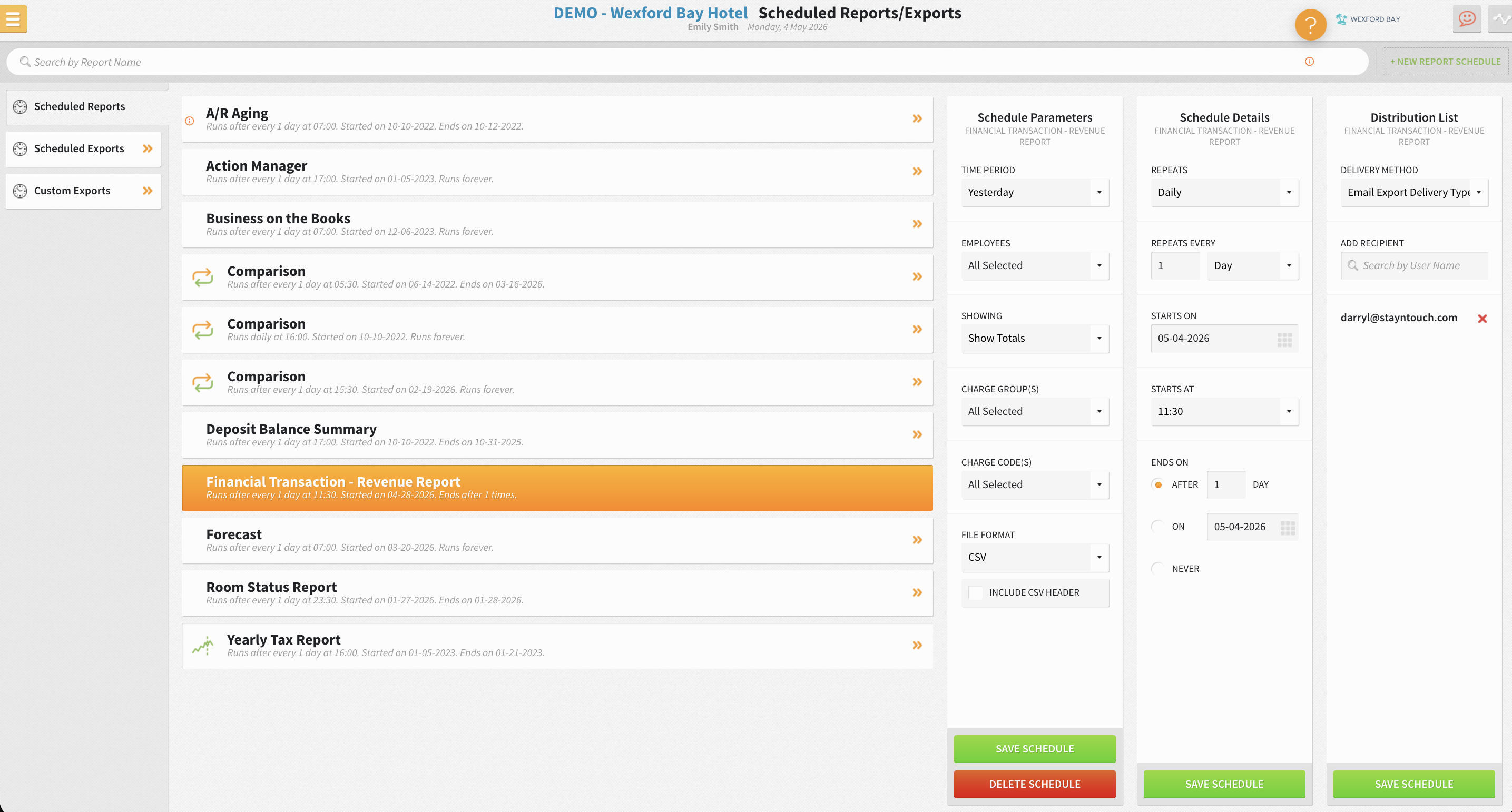
Tactic 11: Schedule Reports for Direct Share and Commission Savings
Hotels manage channel mix effectively when they track it consistently. Independent hotels often overestimate their direct share because of misattributed brand-search bookings and front-desk phone bookings routed through OTAs. Stayntouch PMS delivers scheduled, filtered reports by email, SFTP, or cloud drive without anyone requesting them. Teams can track direct share, OTA commission costs, and RevPAR (revenue per available room, room revenue divided by total rooms available) weekly. Time to value: reports scheduled at go-live, with a baseline established within 30 days.

Tactic 12: Test Booking Engine Landing Pages with A/B Experiments
Simple layout changes on the booking engine can lift conversion. Simplifying the mobile date picker and displaying rates above the fold often improves direct conversion. Stayntouch Booking Google Tag Manager and GA4 event coverage report the full booking journey, giving the data needed to test headlines, room images, and rate-plan naming. Invisible reCAPTCHA screens out bots silently, protecting inventory without adding friction for genuine guests. Time to value: first test results available within 30 days of launch.
Ready to put this playbook into action? Get implementation support for your property.
90-Day Implementation Roadmap for the 12 Tactics
The following roadmap breaks the 12-tactic playbook into three phases that independent hotels can execute in 90 days, showing which tactics to prioritize in each phase and who owns each action.
|
Phase |
Weeks |
Key Actions |
Owner |
|---|---|---|---|
|
Audit & Engine Install |
1–4 |
Audit current channel mix and true direct share (Tactic 11). Install Stayntouch Booking engine on the hotel website. Configure two-way PMS sync, rate plans, and promotional codes. Set up GA4 event tracking. Activate Stayntouch Pay and Digital Registration Cards. Complete full platform training (2 days for all modules). |
To be defined by your company |
|
Launch & Activate |
5–8 |
Launch Google Hotel Ads via Channel Manager (Tactic 3). Activate best-rate guarantee and value-added perks (Tactics 2 and 5). Configure upsell packages in booking flow and kiosk (Tactic 7). Build post-stay email sequences in CRM integration (Tactic 4). Enable Rate Strategy module or connect specialist RMS (Tactic 8). Begin first A/B test on booking engine landing page (Tactic 12). |
To be defined by your company |
|
Optimize & Scale |
9–12 |
Review scheduled direct-share and commission-savings reports (Tactic 11). Analyze A/B test results and implement the winning variant (Tactic 12). Adjust channel sell limits based on cancellation data (Tactic 6). Merge guest profiles and activate loyalty enrollment sequence (Tactic 9). Set a 12-month direct-share target of 35–45%. |
To be defined by your company |
Questions to Ask Any PMS Vendor Before You Commit
-
Timeline: How long from contract signature to go-live for a single property and for a portfolio? Ask for a specific number of days, not a range.
-
Training: How long does full platform training take across all modules, not just front desk? Who delivers it, and is self-paced eLearning available for new hires after go-live?
-
Total cost: What is included in the base subscription? Are integrations, API certification, support, and data migration billed separately?
-
Property-size fit: Does the platform serve independent hotels of all sizes, including those under 75 rooms, as well as 75–350-room properties?
-
Data-migration support: What happens if the legacy export is messy or incomplete? Can the vendor clean and validate the file, or does the hotel bear that risk?
-
Rate-parity risk: Does the booking engine support value-added perks and promotional codes without requiring a rate below BAR? How does the channel manager enforce sell limits to protect direct channels?
Want answers specific to your property? Get your questions answered by our team.
Frequently Asked Questions
How long does it take to see measurable results from a direct-booking program?
Quick-win tactics such as activating a best-rate guarantee, launching Google Hotel Ads, improving booking engine UX, and starting post-stay email sequences typically produce measurable direct-booking gains within one booking cycle of 60–90 days. A full shift of 10–20 percentage points in channel mix takes 9–12 months of consistent execution across all 12 tactics. The 90-day roadmap above is designed to establish the infrastructure in the first month and generate first data by day 90.
How many training hours does Stayntouch require?
Front desk staff complete training on the PMS front desk and reservation management module in 2 hours. Full platform training takes 2 days, as noted in the roadmap above. The Rate Strategy module trains in 20 minutes and activates instantly. Stayntouch Academy provides self-paced eLearning with role-based learning paths, test environments, certifications, and progress tracking, so new hires can onboard without scheduling a trainer. This matters in an industry where annual turnover runs high, because training time is a permanent operating cost, not a one-time event.
Is Stayntouch the right fit for a 75–350-room independent hotel?
Stayntouch is purpose-built for independent hotels, boutique brands, and multi-property groups of all sizes, including those under 75 rooms, with no upper room limit. The platform scales from a single property to portfolios of 100+ hotels managed from one multi-property dashboard, with centrally pushed configuration templates and shared guest profiles across the group. The largest single property on the platform has 730 rooms, and the largest group deployment covers 7,000+ rooms across 29 states.
What does data migration look like when switching from a legacy PMS?
Stayntouch Dataloader migrates guest profiles, group reservations, company and travel agent profiles, and deposit totals in as little as 1–2 hours. If the legacy export is messy or incomplete, a common issue with older systems, the Stayntouch team uses an internal Colab-based file cleanup and validation process to reformat and validate the data before migration, rather than rejecting the file. Manual data entry remains available as a fallback when automated migration is not feasible. Certain fields, such as group blocks, are always created manually regardless of export quality. Non-standard data such as group rooming lists or revenue budgets can be uploaded as CSV files. Auto-Configuration reduces property setup from roughly 30 hours of manual work to 4–5 hours using standardized templates.
Does offering direct-booking perks violate OTA rate-parity agreements?
Rate-parity clauses have been significantly weakened or eliminated in the EU, UK, Australia, and several other jurisdictions, allowing hotels to legally offer direct-booking perks without violating OTA agreements in those markets. Parity-compliant tactics such as free upgrades subject to availability, complimentary breakfast on non-breakfast-rate bookings, flexible late checkout, and welcome amenities do not change the public BAR and are safe across most markets. Always verify the specific terms of your OTA agreements and local regulatory environment before activating any direct-only offer. Stayntouch Booking supports promotional codes and access codes that unlock contracted rates without altering the publicly displayed rate.
Ready to Own Your Guest Relationships?
OTA commissions of 15–25% and a direct booking share stuck below 30% represent a distribution gap that a mobile-first booking engine and a best-in-class PMS can close. The 12 tactics above address every layer of that gap, including the booking engine, the channel mix, the guest data, the post-stay sequence, and the reporting that keeps the program honest.
Stayntouch delivers two-way live sync between the booking engine and PMS, 1,400+ integrations at no extra cost per integration, full platform training in 2 days, and 24/7/365 support with a guaranteed response under one hour, included at no extra cost and delivered by hospitality specialists rather than a chatbot. According to Stayntouch customer data, the platform has achieved a 97% customer retention rate and a 94% recommendation rating on Hotel Tech Report.
The 90-day roadmap is ready, and the playbook is in your hands.
See how Stayntouch can help your property shift bookings direct in 2026.
Read Next
Turn a more connected stack into a better stay.
See how Stayntouch can support the operating moments that matter most to your hotel team.